The rule
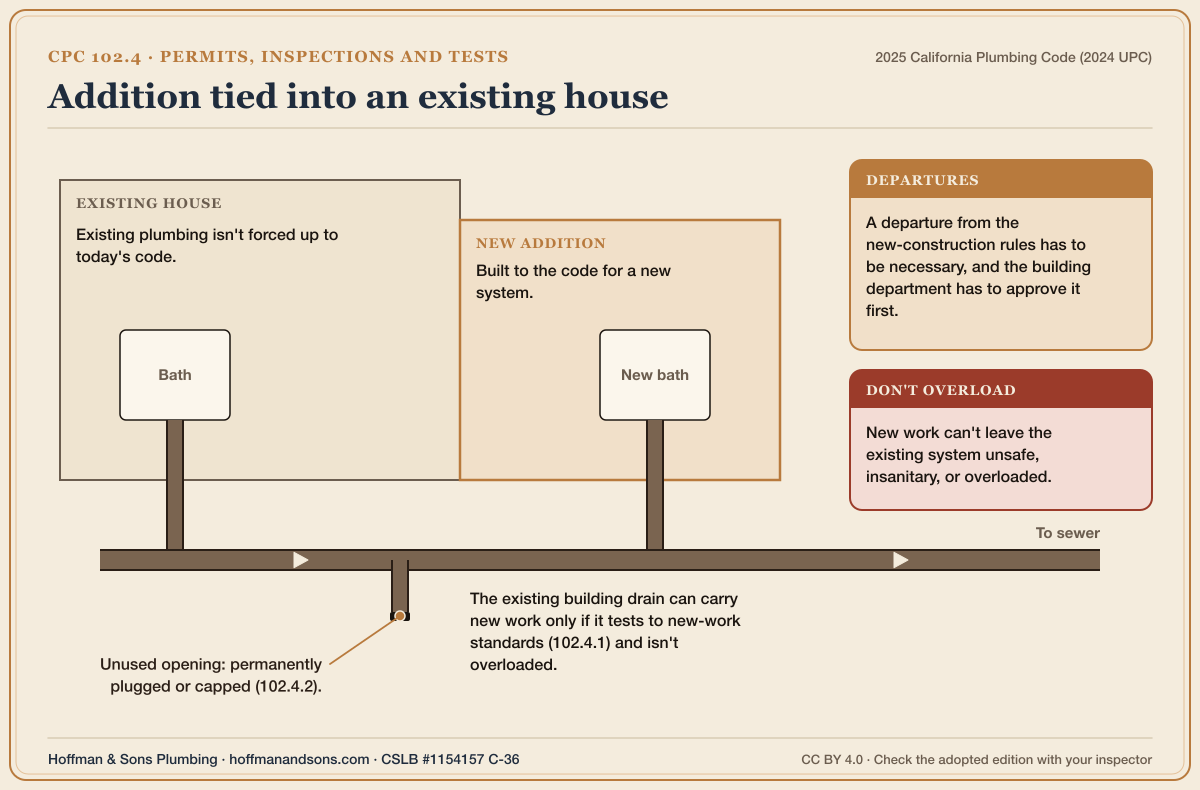
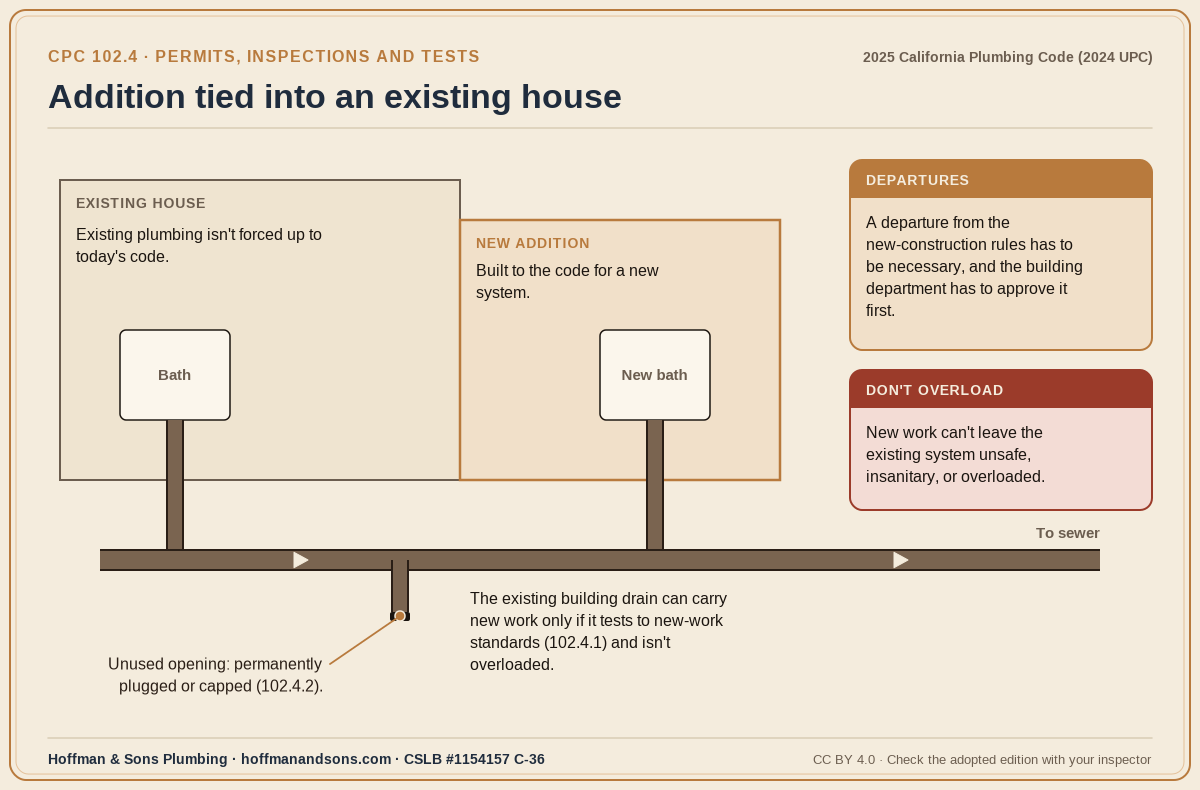
When you add a bathroom, remodel a kitchen, or repair a line, the work you're doing is held to the same rules as a brand-new system. The rest of the existing plumbing doesn't have to be brought up to current code just because the building was touched.
There's a catch. The new work can't make the existing system unsafe, insanitary, or overloaded. Piping a new bath group into an old drain that can't carry it is a problem no matter how clean the new pipe looks.
Departures from the new-construction rules are allowed only when they're found to be necessary and the building department approves them first. Get that approval before the work, not after.
Two subsections matter in the field. An existing building sewer or building drain can be used for new work only where examination and test show it meets the requirements for new work (102.4.1). And any opening in a drain or vent that isn't a fixture connection or a vent terminal has to be permanently plugged or capped in an approved way (102.4.2).
On the job
- Look at the existing sewer or drain before you price the tie-in. The code lets you use it for new work only if it checks out to new-work standards, so a surprise there changes the job.
- Abandoned stubs and old openings are an easy correction. Cap or plug them permanently with materials that suit the pipe, not a rag, tape, or a temporary test plug.
- If the old framing or a slab makes a new-work rule hard to meet, ask the building department about a departure before you rough it in. Their approval has to come first.
The inspector and your city's adopted edition have the final word.