The rule
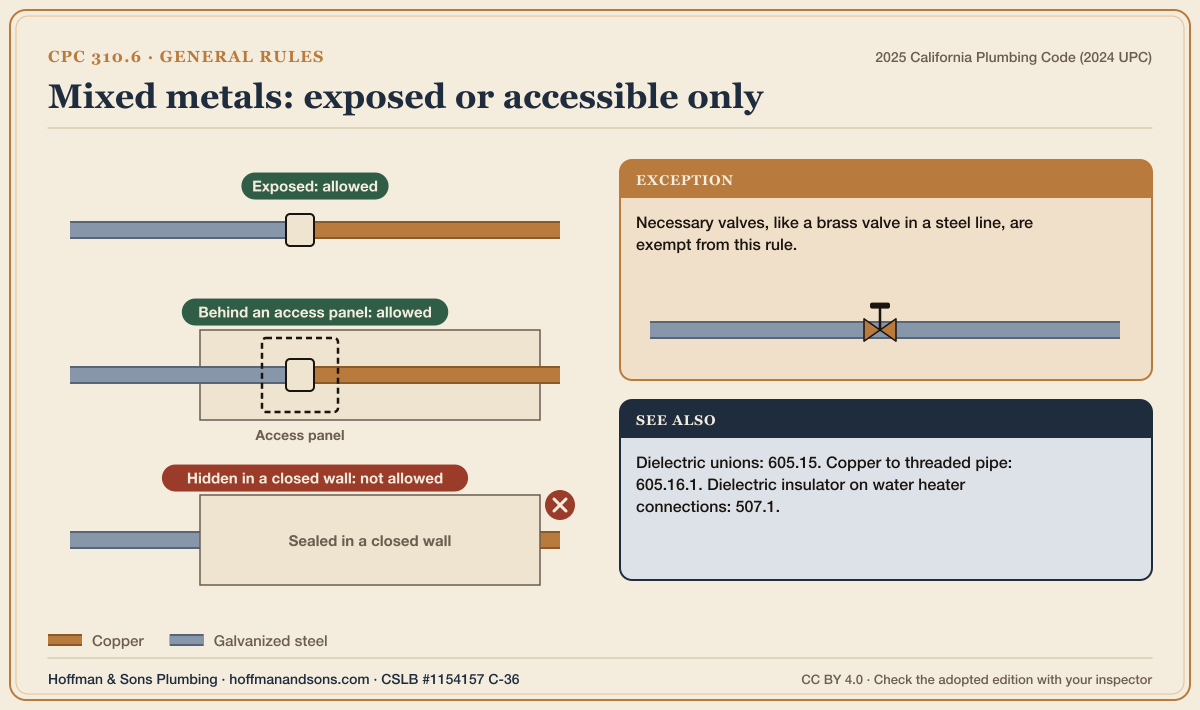
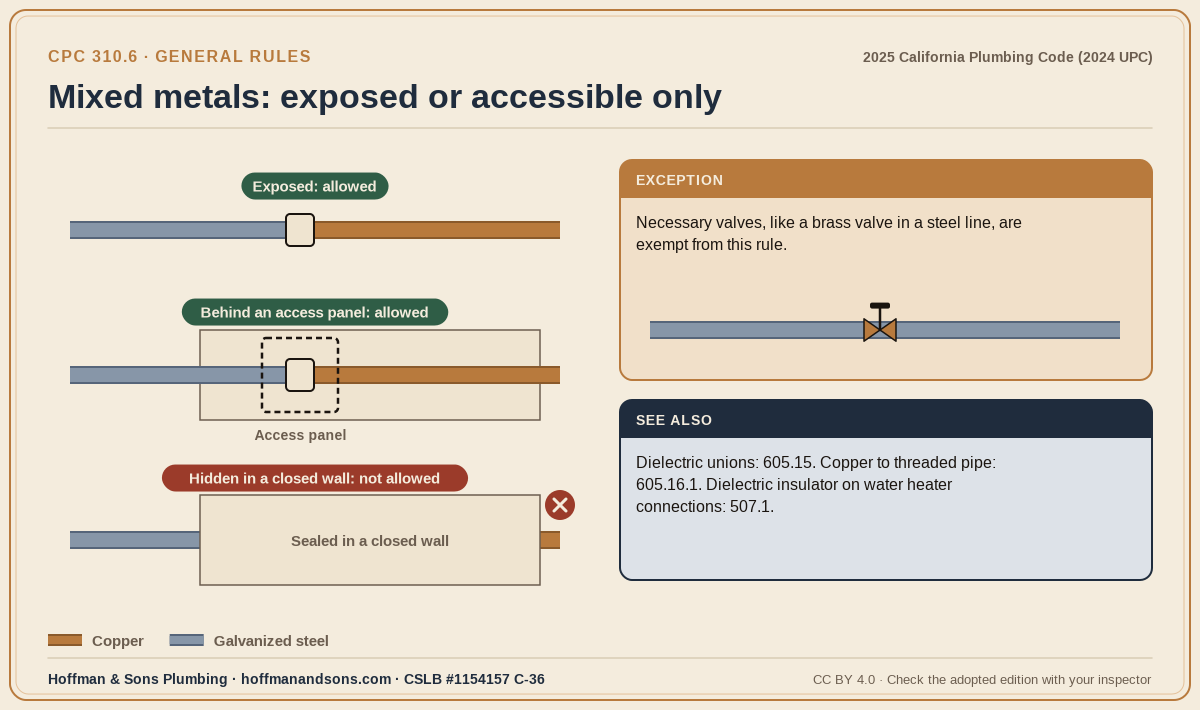
Joining different metals, copper to galvanized steel for example, can set up corrosion at the joint. This section doesn't tell you how to prevent it. It tells you where the connection can be: exposed or accessible, so it can be seen and serviced.
Necessary valves are the exception. A brass valve in a steel or copper line is expected and doesn't have to sit in an accessible spot just because it's a different metal.
The fittings and unions made for joining different metals are covered in other sections, such as the dielectric union rules in 605.15 and the copper-to-threaded-pipe joint rules in 605.16.1. The inspector and the city's adopted edition of the code have the final word.
On the job
- Plan where each copper-to-steel transition lands. If it would end up inside a wall, move it to an exposed spot or put in an access panel.
- Use the right transition fitting for the pipes involved (see 605.15 and 605.16.1) and keep it where an inspector, and the next plumber, can reach it.
- Water heater connections are a common spot for mixed metals. The building department can require a dielectric insulator there (see 507.1).
The inspector and your city's adopted edition have the final word.