The rule
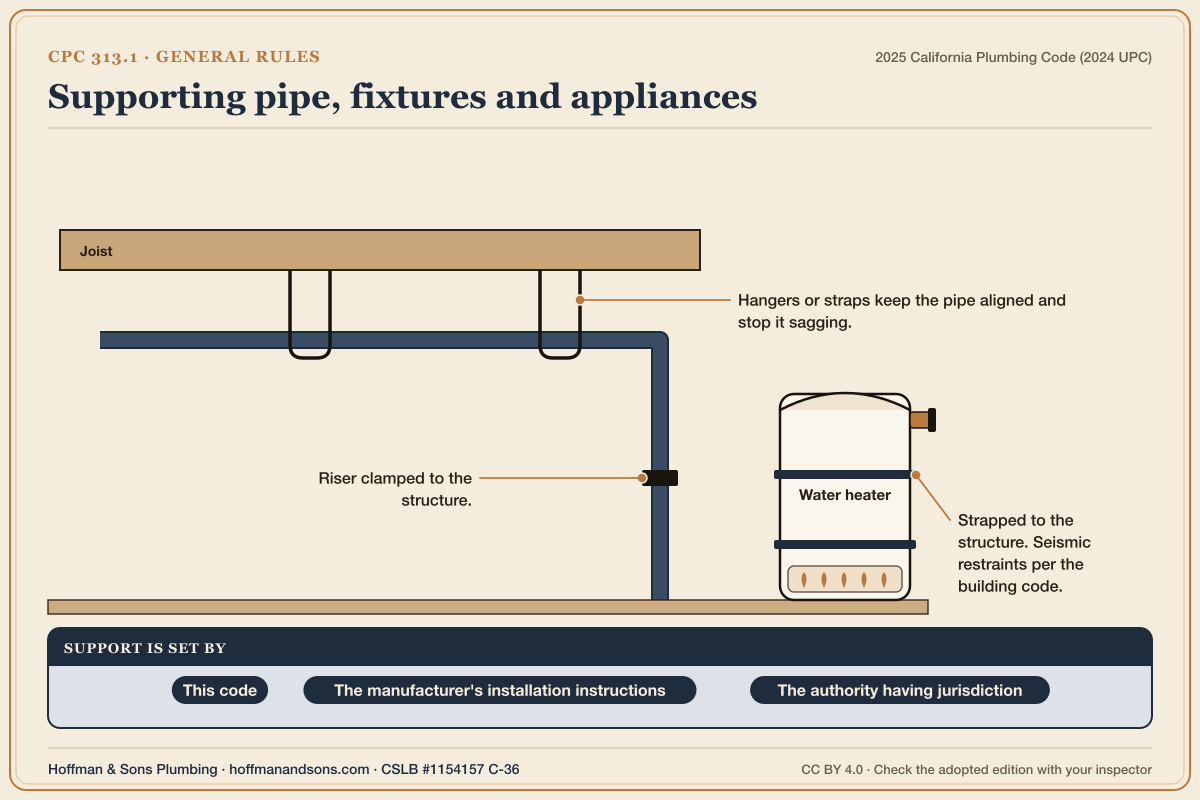
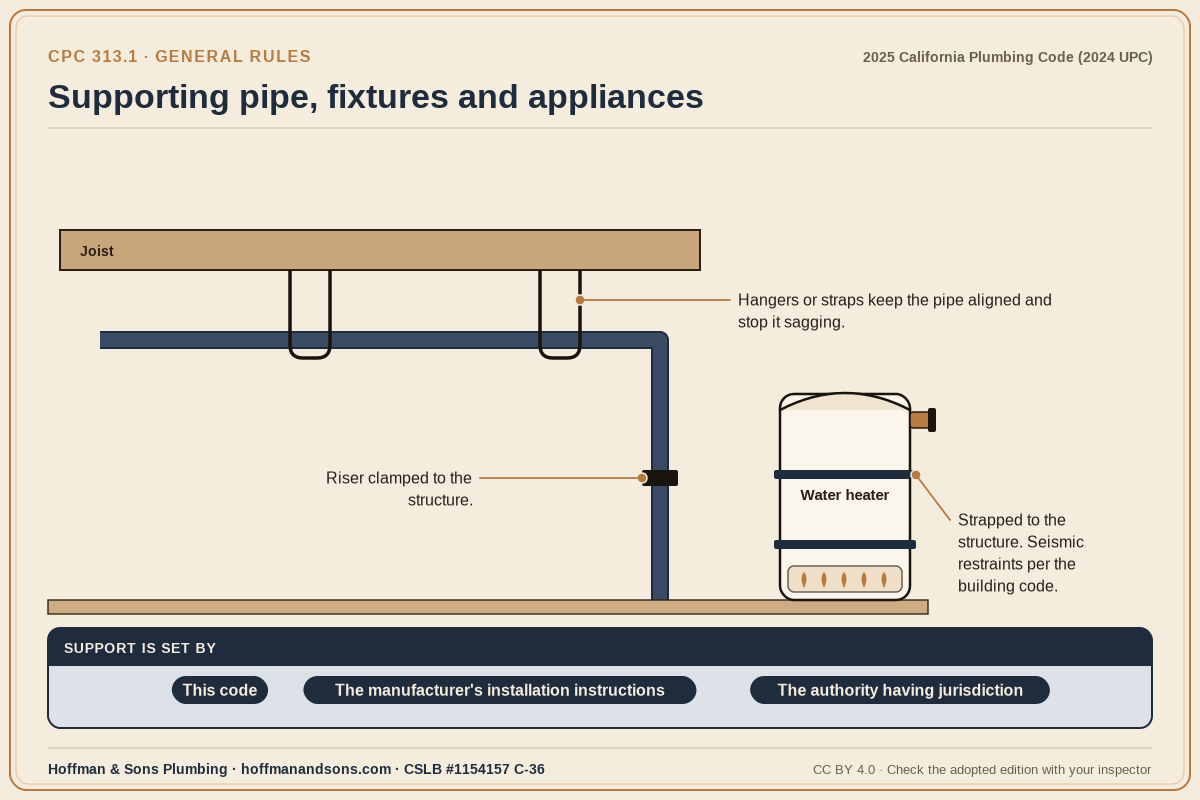
Three sources set how things are supported: the plumbing code itself (spacing in 313.3, rods in 313.6, gas in 313.7), the manufacturer's installation instructions, and the authority having jurisdiction. When they differ, the strictest one is the safe one to follow.
Seismic restraint isn't spelled out here. The section sends you to the building code. In California that matters, since water heaters and larger suspended piping are the usual places where bracing comes up.
Other parts of Chapter 3 add detail. Hangers and supports have to carry the weight of the pipe and its contents, and pipe has to stay aligned and not sag.
On the job
- Read the instruction sheet for the pipe or fixture. Manufacturers often set tighter spacing than the code's table, and the inspector will hold you to it.
- Support is part of rough-in: look for loose riser clamps, missing hangers and sagging runs before you call for inspection.
- Ask early what bracing the city wants on water heaters and large suspended lines. Seismic details come from the building code, not the plumbing code.
The inspector and your city's adopted edition have the final word.