The rule
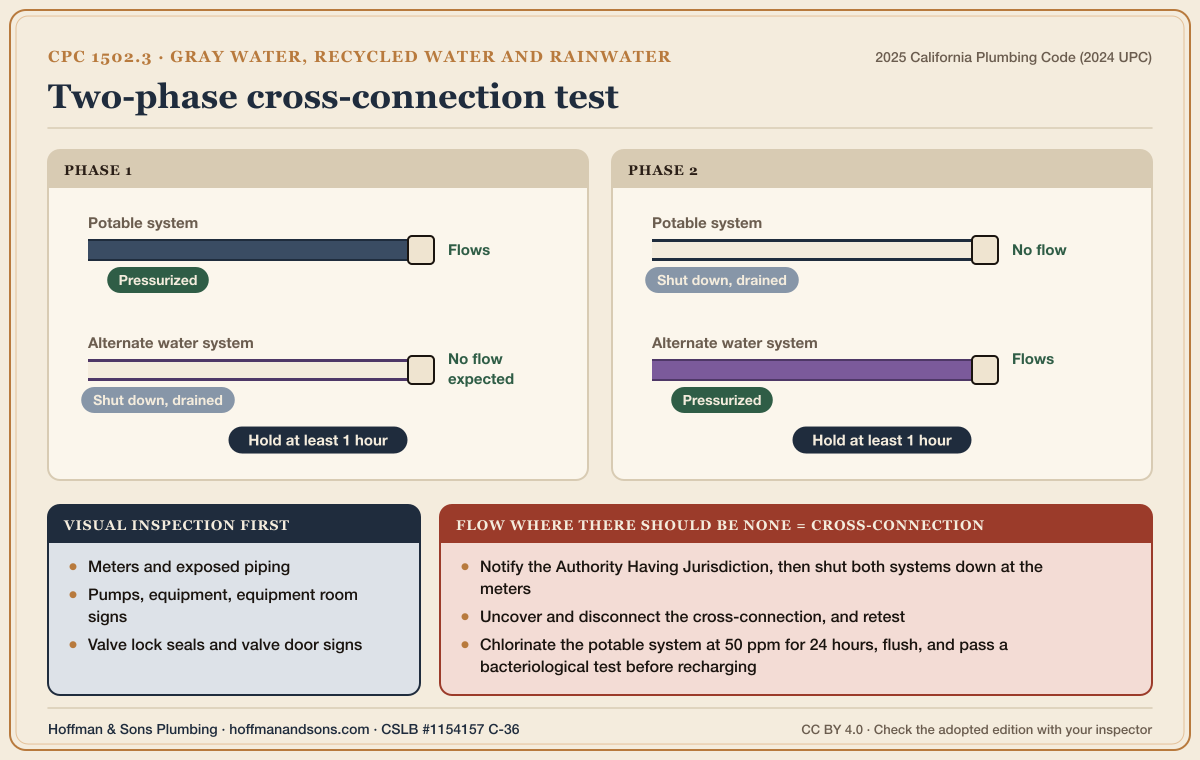
The test proves the two systems aren't connected anywhere they shouldn't be. It's done in front of the Authority Having Jurisdiction before the alternate system is put into operation. The visual part comes first: meter locations, pumps and equipment, equipment room signs, exposed piping, valve lock seals, and valve door signs.
Phase one: pressurize the potable system and shut down, depressurize and drain the alternate system. Leave it like that for the period the Authority Having Jurisdiction sets, never less than 1 hour. Check the alternate drain and fixtures for flow. Flow out of an alternate outlet means a cross-connection. Then flip it.
Phase two: depressurize and drain potable, pressurize the alternate system, and again wait at least 1 hour. Now any flow from a potable outlet is a cross-connection. If the alternate source isn't available yet, a temporary connection to potable water is used for the test and then removed.
If a cross-connection is found, notify the Authority Having Jurisdiction, shut down both systems at the meters, uncover and disconnect the connection, and retest. The potable system is then chlorinated at 50 parts per million for 24 hours, flushed, and bacteriologically tested before it's recharged.
On the job
- Schedule the inspector before you drain anything. The test has to be run in their presence, and a cold start on a big building can eat the whole day.
- Make sure there are valves and drains where you'll need them to isolate and empty each side. Nobody wants to be cutting in a valve during the test.
- Keep the alternate lines tagged and sealed after the test. The inspection checks that valve seals and signs haven't been disturbed.
The inspector and your city's adopted edition have the final word.