The rule
Gray water here means untreated used water from fixtures like showers, lavatories and laundry that's reused for irrigation. The section covers building, altering and repairing those systems, and a city or county can adopt stricter standards than the state after a public hearing.
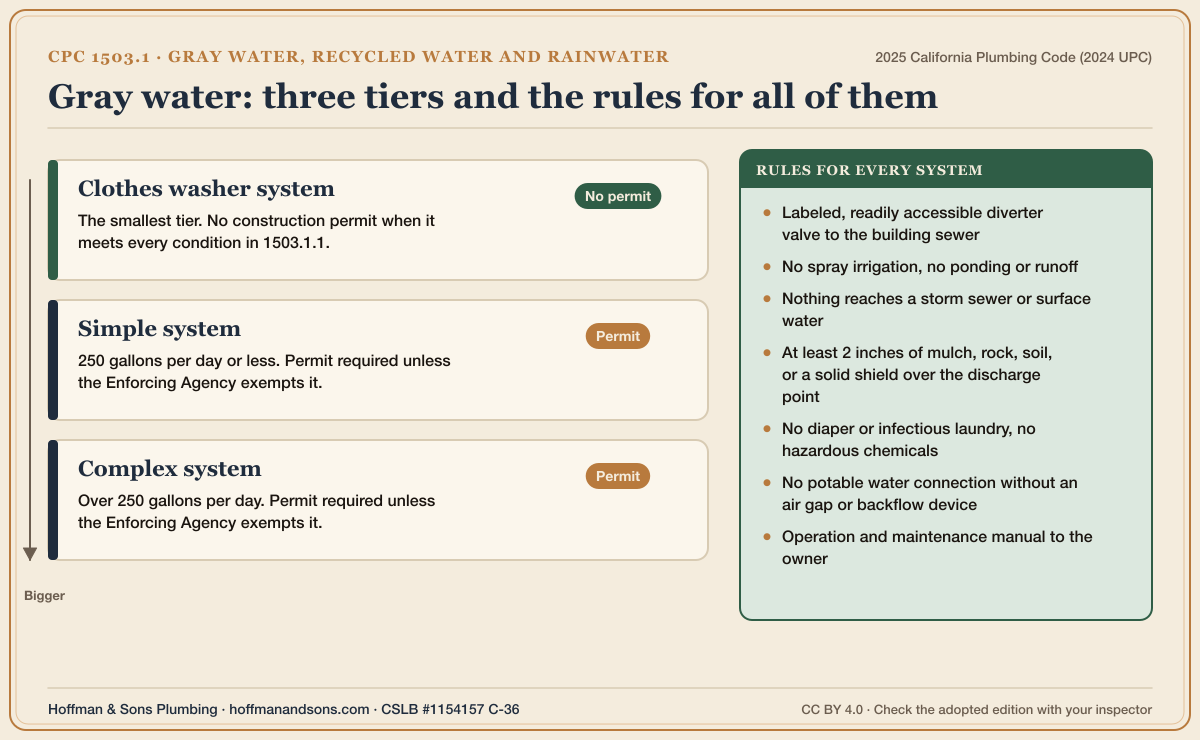
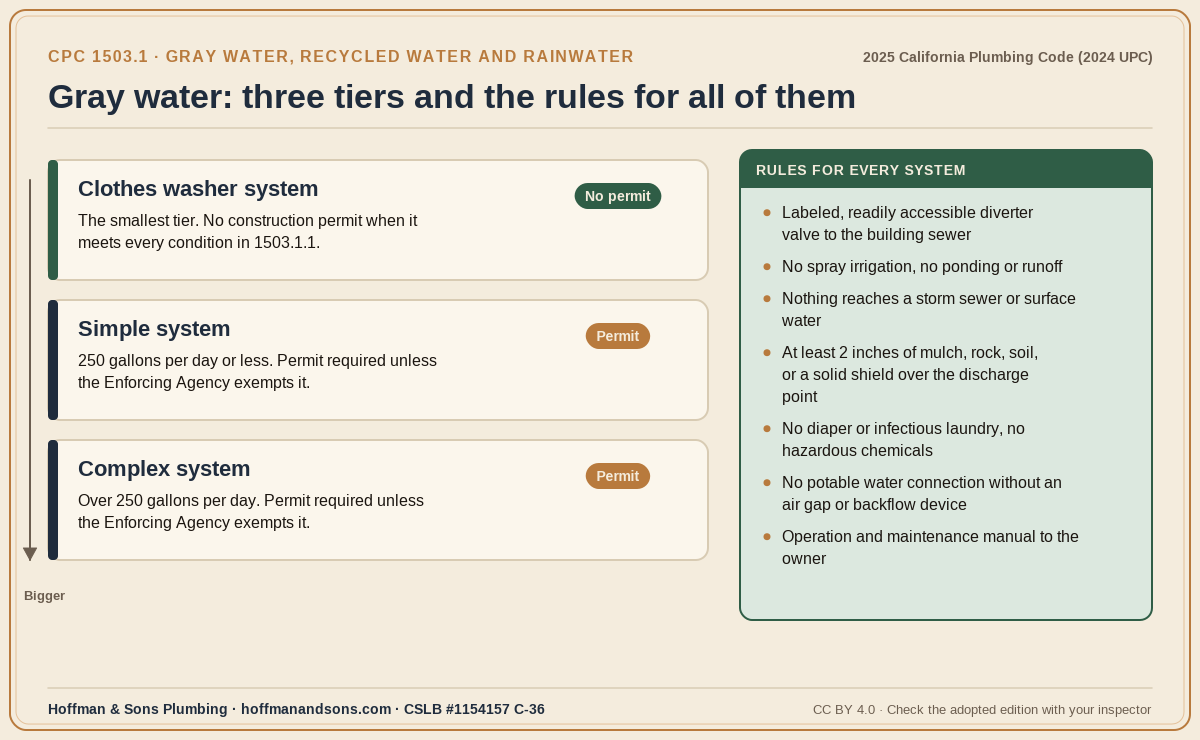
Every system needs a diverter valve so the user can send flow to the building sewer or to the irrigation or disposal field. It has to be labeled and easy to reach. Water used to wash diapers or similarly soiled or infectious clothes, or anything with prohibited contents, gets diverted to the sewer. No hazardous chemicals from things like cleaning car parts or greasy rags, and that includes home photo lab waste.
Gray water can't be used for spray irrigation, can't pond or run off, and can't reach a storm sewer or any surface water. Keep human contact to a minimum. The discharge point of a subsurface or subsoil irrigation field has to be covered by at least 2 inches of mulch, rock, soil, or a solid shield, and the same cover works when gray water is released above ground. The system can't connect to potable water without an air gap, a reduced-pressure backflow preventer, or another physical backflow device.
Capacity decides the tier. A clothes washer system (1503.1.1) is the smallest. A simple system has a discharge capacity of 250 gallons a day or less, and a complex system is over 250 gallons a day. Simple and complex systems need a construction permit unless the Enforcing Agency exempts them, and the agency has to consult the water purveyor before doing that. Either way, an exemption doesn't excuse a violation of any other code or law, and the owner gets an operation and maintenance manual that stays with the building.
On the job
- Figure out the daily flow first (1503.8). It decides if you're in simple or complex, and that decides permit and design work.
- The diverter is the item inspectors look at. It's accessible, labeled, and can send everything to the sewer with one move.
- Ask the city or county what local gray water standards they've adopted. The state allows stricter local rules, so a clean state-code design can still need changes.
The inspector and your city's adopted edition have the final word.