The rule
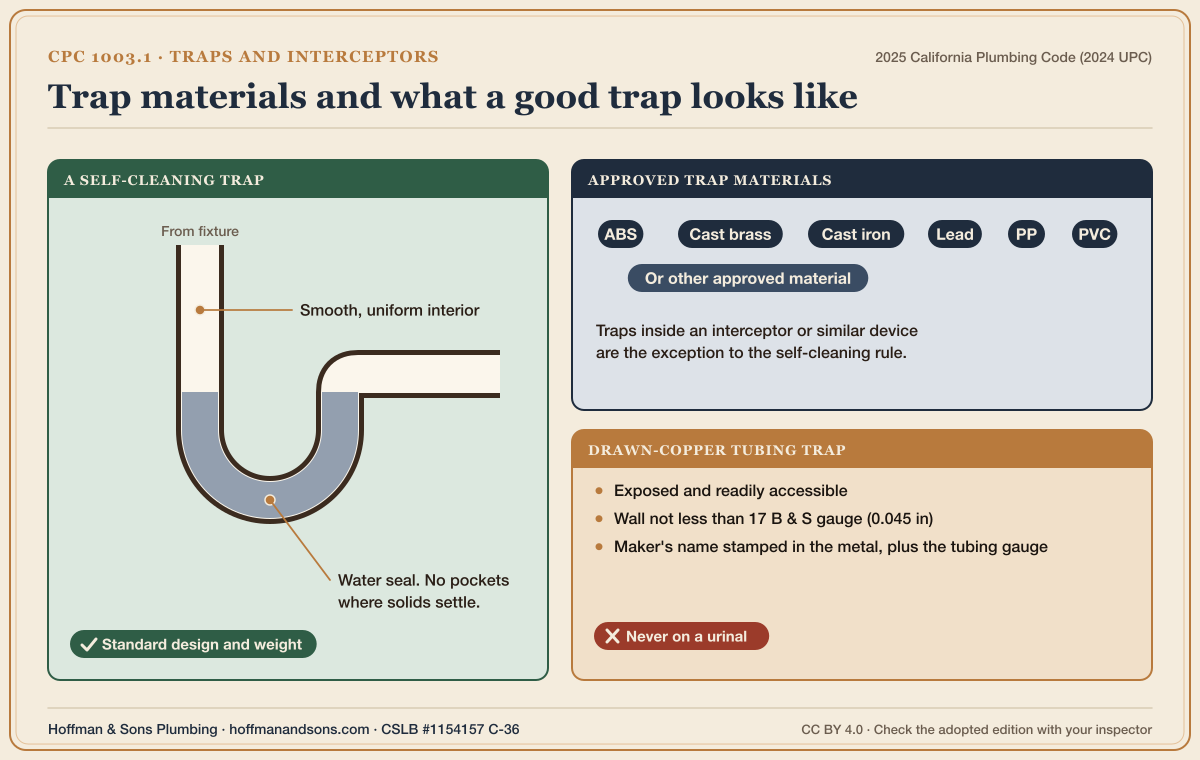
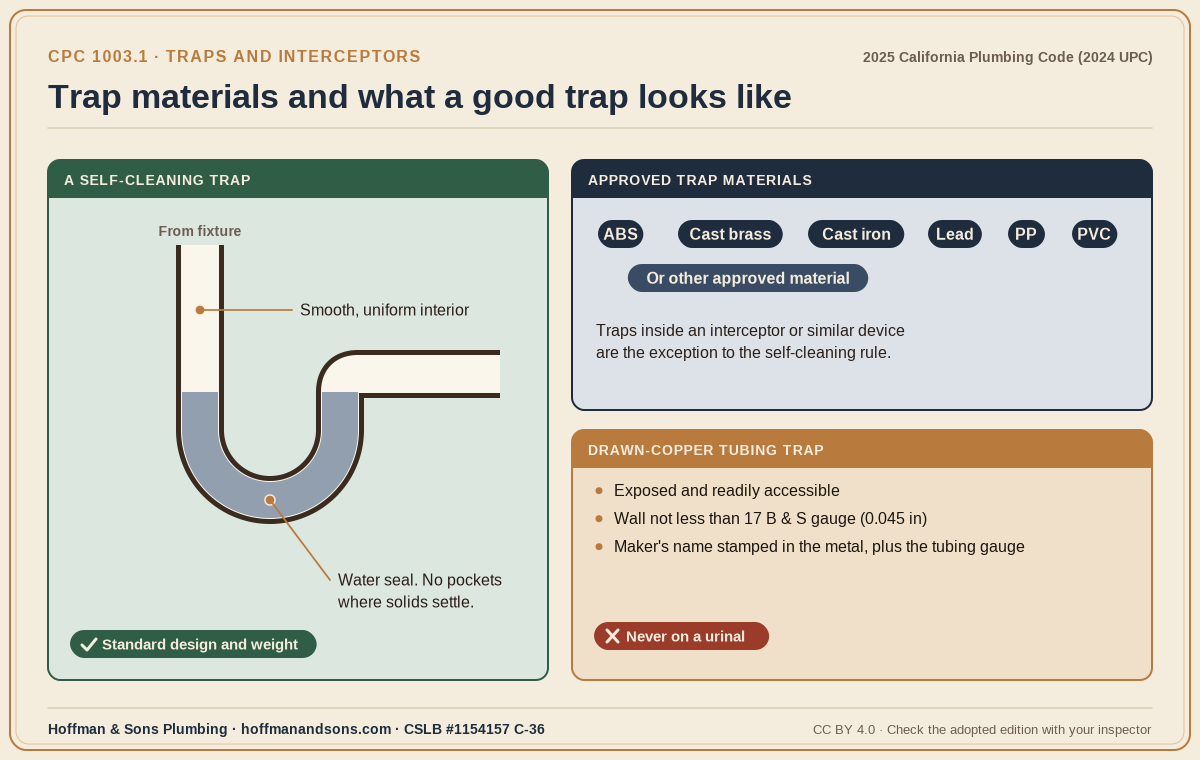
Except for traps built into an interceptor, a trap has to be self-cleaning. That means no pockets where solids settle. The inside has to be a smooth, uniform waterway.
For tubs, showers, lavatories, sinks, laundry sinks, floor drains, urinals, drinking fountains, dental units, and similar fixtures, the trap is a standard-design, standard-weight trap in ABS, cast brass, cast iron, lead, PP, PVC, or another approved material.
A drawn-copper alloy tubing trap is allowed when it's exposed and readily accessible and the tubing is not lighter than 17 B & S gauge (0.045 inch), on fixtures that discharge domestic sewage. It can't be used on a urinal. Each trap carries the maker's name stamped in the metal, and each tubing trap also carries the tubing gauge.
On the job
- Chrome tubing traps under a lavatory are common. Look for the stamp, and check the wall isn't thin or dented before you reuse one on a remodel.
- Use a listed tubing trap adapter on a tubing trap. A tubing trap shouldn't be connected without one.
- A trap that's rough inside or has an internal ledge is a trap that clogs. Replace it with a smooth-bore one.
The inspector and your city's adopted edition have the final word.