The rule
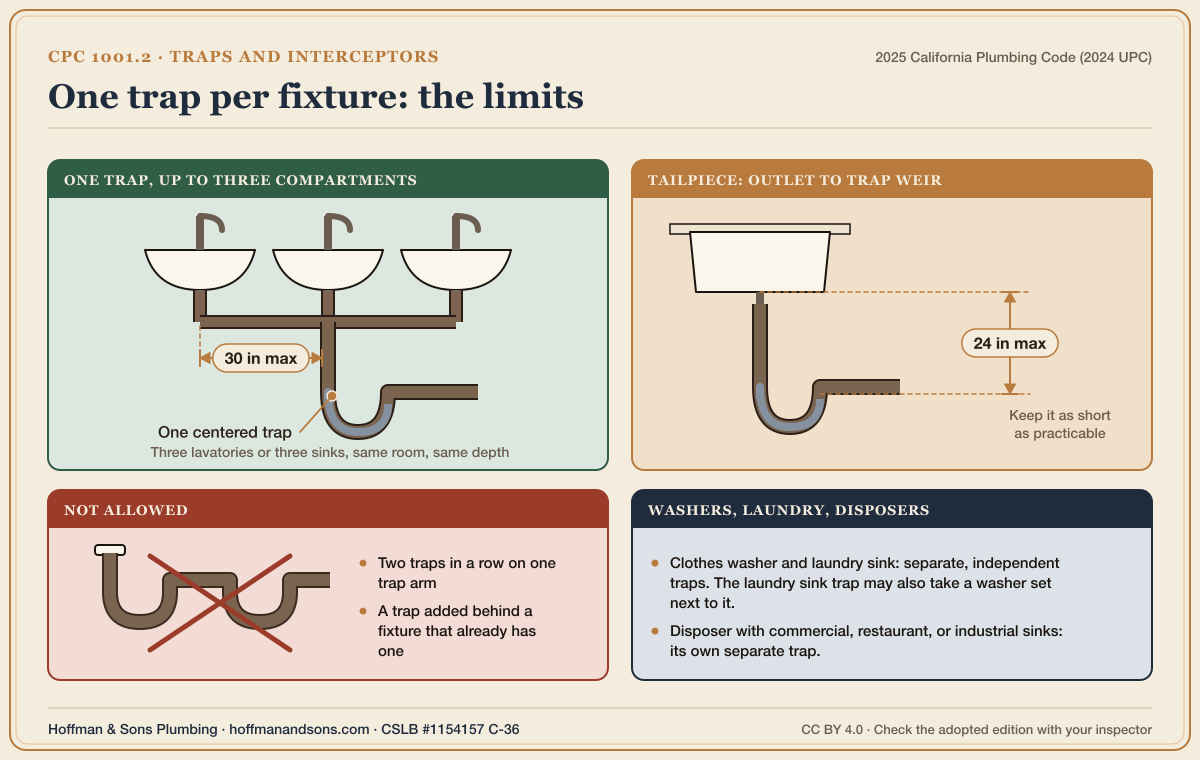
A trap holds a water seal that keeps sewer gas out of the building. The basic rule is one fixture, one trap, and one trap on any trap arm. Fixtures that come with an integral trap, like a toilet, are the exception. A food waste disposer that goes with a set of restaurant, commercial, or industrial sinks gets its own separate trap too.
Laundry is a little different. A clothes washer and a laundry sink each need a separate, independent trap. The one allowance is that the laundry sink's trap can also take the waste from a washer set right next to it.
Keep the tailpiece short. The vertical distance from the fixture outlet to the trap weir should be as short as practicable, and it can never run past 24 inches.
You can share one trap for a set of up to three single-compartment sinks or laundry sinks of the same depth, or up to three lavatories right next to each other in the same room. The waste outlets can't be more than 30 inches apart, and with three compartments the trap has to sit in the middle.
On the job
- Measure the tailpiece before you rough in a sink on a tall cabinet or a pedestal. A long drop to the trap is a quick correction on a final.
- Watch for a second trap hiding in a remodel. A new P-trap added in front of an old one, or a trap built into a drain body that's already trapped, makes a double trap, and the second one has to go.
- On a three-compartment kitchen sink, set the trap at the center compartment so the outlets line up with it. The 30 inch limit is measured between waste outlets.
The inspector and your city's adopted edition have the final word.