The rule
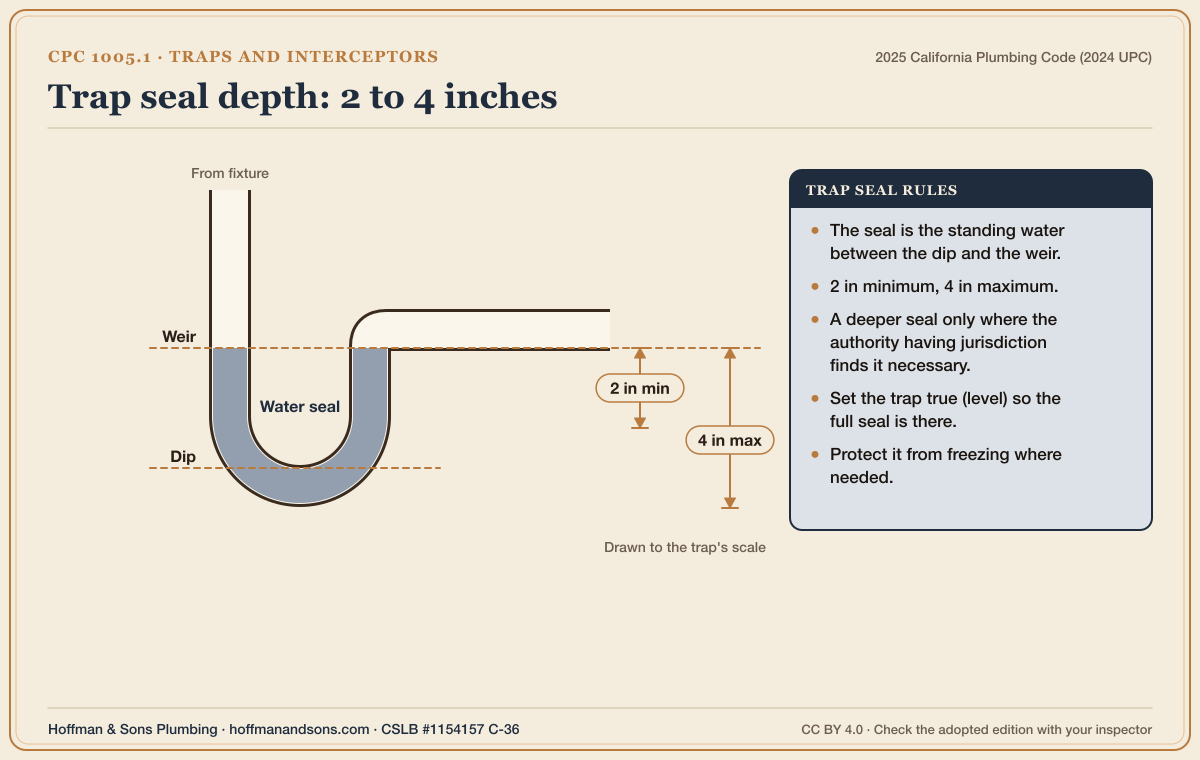
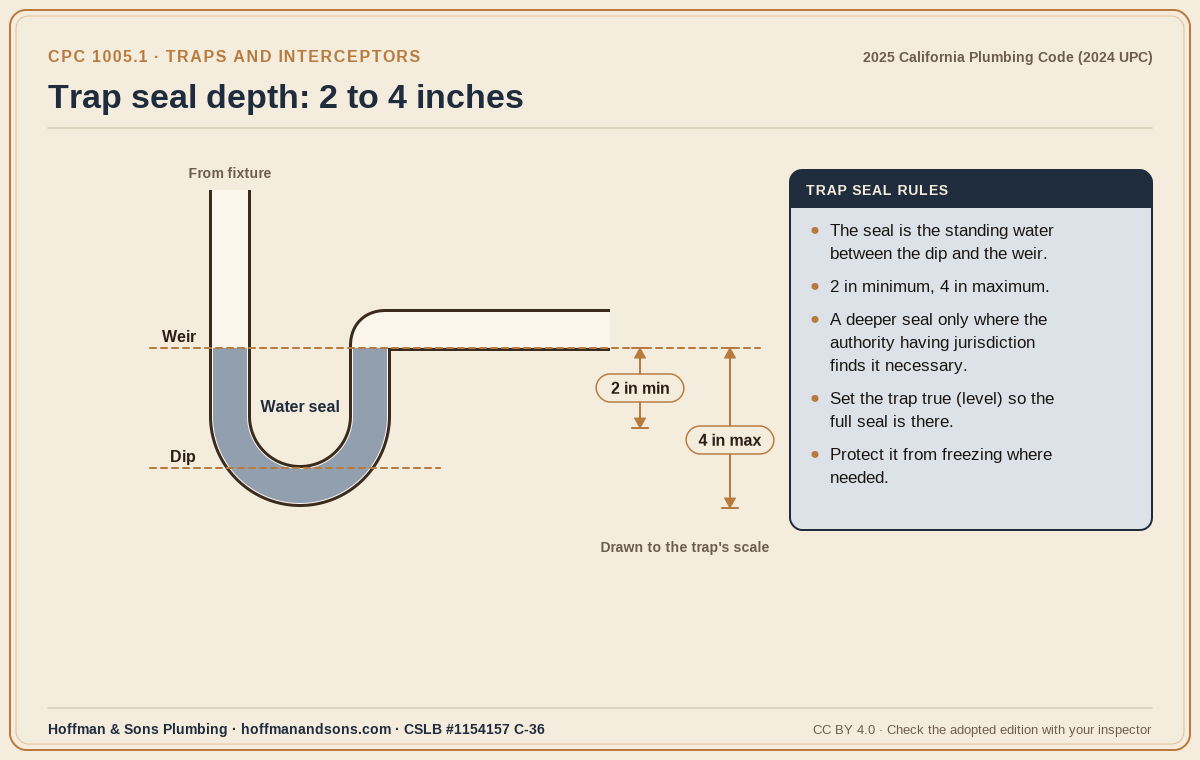
The seal is the depth of standing water between the dip and the weir. Less than 2 inches won't hold up against normal air pressure changes, and more than 4 inches slows the drain and collects solids. The code sets the range at 2 to 4 inches.
The authority having jurisdiction can require a deeper seal where it's found necessary. That's rare on a house, but an inspector can ask for it.
Traps have to be set true with respect to their liquid seals. A trap that's tilted can have a shallower seal than it was made for. Where freezing is a risk, the trap has to be protected.
On the job
- Level the trap when you make it up. A trap pulled out of true by a long run of unsupported pipe or a crooked cabinet drain can have a short seal on one side.
- If the inspector asks for a deeper seal, get that in writing from the authority having jurisdiction before you swap parts.
- A trap in an unheated or exposed spot, like an unconditioned garage or an exterior wall, is worth a second look for freeze protection.
The inspector and your city's adopted edition have the final word.