The rule
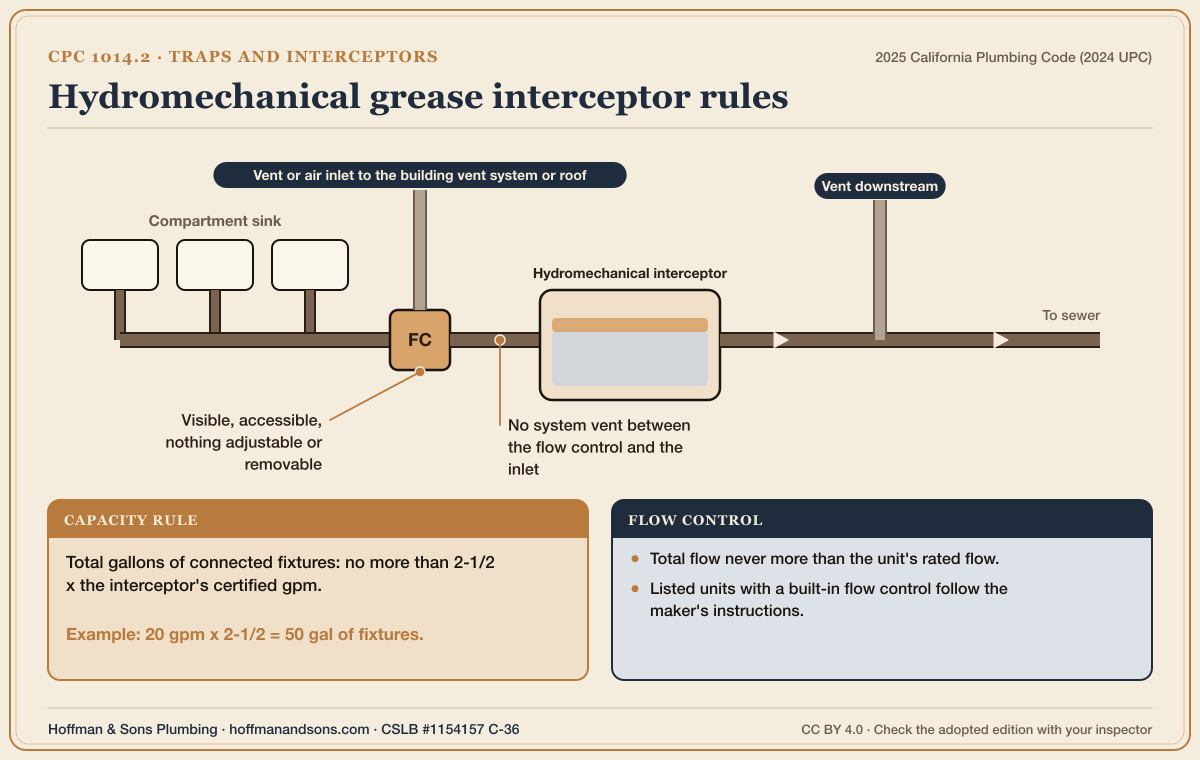
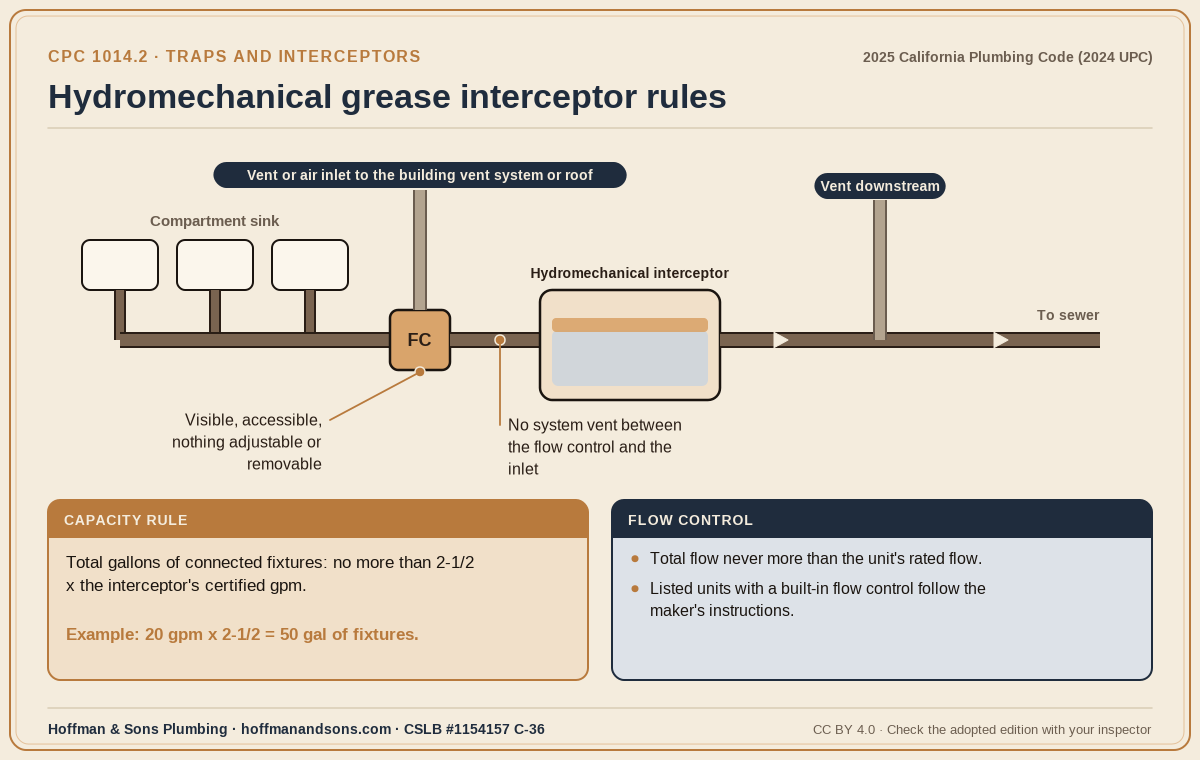
A hydromechanical interceptor (the small under-counter or floor unit) has a certified flow rate in gpm. The fixtures that feed it have to discharge through an approved vented flow control, installed where people can see and reach it. The flow control can't have adjustable or removable parts, and the flow through it can never exceed the interceptor's rated flow.
The flow control's vent or air inlet ties into the sanitary drainage vent system or goes through the roof. It doesn't terminate to the free air inside the building, and no system vent sits between the flow control and the interceptor inlet. A listed interceptor with an integral flow control is the exception, and it follows the manufacturer's instructions.
For capacity, total the gallons of the fixtures that discharge into the unit (the fixtures, appliances, and equipment that connect to it). That total can't exceed two and one-half times the certified gpm of the interceptor. The code's example works out a compartment sink as length times width times depth, divided by 231, times a 0.75 fill factor, over a drain period of 1 or 2 minutes.
A vent has to be installed downstream of a hydromechanical interceptor.
On the job
- Use the manufacturer's certified gpm, not the nominal size. A 20 gpm unit can take fixtures totaling up to 50 gallons.
- A flow control that's hidden behind a panel or can be adjusted by a cook is a rejection. Put it in plain sight and don't use an adjustable type.
- Count every fixture that drains to the unit when you total it. Add a floor sink or a pre-rinse and the number moves.
The inspector and your city's adopted edition have the final word.