The rule
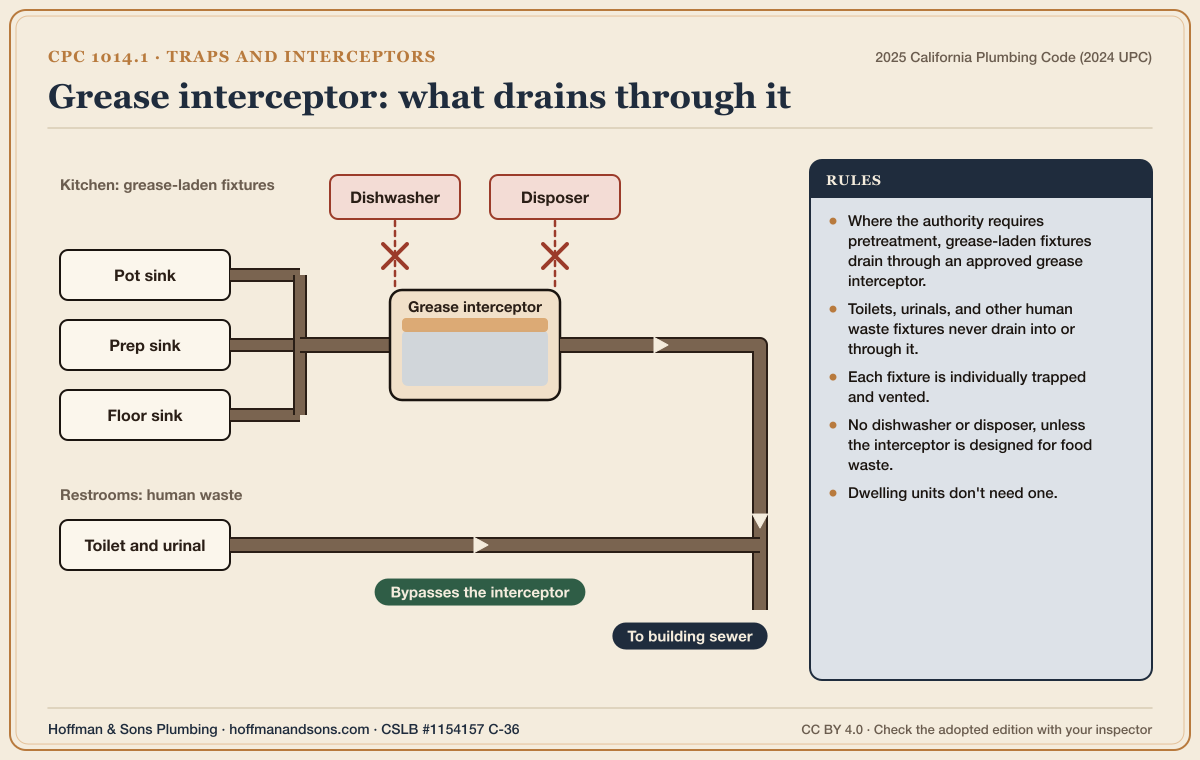
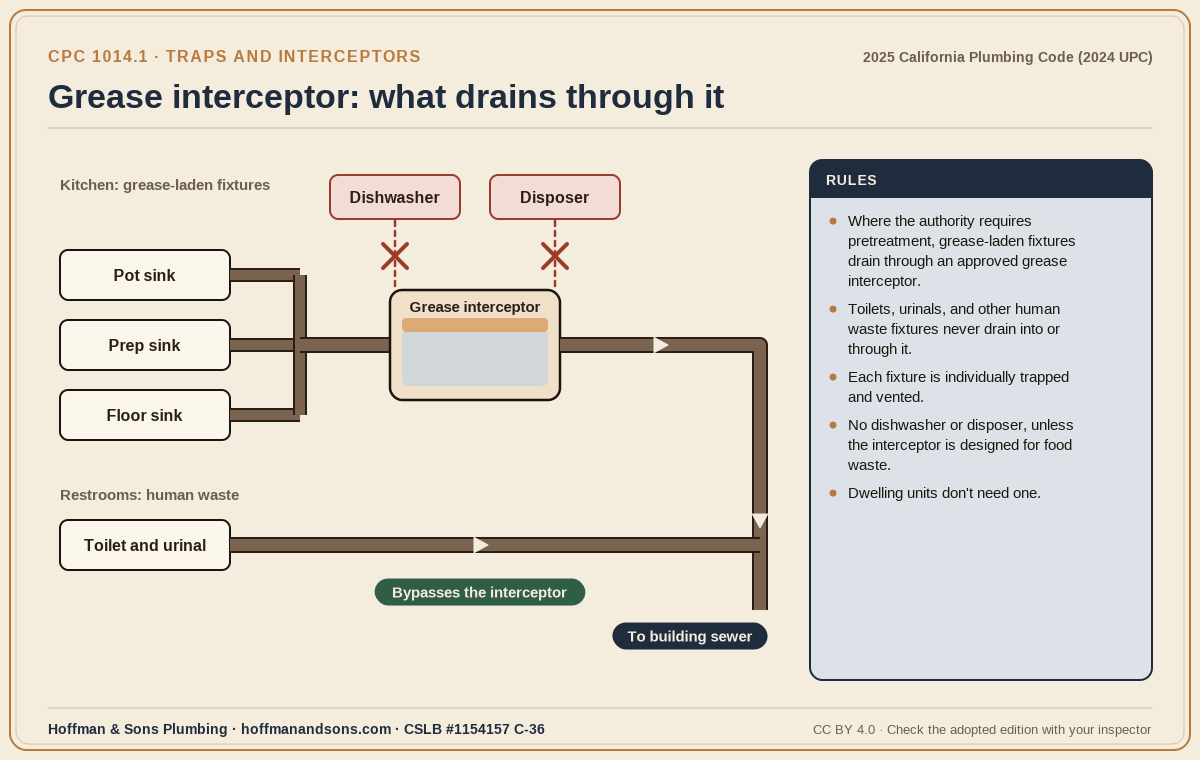
Restaurant and kitchen waste carries grease that can stop up a building drain and the sewer. When the authority having jurisdiction determines pretreatment is required, the grease-laden fixtures drain through an approved grease interceptor sized under the code and installed per the manufacturer's instructions.
Grease-laden fixtures include sinks and drains such as floor drains and floor sinks in restaurants, cafes, lunch counters, cafeterias, bars, clubs, hotels, hospitals, and factory or school kitchens. A grease interceptor isn't required for individual dwelling units or private living quarters.
Water closets, urinals, and other fixtures that carry human waste can't drain into or through the interceptor. Each fixture that does discharge into it needs its own trap and vent. As a rule a food waste disposer or a dishwasher doesn't connect to the interceptor either, though commercial disposers can go straight to the building drain, and disposers can go to an interceptor designed to take food waste.
The interceptor has to be cleaned regularly. Collected grease never goes back into the drainage piping or the sewer, and the authority can order added equipment or a maintenance program if it isn't kept up.
On the job
- Get the interceptor type and size confirmed by the plan reviewer and the local sewer agency before you rough in. Local pretreatment rules often drive the choice.
- Keep the restroom drain line separate from the kitchen line so nothing from a toilet reaches the interceptor.
- Leave room and access for the interceptor to be pumped or emptied. It's a maintenance item for the life of the building.
The inspector and your city's adopted edition have the final word.