The rule
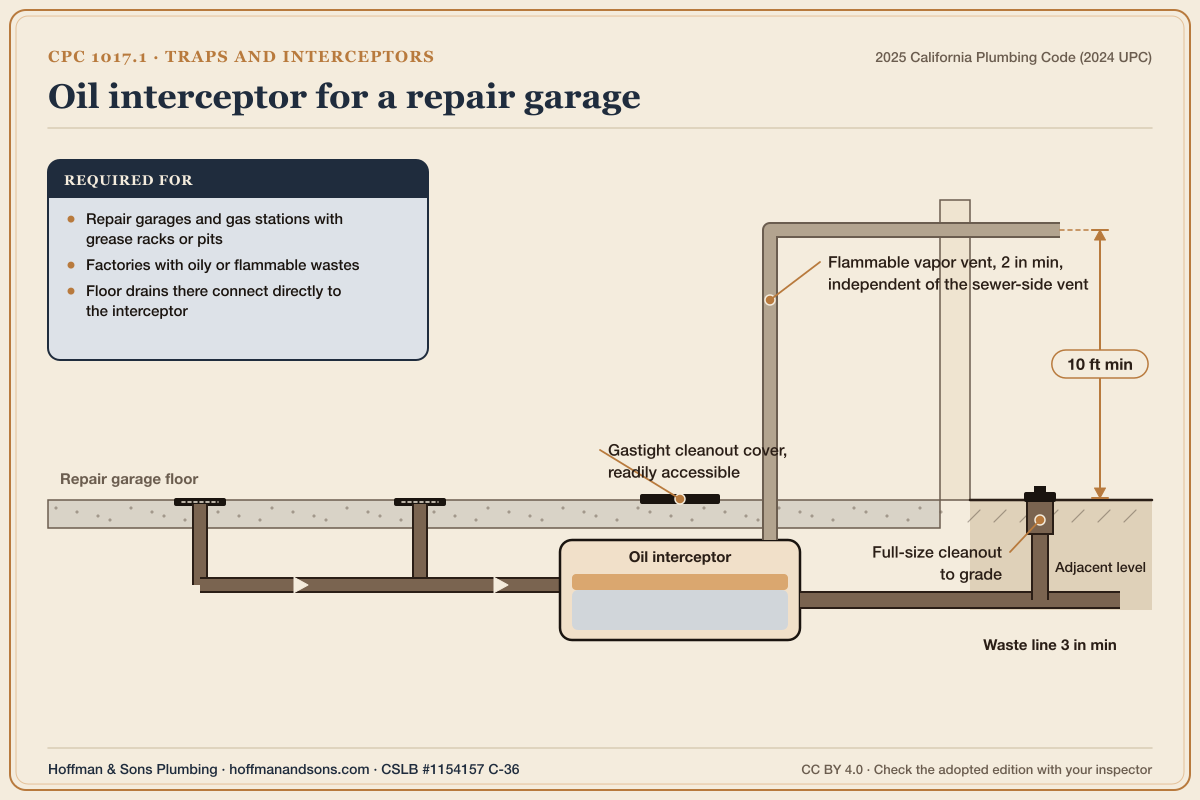
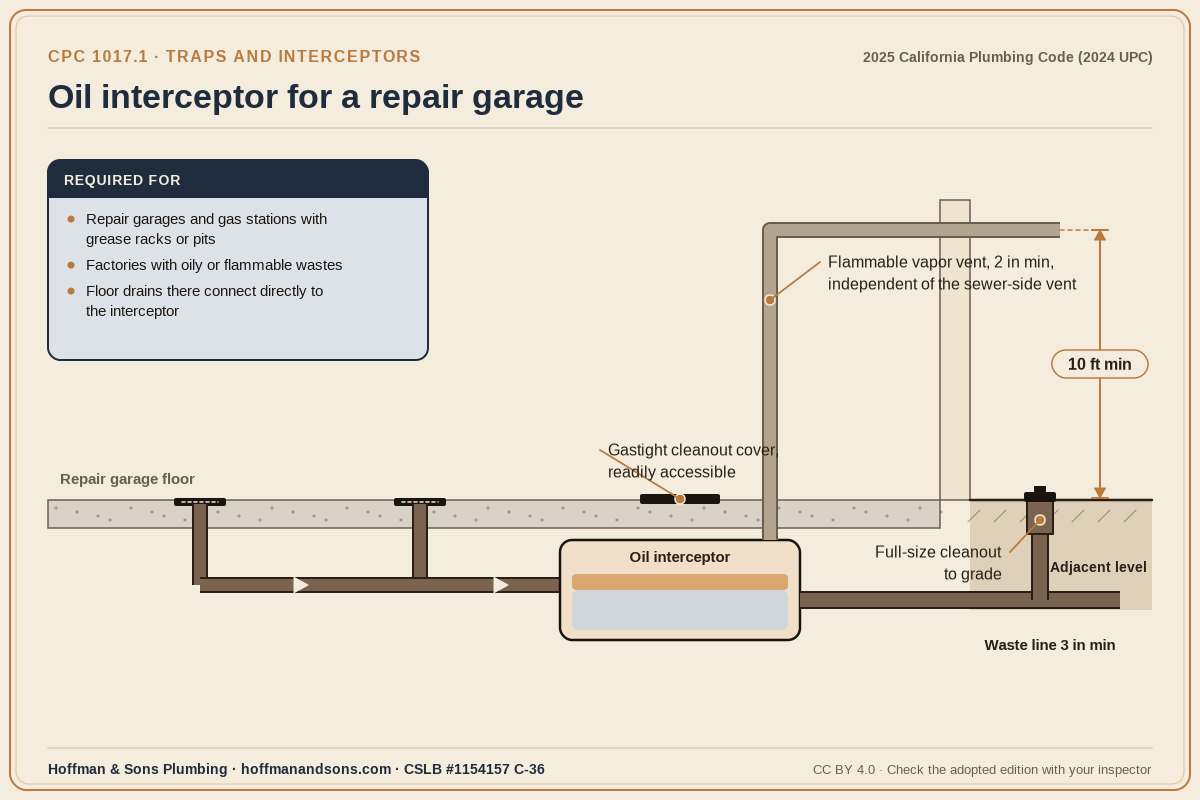
Anywhere oil or flammable liquid could end up on the floor, it can't go to the sewer. The code requires an oil or flammable liquid interceptor for repair garages and gas stations that have grease racks or grease pits, and for factories where manufacturing, storage, maintenance, repair, or testing produces oily or flammable wastes.
Floor drains in those areas connect directly to the interceptor, not into the general drainage system first.
Section 1017.3 covers interceptor details. The separation or vapor compartment is vented to the outer air on its own, with a flammable vapor vent not smaller than 2 inches, and where that vent goes through a sidewall it terminates not less than 10 feet above the adjacent level. The interceptor is vented on the sewer side too, and it has gastight cleanout covers that are readily accessible. The waste line is at least 3 inches with a full-size cleanout to grade.
On the job
- Get the interceptor's rating and the number of vehicles served in front of the plan reviewer early. The code sizes unrated interceptors by vehicle count or surface area, and larger counts go to the authority.
- Keep the vapor vent separate from the sewer-side vent. Joining them is one of the details inspectors look for.
- Plan where the cleanout comes to grade and what rolls over it.
The inspector and your city's adopted edition have the final word.