The rule
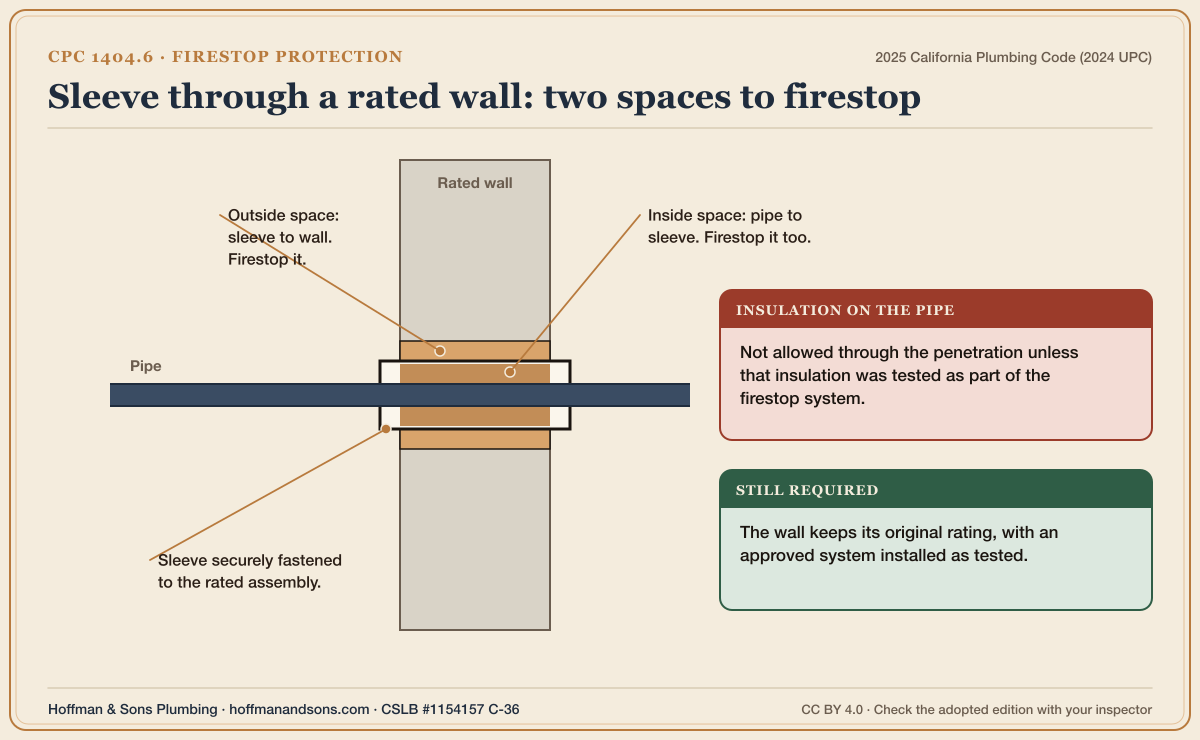
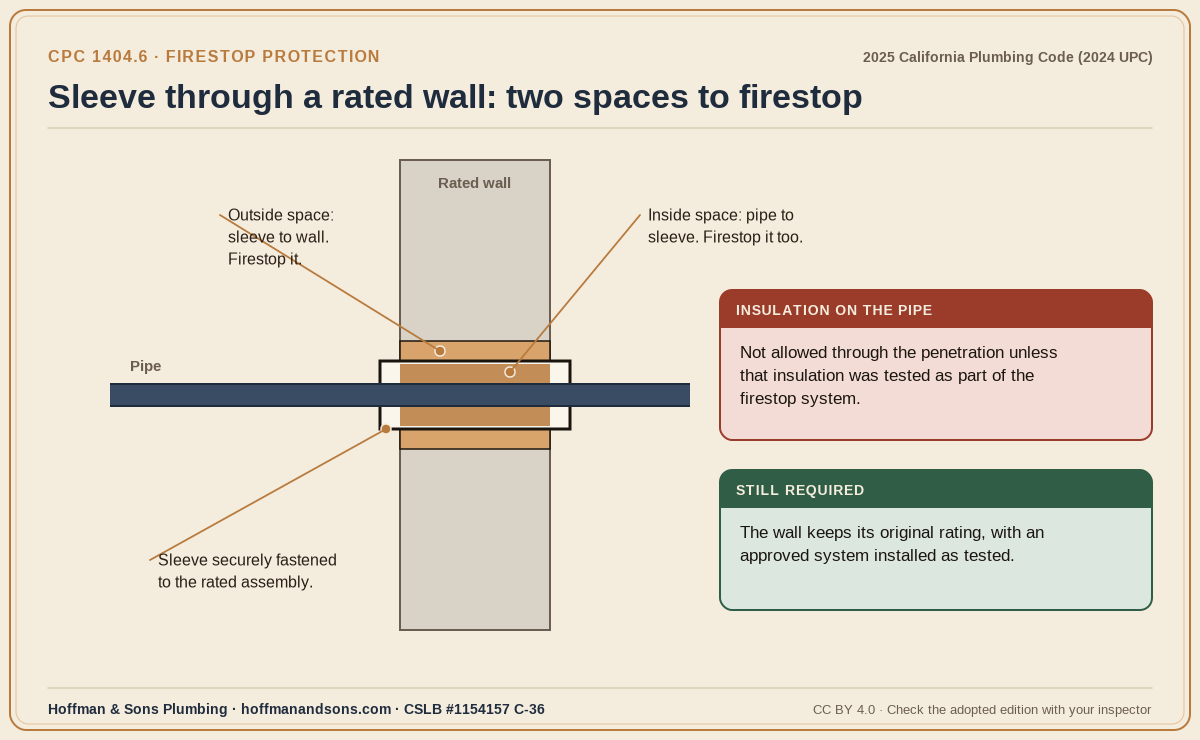
Sleeves are common where a pipe has to move or be replaced later. The code lets you use them in a rated assembly, but a sleeve adds two gaps. The inside gap is between the pipe and the sleeve. The outside gap is between the sleeve and the wall or floor.
Both gaps have to be firestopped under this chapter, and the sleeve itself has to be securely fastened to the rated assembly so it can't shift or pull out in a fire.
Insulation or coverings on the pipe are a separate trap. You can't leave pipe insulation or a wrap through the penetration unless that specific insulating or covering material was tested as part of the firestop system you're using.
The rating still has to be restored to its original value, and the system has to be an approved, tested one installed the way it was tested.
On the job
- Check the firestop listing for the sleeve material. Some listings allow a steel or PVC sleeve and some don't, and they limit the gap size.
- Treat it as two jobs, not one. Put both spaces on your punch list so the inner gap doesn't get skipped once the outer one is done.
- Insulated hot water lines through a rated wall are where this gets caught. If your firestop listing doesn't cover the insulation, strip it back or pick a system that includes it.
The inspector and your city's adopted edition have the final word.