The rule
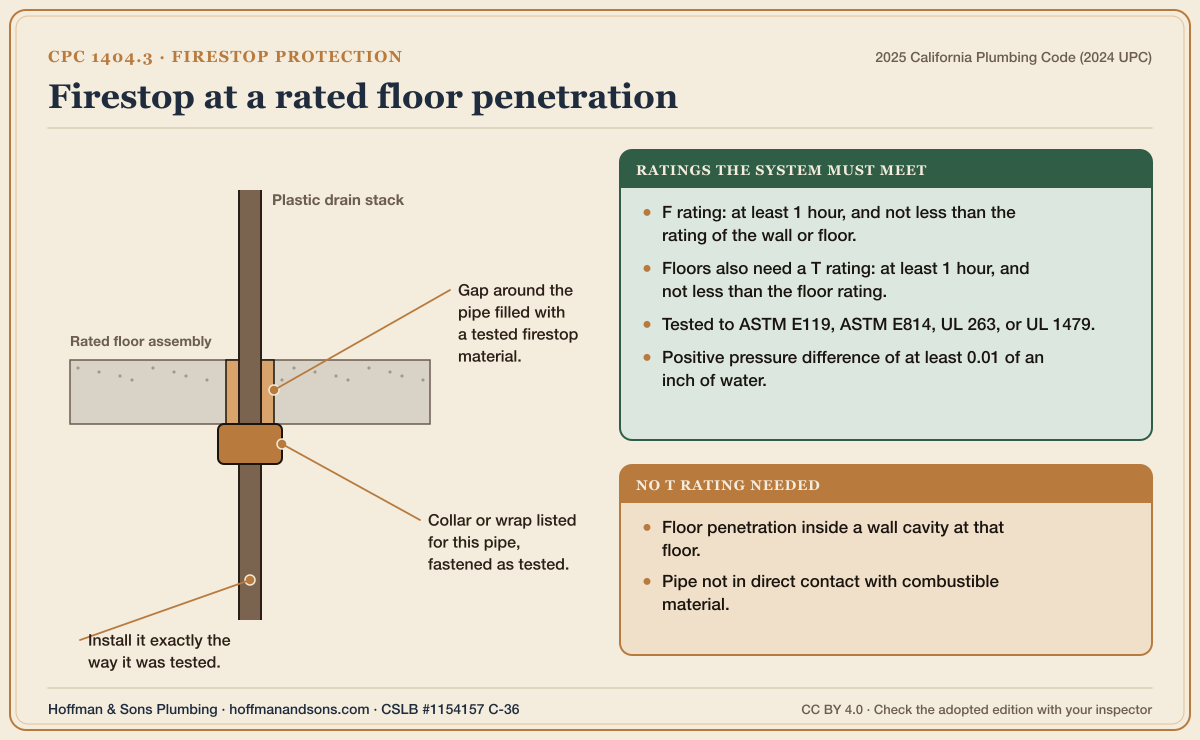
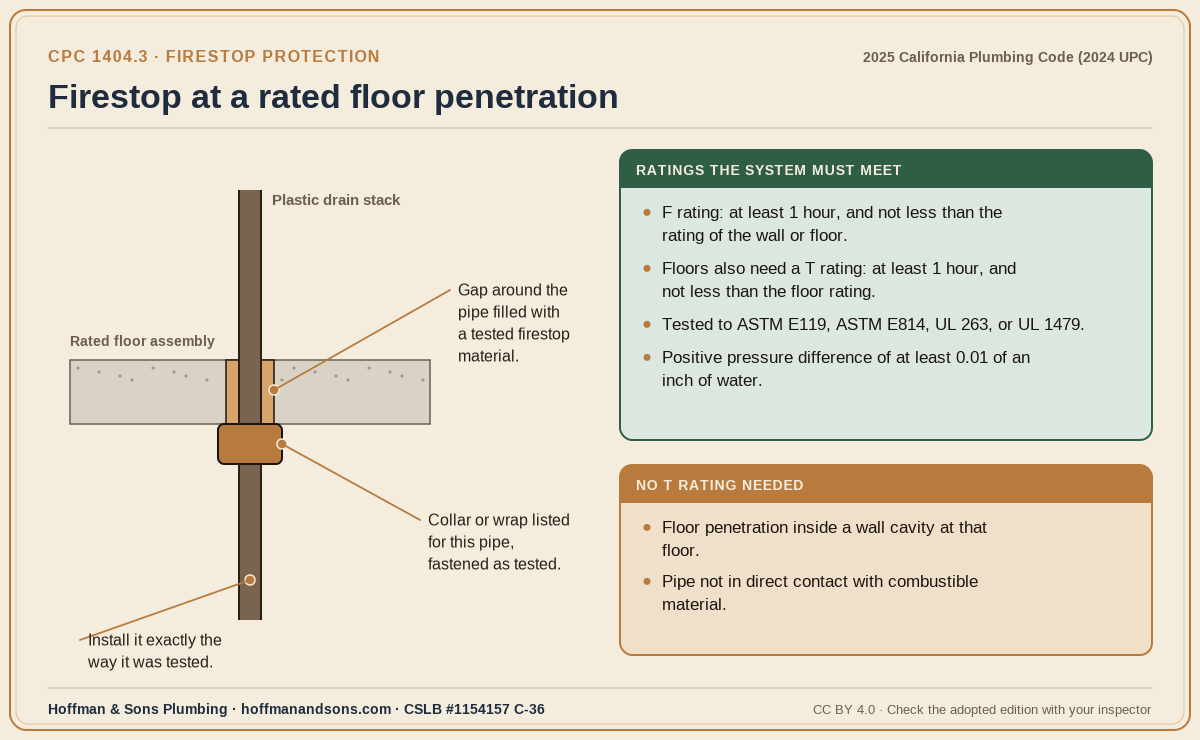
Any time pipe goes through a fire-resistance-rated wall, partition, floor, floor-ceiling assembly, roof-ceiling assembly, or shaft, the hole can't weaken the assembly. The code says the original rating has to be restored. The way you do that with plastic pipe is an approved penetration firestop system, installed exactly the way it was tested.
The system has to be tested to ASTM E119, ASTM E814, UL 263, or UL 1479, with a positive pressure difference of at least 0.01 of an inch of water. Its F rating (how long it holds back flame and hot gases) has to be at least 1 hour and not less than the rating of the wall or floor it goes through.
Floor penetrations also need a T rating (how long the far side stays cool), again at least 1 hour and not less than the floor's rating. Two cases don't need a T rating: a floor penetration that sits inside a wall cavity at that floor, and pipe that isn't in direct contact with combustible material.
Plastic pipe can't tie into noncombustible pipe at the penetration unless the transition can be shown to meet the same system requirements. Insulation or coverings on the pipe aren't allowed unless that exact material was part of the tested system.
On the job
- Get the rating of every wall and floor you cross from the plans before you rough in. A 1-hour wall and a floor with a higher rating can need different listed systems.
- Use the manufacturer's listed system for your pipe type and size, and keep the listing sheet on site. Inspectors compare what's installed against the tested assembly, and they can ask to see it before the penetration is closed up.
- Don't swap in a different sealant, collar, or wrap because it's what's on the truck. A product that isn't in the tested system you're using isn't the firestop system.
The inspector and your city's adopted edition have the final word.