The rule
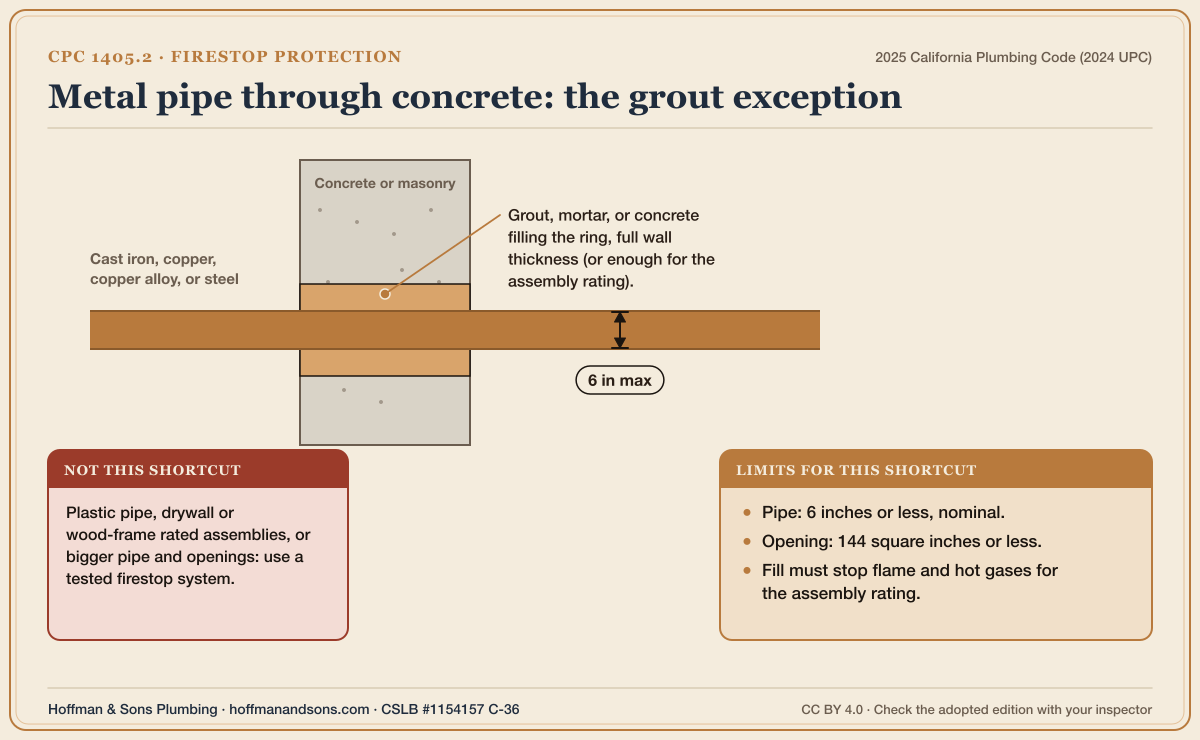
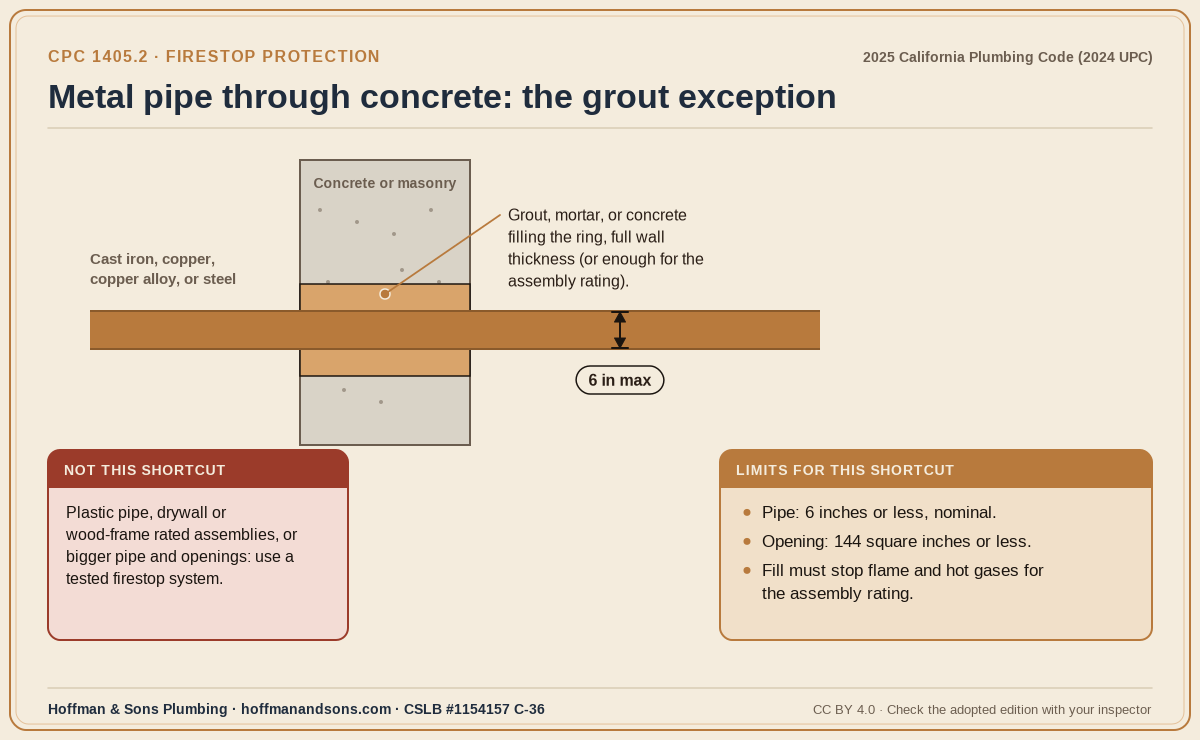
Noncombustible pipe still has to restore the rating of a wall or floor it goes through. The general rule is the same as for plastic: an approved firestop system. But there's a shortcut for metal pipe through concrete or masonry.
Concrete, mortar, or grout can fill the ring around cast-iron, copper, copper-alloy, or steel pipe, as long as the pipe's nominal diameter is no more than 6 inches and the opening isn't bigger than 144 square inches.
The fill has to go the full thickness of the assembly, or be thick enough to give a rating at least equal to the assembly's. It also has to stop flame and hot gases that could ignite cotton waste for the time of the assembly's rating, when tested to the standards in the firestop section.
Outside that exception, noncombustible pipe goes back to the regular firestop system rules. Unshielded couplings can't connect noncombustible piping at the penetration unless the fire-resistive integrity can be shown.
On the job
- Work out the opening size, not only the pipe size. A 6 inch pipe in a 14 by 14 inch hole is 196 square inches, so the grout shortcut doesn't apply.
- Don't use the shortcut in drywall or wood-frame rated assemblies. It's written for concrete and masonry.
- Ask the inspector what documentation they want for the fill material before you pour. It has to be a material that passes the flame and hot-gas test, not just any mortar.
The inspector and your city's adopted edition have the final word.