The rule
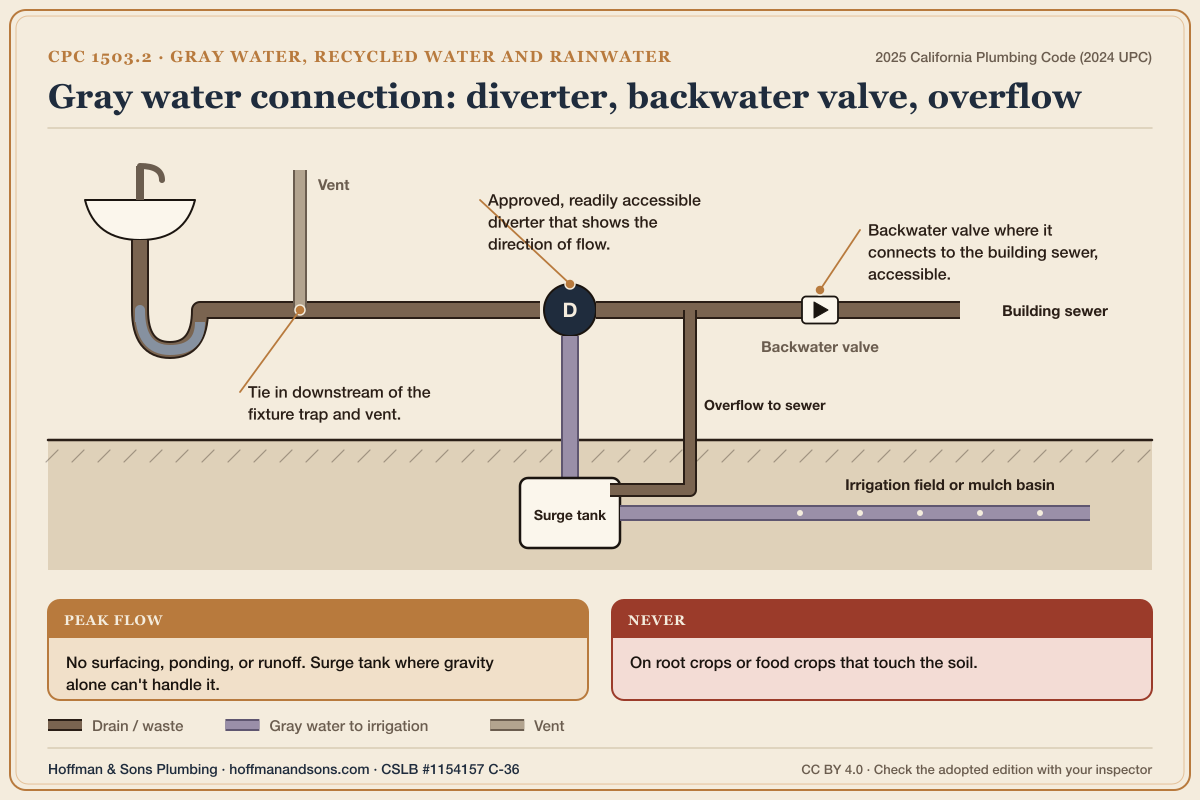
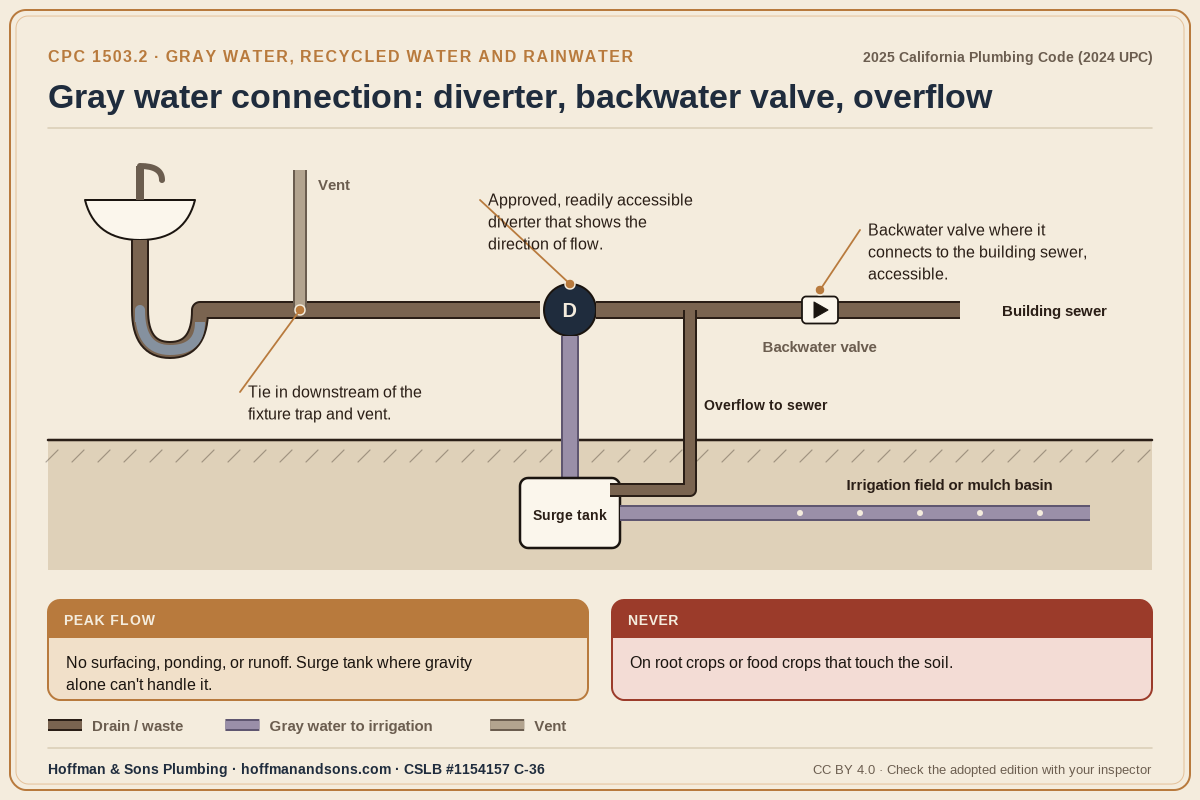
Gray water can be diverted away from the sewer or private sewage disposal system to subsurface or subsoil irrigation, a disposal field, or a mulch basin in residential occupancies. It can't be used on root crops or food crops that come in contact with soil.
The connection comes off the sanitary drainage system downstream of the fixture traps and vent connections, so the traps and vents still do their job. It goes through an approved diverter valve in a readily accessible place that clearly shows the direction of flow. Clothes washer systems that meet 1503.1.1 are excepted from this connection rule.
The system has to handle peak flow rates and spread the estimated daily gray water to the field or basin without surfacing, ponding, or runoff. If it can't do that by gravity, you need a surge tank. Not all gray water has to go to the landscape, though. Extra can go to the building sewer through the diverter valve or an overflow drain.
A gray water drain that could back up gets a backwater valve at the point where it connects to the building sewer, located so it can be inspected and maintained.
On the job
- Tie in after the trap and its vent, not before. A connection upstream of the trap is a quick correction notice.
- Plan the access to the diverter and the backwater valve at rough-in. A valve buried in a wall with no door isn't readily accessible.
- Size the system from the daily flow calculation in 1503.8, not from the number of fixtures alone, and plan the overflow to the sewer for days the field can't take it.
The inspector and your city's adopted edition have the final word.