The rule
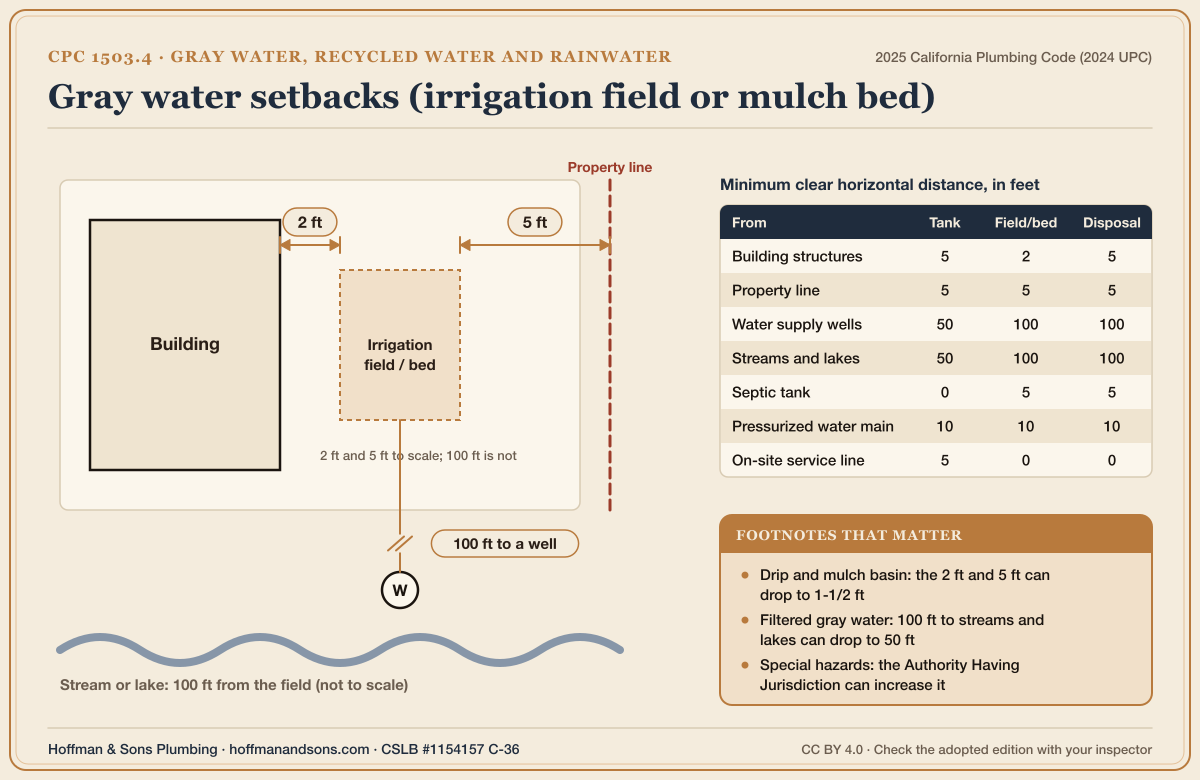
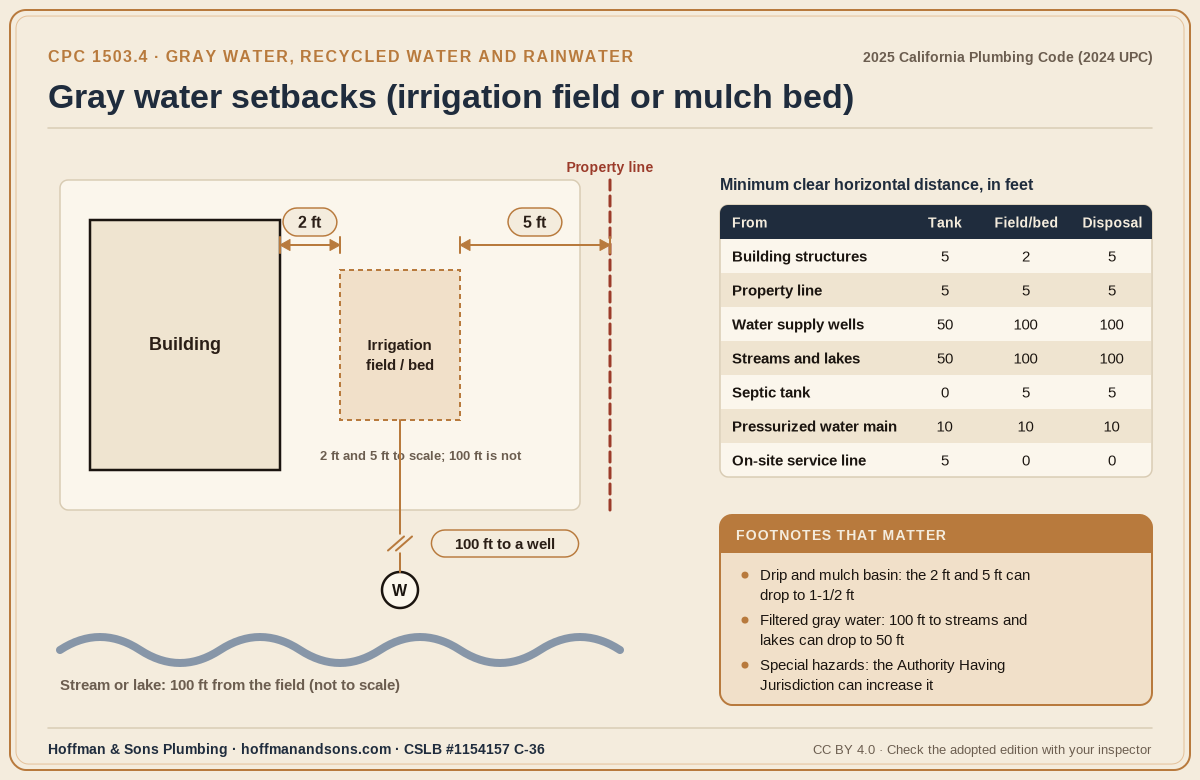
The table lists three columns: surge tank, subsurface and subsoil irrigation field or mulch bed, and disposal field. For an irrigation field or mulch bed, the rows you'll hit most often are 2 feet from building structures, 5 feet from an adjoining property line, 0 feet from the on-site domestic water service line, 5 feet from a septic tank, and 100 feet from a water supply well or from a stream or lake.
For a surge tank, it's 5 feet from building structures, 5 feet from the property line, 50 feet from wells, streams and lakes, 0 feet from a septic tank, 5 feet from the on-site water service line, and 10 feet from a pressurized public water main. Irrigation fields and disposal fields are both 10 feet from a pressurized public water main.
Footnotes matter. Building structures don't include porches, steps, breezeways, roofed carports and patios, and similar appurtenances. The 2 foot and 5 foot distances for an irrigation field can drop to 1-1/2 feet for drip and mulch basin systems, and above-ground tanks can be reduced if the Authority Having Jurisdiction approves it first. Where special hazards exist, the distance can be increased. The 100 foot distance to streams and lakes can drop to 50 feet where the gray water is filtered before the distribution piping.
On the job
- Get a site plan with the property lines, well locations, and septic tank on it before you design the field. The setbacks are measured in clear horizontal distance.
- Pressurized water main crossings and parallel runs need the Authority Having Jurisdiction's approval, so flag them early.
- Coastal lots have an extra rule: the distance to streams and lakes also applies between the field and the ocean mean higher high tide line.
The inspector and your city's adopted edition have the final word.