The rule
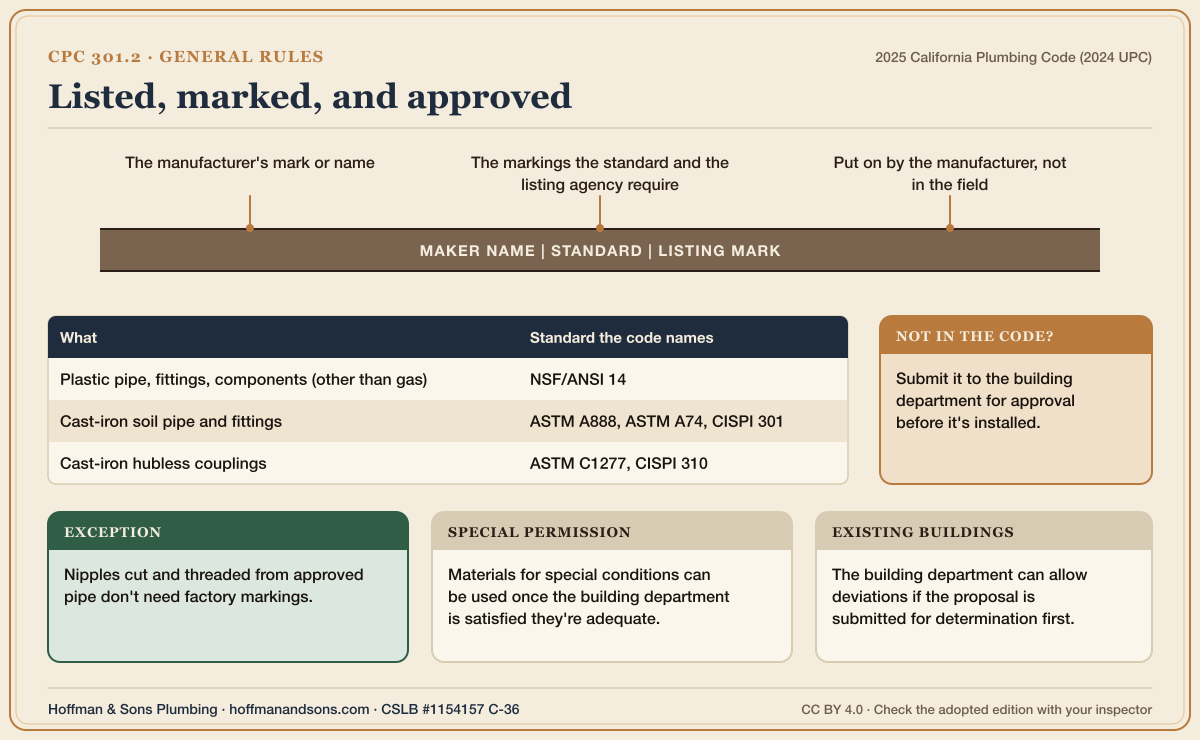
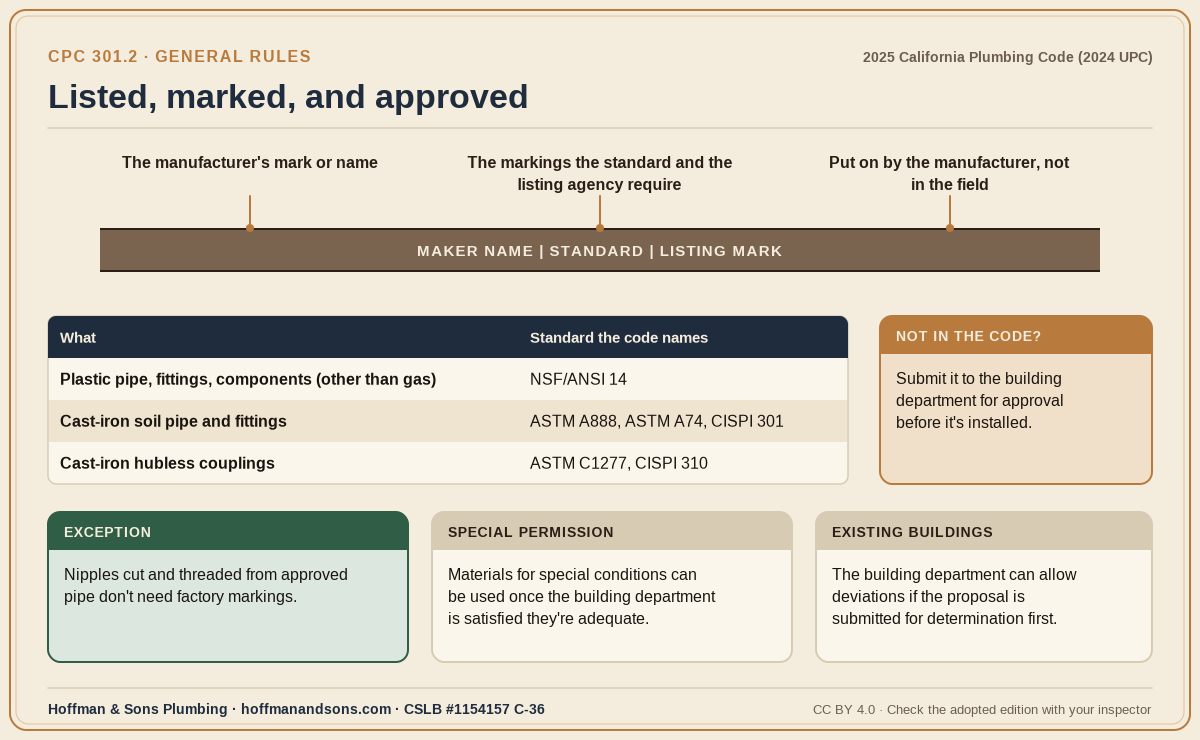
Everything that goes into a plumbing system has to be listed by an accredited third-party certifier as meeting the approved standards the code references, and it has to be free from defects. If the code doesn't specifically provide for a material, fixture, or device, it has to be submitted to the building department for approval before installation.
Marking is part of the rule. Each length of pipe, fitting, trap, fixture, material, and device carries the markings its standard and listing agency require, plus the manufacturer's mark or name, applied by the manufacturer. Field markings aren't acceptable. The one exception is a nipple you cut and thread from approved pipe.
A listed standard applies within the limits of the code and the listing. Design and materials for special conditions, or materials the code doesn't cover, can be used by special permission of the building department once it's satisfied they're adequate.
Some material families have their own line. Plastic pipe, fittings, and components (other than gas) have to comply with NSF/ANSI 14. Cast-iron soil pipe, fittings, and hubless couplings have to be third-party certified to the ASTM and CISPI standards the code names. In existing buildings, the building department has discretion to allow deviations, but the proposal has to be submitted for determination first.
On the job
- Read the pipe before you cut it. No manufacturer name, no listing mark, or no standard marking is a reason for an inspector to reject it, and a marker or a paint pen doesn't count as a marking.
- Keep cut sheets on site for anything unusual, like an imported fitting or a new product. If the code doesn't clearly cover it, the approval has to come from the building department before it goes in the wall.
- Check hubless couplings and soil pipe at the supply house, not at rough-in. Fittings that aren't third-party certified to the standards the code names can't be used.
The inspector and your city's adopted edition have the final word.