The rule
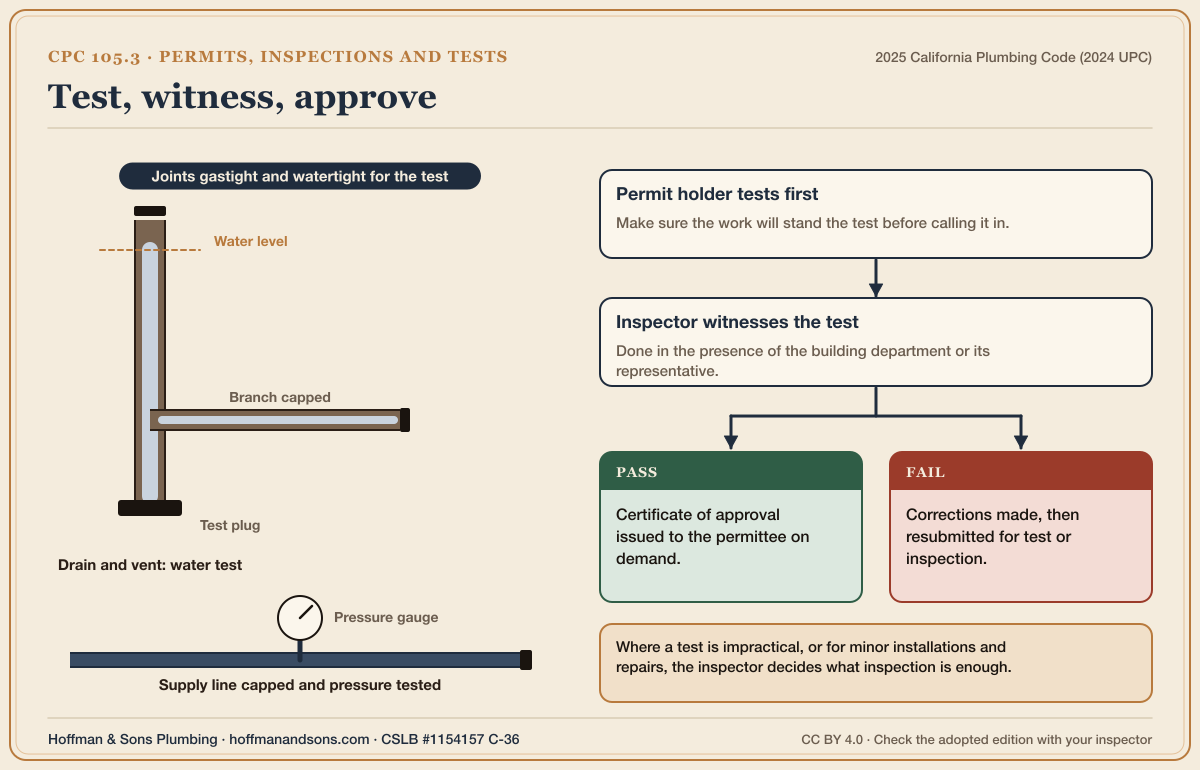
Testing is part of approval. A plumbing system is tested as the code prescribes, or as the building department directs, and the tests are done with the building department's inspector or an appointed representative present.
There are two practical carve-outs. A system set up for exhibition with no connection to a water or drainage system doesn't need a test or inspection. Where a water or air test would be impractical, or for minor installations and repairs, the building department can do whatever inspection it thinks is enough.
Joints and connections have to be gastight and watertight at the pressures the test calls for. If the work doesn't pass, corrections are made and it's resubmitted for test or inspection. An air test is the named method for checking the sanitary condition of a system that may have become defective. The test media and pressures are in Section 712.
When the tests and inspections show the work meets the code, the building department issues a certificate of approval to the permittee on demand. The city's adopted edition of the code and the inspector's call have the final word.
On the job
- Test it yourself first. The permit holder is responsible for making sure the work will stand the test before calling it in, and for furnishing the equipment, material, and labor.
- Leave the test up until the inspector has seen it. Pulling plugs or draining down early means starting over.
- Ask for the certificate of approval at the end and file it with the job. It's the proof the system passed.
The inspector and your city's adopted edition have the final word.