The rule
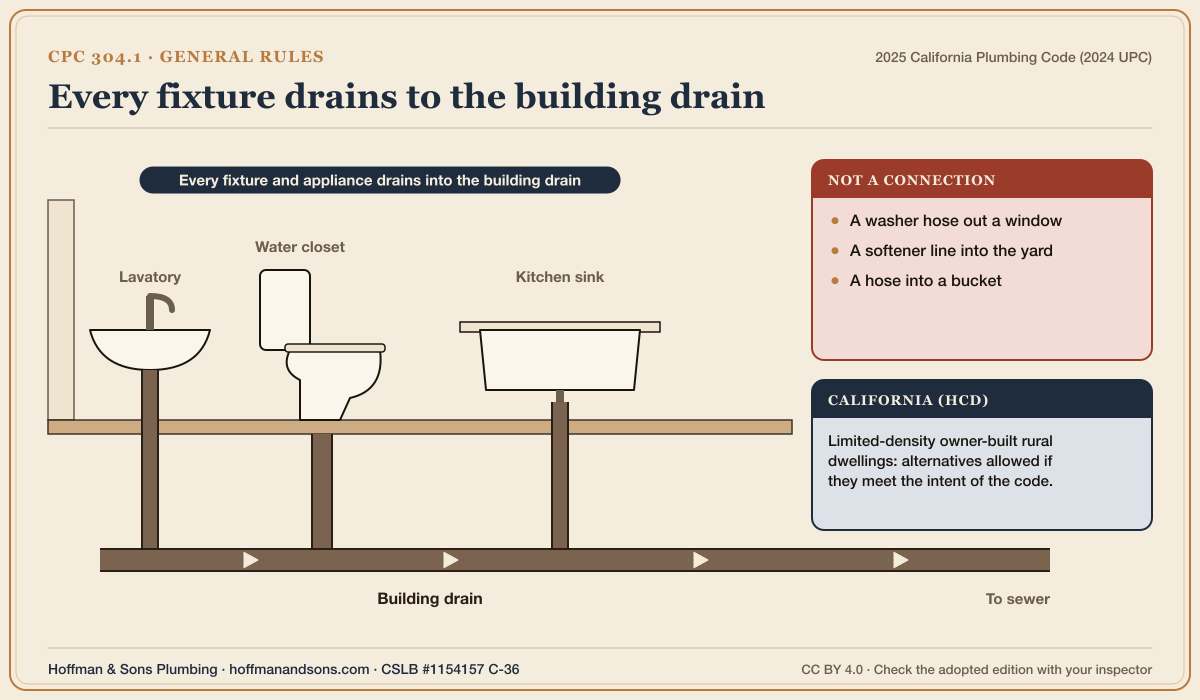
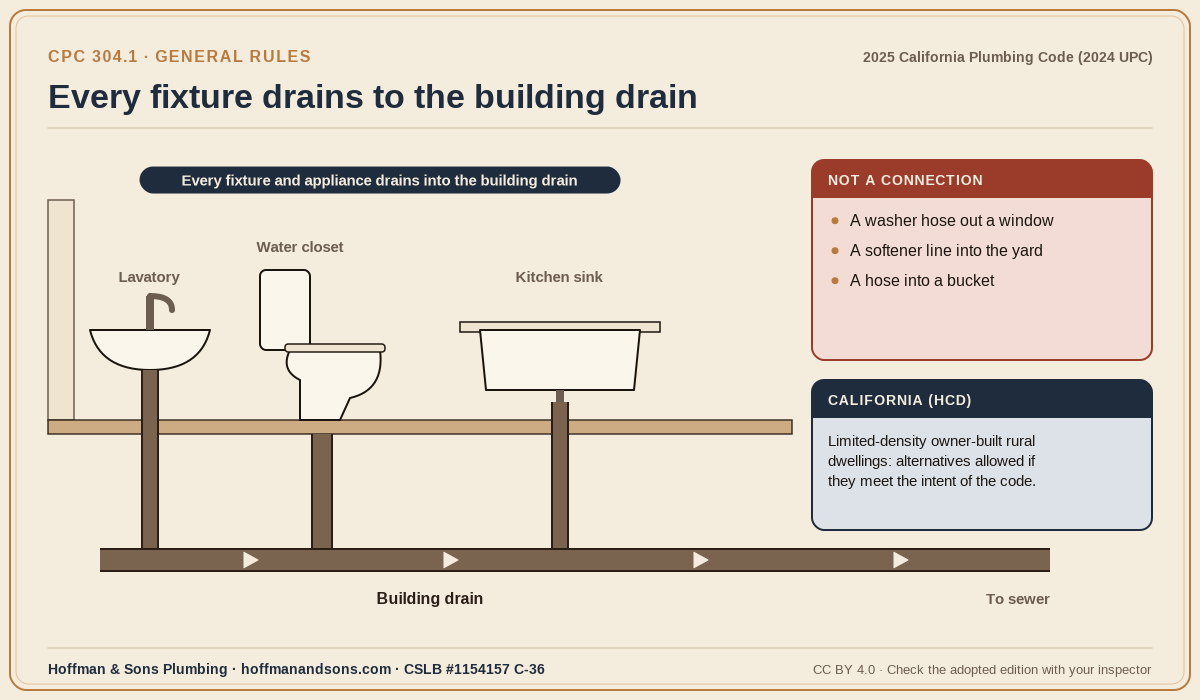
Anything that takes in or puts out liquid waste or sewage (fixtures, drains, appurtenances, and appliances) gets connected to the drainage system of the building or premises, and the connection has to be made the way the code says.
The word that does the work is 'properly.' A connection that skips the trap, the vent, the right material, or the right size isn't a proper connection, even if the water goes down. Those rules live in other sections.
Appliances count along with fixtures. Washing machines, dishwashers, water softeners, and other equipment that discharges liquid waste all need a code-compliant way into the drainage system, and many of them connect indirectly through an air gap or similar arrangement.
The inspector and the city's adopted edition of the code have the final word on whether a connection is proper.
On the job
- On a remodel, trace where every drain goes: the laundry, the garage floor drain, the water softener discharge. Anything routed some other way gets reconnected correctly.
- Look for old shortcuts like a washer hose out a window or a softener line running to the yard. Plan the proper connection into the job.
- When you add fixtures, check that the existing drainage system can carry them (see 102.4) and that each new fixture ties in with its own trap and vent.
The inspector and your city's adopted edition have the final word.