The rule
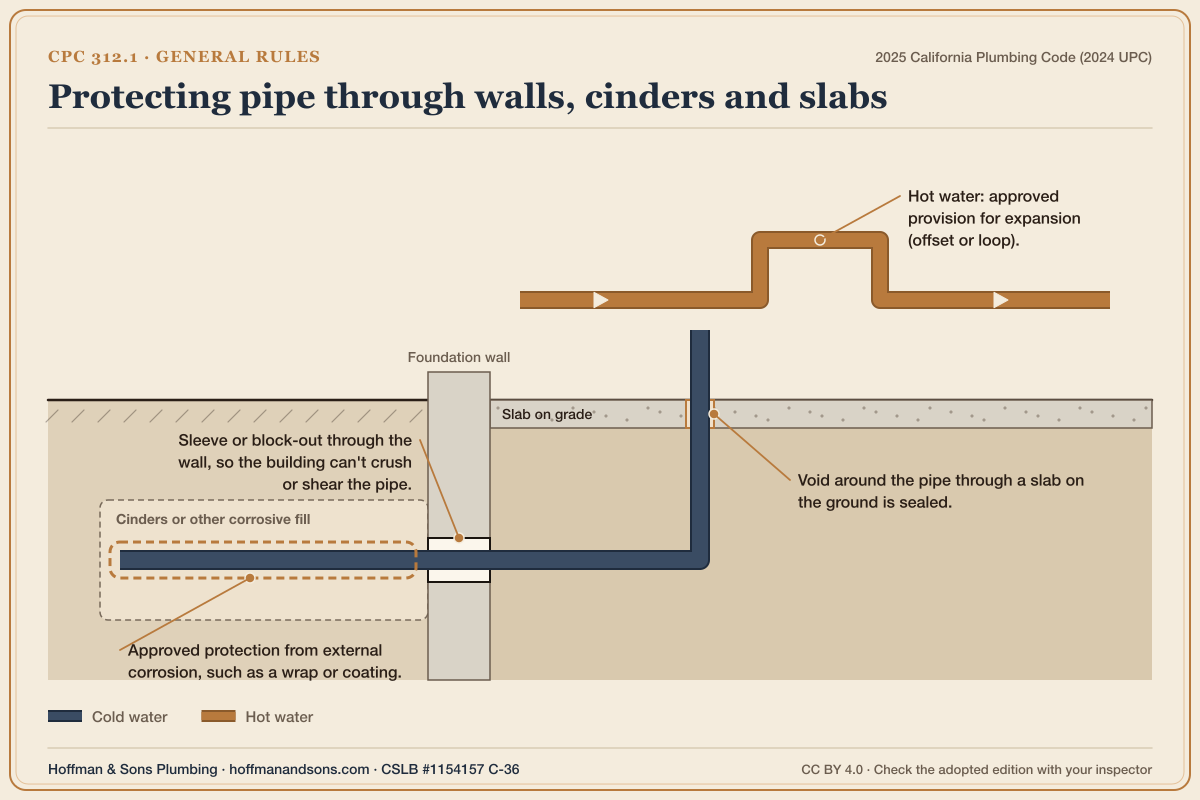
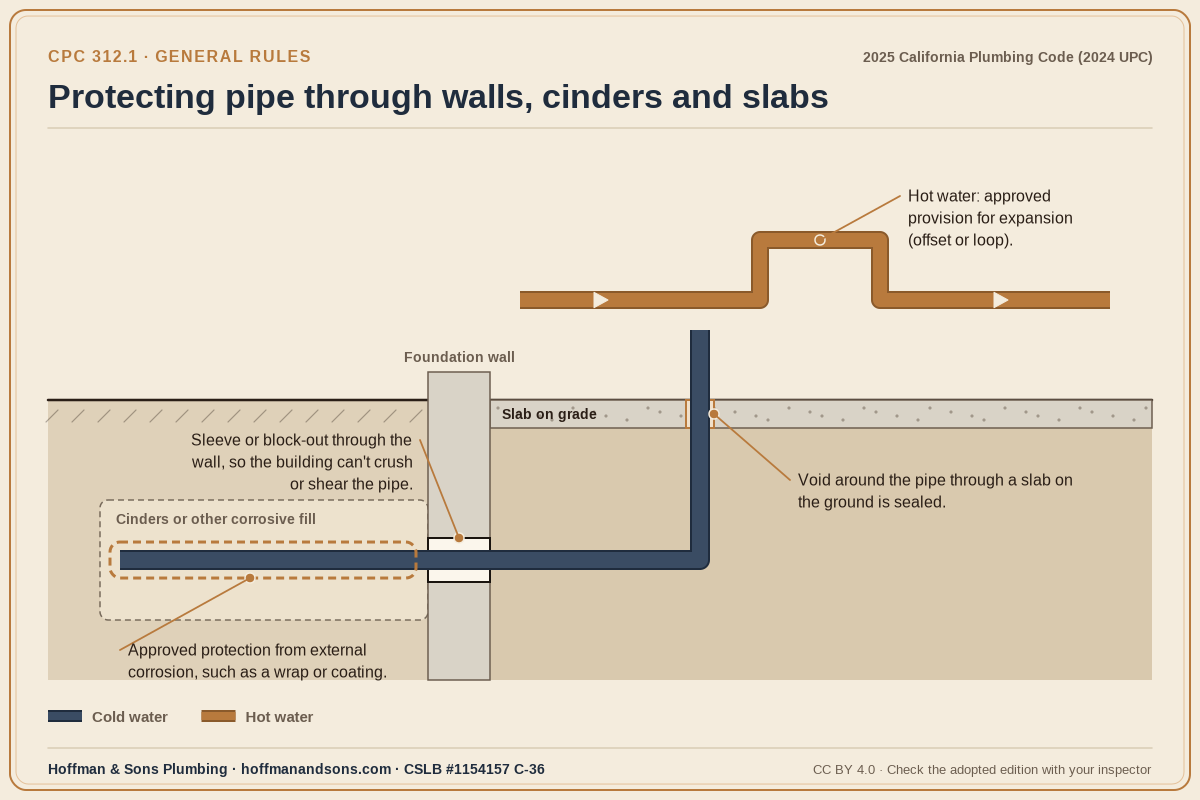
This is the general protection rule for pipe that runs through the structure. Where a pipe passes under or through a wall (a footing, a stem wall, a block wall), it has to be protected so the wall can't crush or shear it.
Pipe that runs through or under cinders or other corrosive material needs approved protection against corrosion from the outside. Section 312.4 says the same thing more broadly: any pipe subject to corrosion, erosion or mechanical damage gets approved protection. Coatings, wraps, sleeves or a better-suited material are the usual routes, and the inspector approves the method. If you use coated pipe, 312.5 says the coating gets checked and any visible damage is repaired.
Hot water piping needs approved provisions for expansion, since a long hot run grows as it heats. And where pipe passes through a concrete floor on the ground, the void around it has to be sealed.
On the job
- Under a footing or through a stem wall, set the pipe in a sleeve or block-out with room to move, so the building can settle without loading the pipe.
- Plan for hot water growth before the wall closes. Offsets, swing joints or sliding hangers are much easier to build into an open frame than to add later.
- Walk the slab before the pour for every penetration, and come back after to seal the void around each pipe.
The inspector and your city's adopted edition have the final word.