The rule
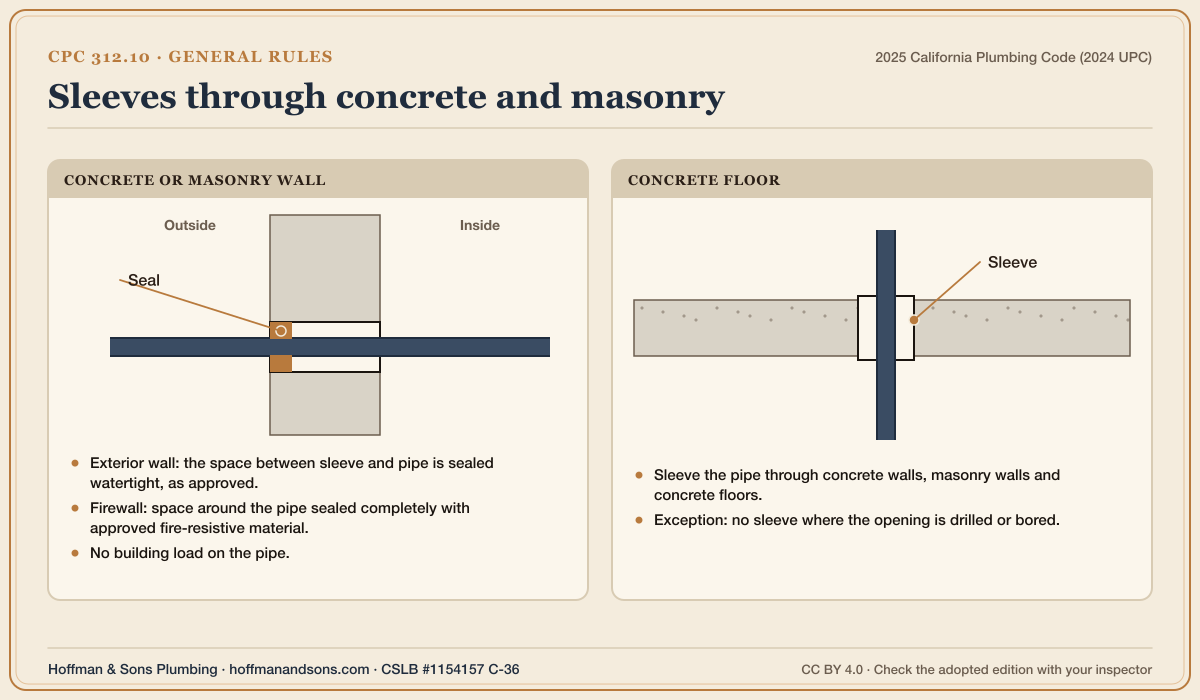
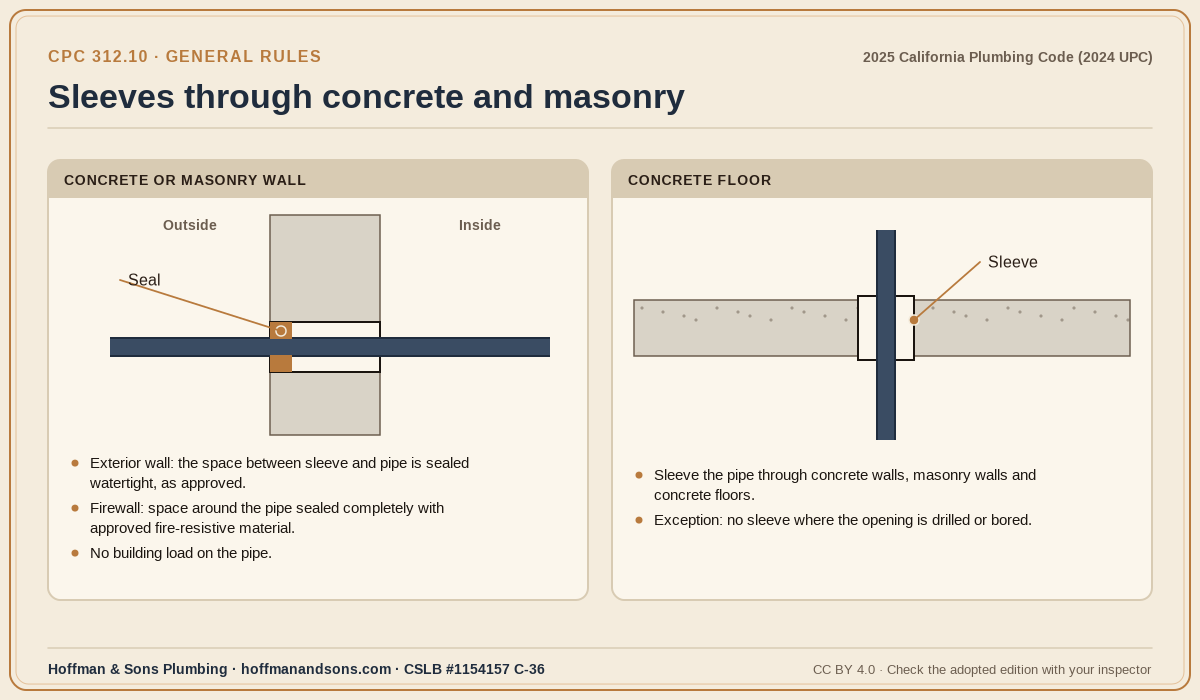
A sleeve is a larger pipe or form set in the concrete or masonry so the plumbing pipe passes through without touching it. That lets the pipe move and be replaced without breaking the wall or slab.
The exception is a drilled or bored opening, where no sleeve is required. The pipe also can't be carrying a load from the building construction as it passes through a concrete or masonry wall.
In an exterior wall, the space between the sleeve and the pipe has to be sealed and made watertight in a way the inspector approves. Through a rated assembly, the penetration also has to meet 312.7, and a sleeve through a firewall gets the space around the pipe sealed completely with approved fire-resistive material.
On the job
- Set sleeves or block-outs before the pour or the grout. Fixing it after is a core drill and a lot of dust.
- Size the sleeve so the pipe has real clearance for movement. A sleeve that's snug to the pipe isn't doing much.
- Seal the annular space on exterior walls once the pipe is in. A missed seal is a water-intrusion call later.
The inspector and your city's adopted edition have the final word.