The rule
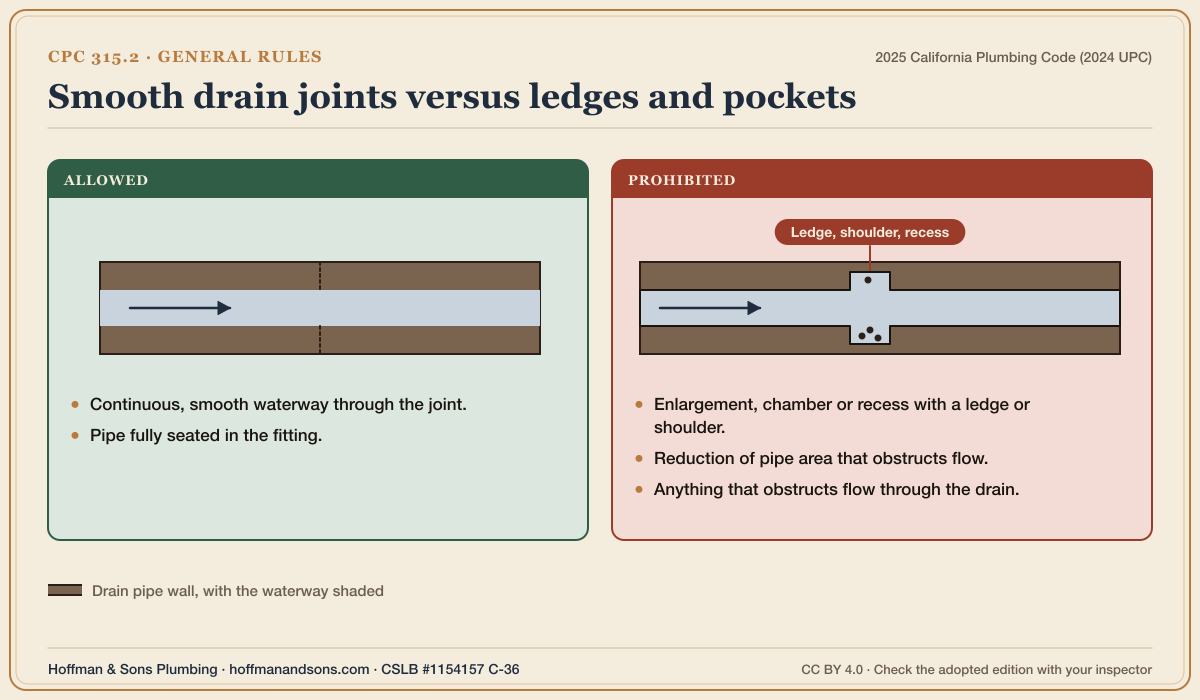
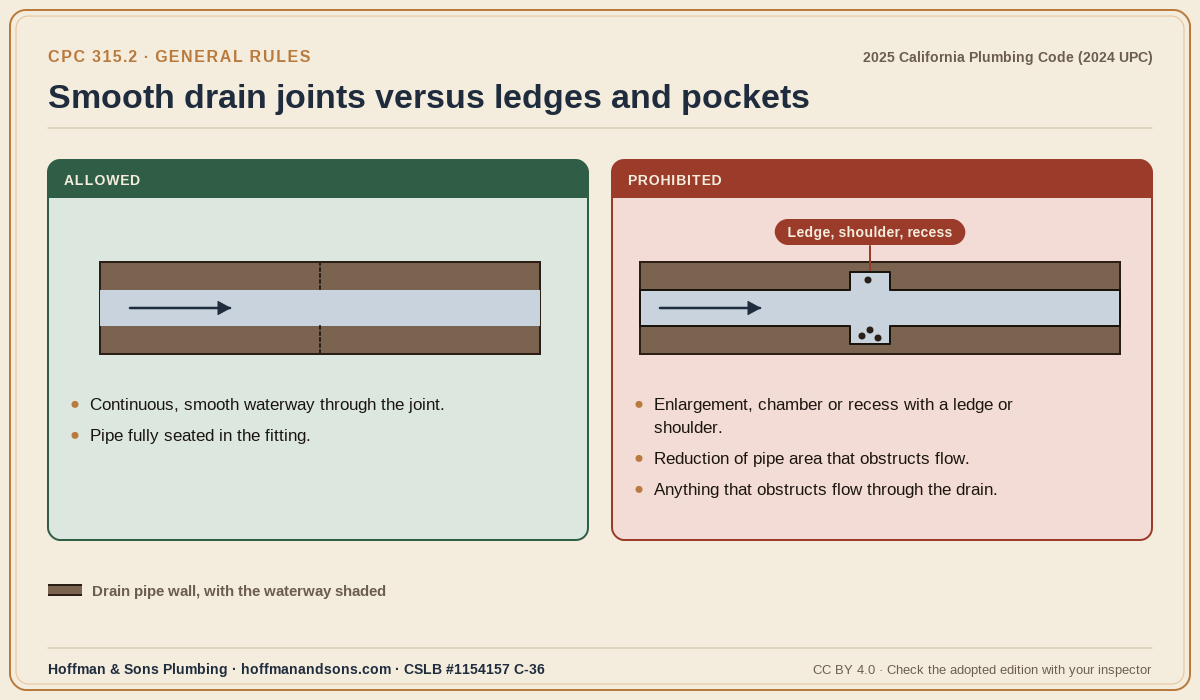
Drains carry solids, so the inside has to be smooth. A fitting or joint that creates a chamber, a recess, a ledge or a shoulder, or that narrows the pipe, catches paper and waste and eventually clogs. The code prohibits it.
It's about the waterway, not the brand or the material. Any drain fitting or connection that leaves a step or pocket in the flow path is out.
The usual way to meet it is to use fittings made for drainage, with a smooth bore and the pipe seated fully into the socket, and to avoid joints that leave the pipe end short of its stop.
On the job
- Use drainage-pattern fittings in drains. Pressure-pattern fittings can leave a ledge at the joint.
- Seat the pipe all the way into the socket and don't leave a gap. A short stab leaves a pocket.
- Where you reduce a drain, use a proper reducing fitting. Don't try to shrink pipe by stuffing a smaller pipe inside.
The inspector and your city's adopted edition have the final word.