The rule
Section 318.1 says dial gauges used in code tests are limited to certain increments. The rules are in the subsections that follow it, so read them together.
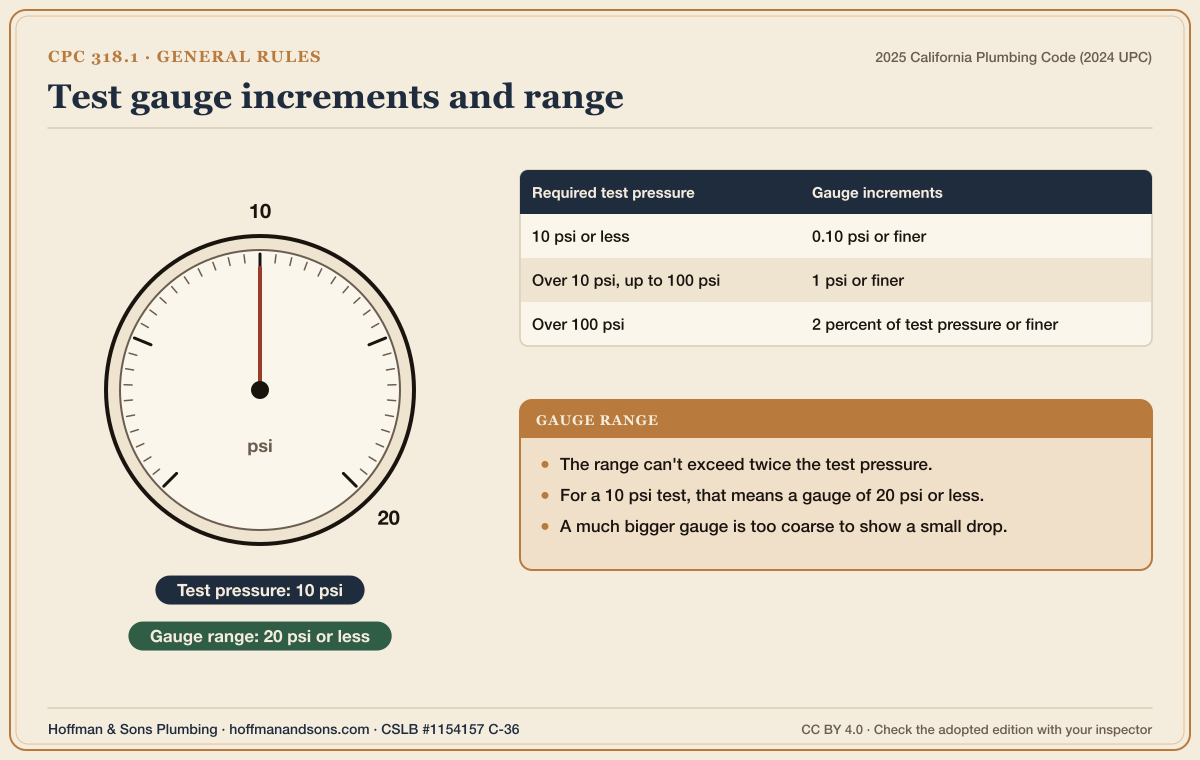
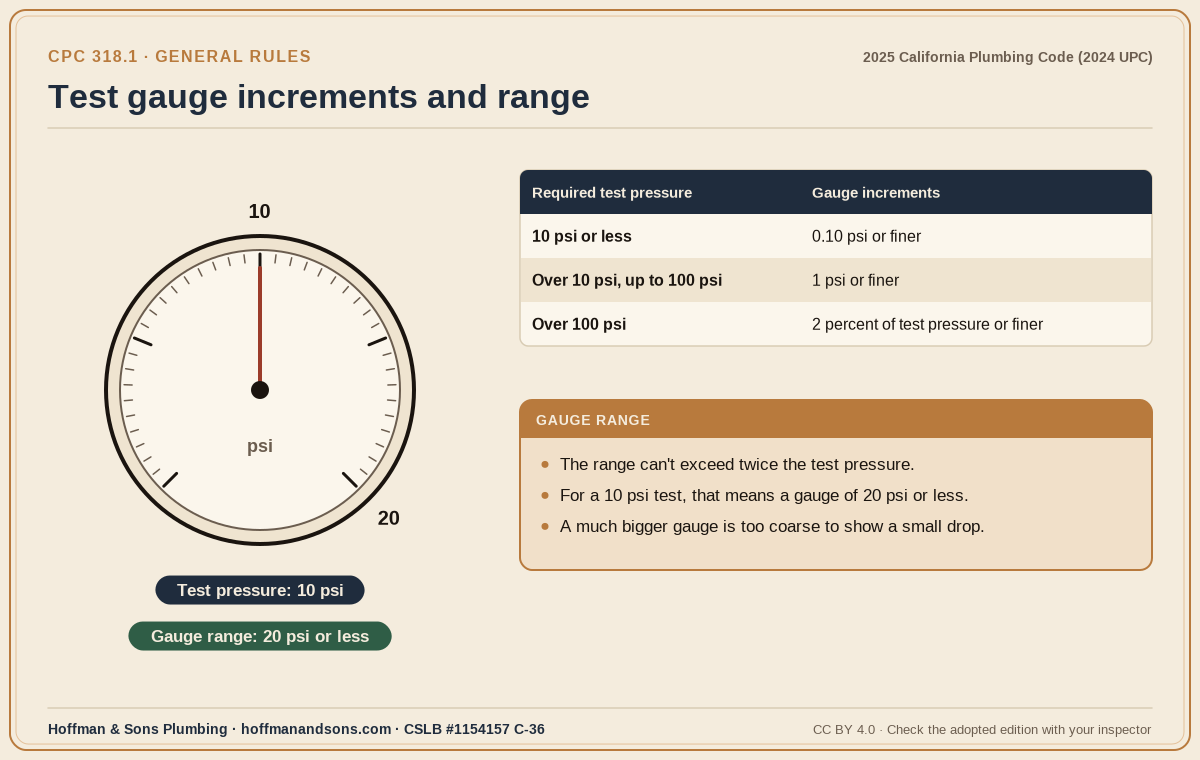
For a required test of 10 psi or less, the gauge has to have increments of 0.10 psi or finer. For tests over 10 psi up to and including 100 psi, increments of 1 psi or finer. Above 100 psi, the gauge is graduated for 2 percent or less of the required test pressure.
Range matters too. A test gauge can't have a range greater than twice the test pressure. A 100 psi gauge on a 10 psi test is out, because the needle barely moves and you can't read a small drop.
On the job
- Keep a low-range gauge for air tests. A gauge made for water pressure won't show a 0.10 psi drop on a low-pressure air test.
- Check that the gauge is in good shape and reads zero before you start. Inspectors will check the face.
- Match the gauge to the test. If you run a few different test pressures on the same job, carry more than one gauge.
The inspector and your city's adopted edition have the final word.