The rule
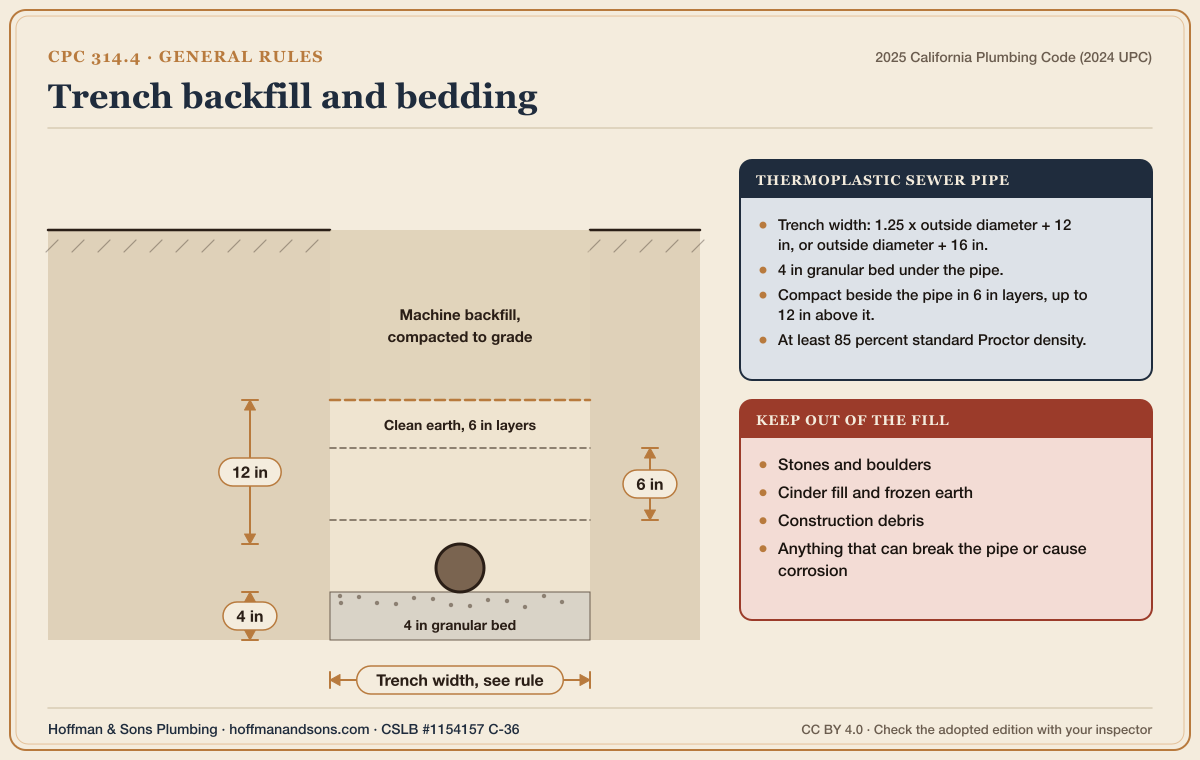
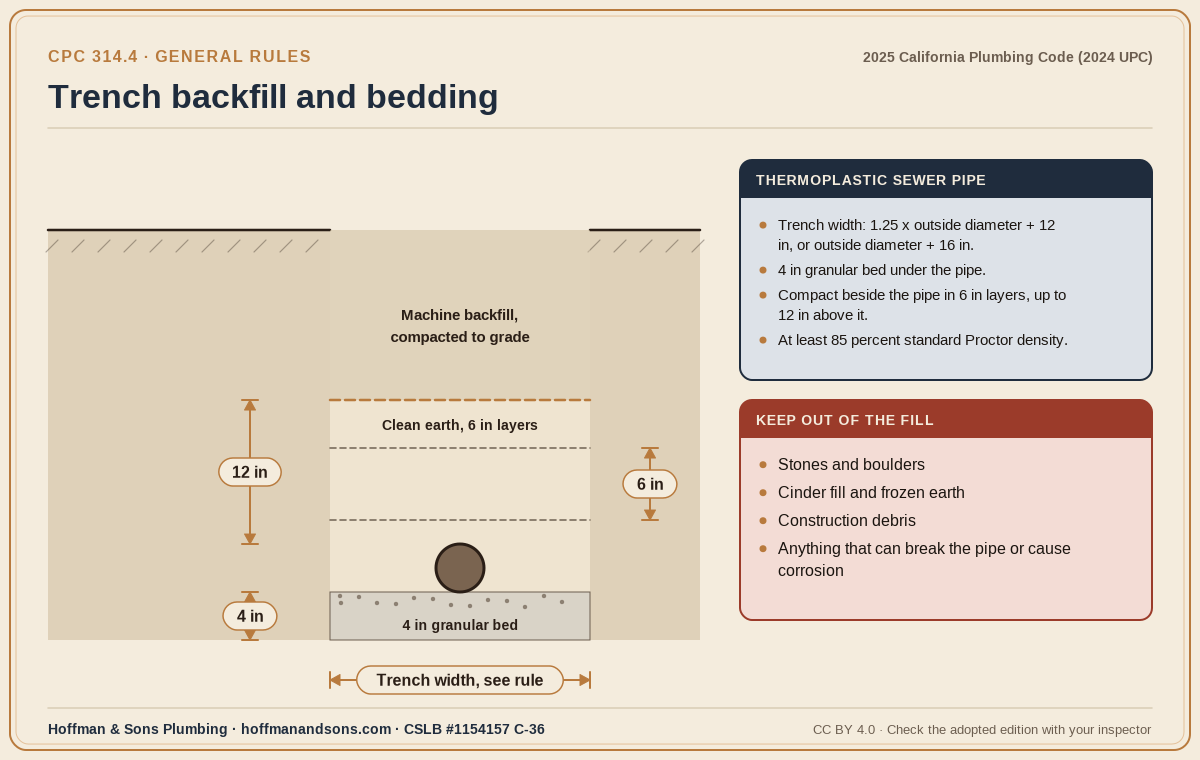
Backfill the trench as soon as practical after inspection. Place clean earth in thin layers up to 12 inches above the top of the pipe, compacting around it without damaging it. The earth can't contain stones, boulders, cinder fill, frozen earth, construction debris or anything else that could break the pipe or cause corrosion. After that 12 inches, machines can finish the backfill to grade, properly compacted.
For fill or made ground, take precautions so the pipe stays stable permanently.
Thermoplastic sewer and gravity pipe has its own rule in 314.4.1. The trench width is at least 1.25 times the pipe's outside diameter plus 12 inches, or the outside diameter plus 16 inches. The pipe sits in at least 4 inches of granular fill, and the backfill beside it is compacted in 6 inch layers up to at least 12 inches above the pipe, to at least 85 percent standard Proctor density.
The code gives two trench-width formulas, so ask the inspector which one they apply. The wider result is the safe call.
On the job
- Keep rock and chunks out of the first 12 inches over the pipe. Sift or import bedding if the native soil is rocky.
- Compaction by layers is what the inspector can see you doing. A pile of fill dumped in one lift doesn't meet the thin-layers rule.
- Call for inspection before you backfill. The code expects the trench to be inspected first, then backfilled promptly.
The inspector and your city's adopted edition have the final word.