The rule
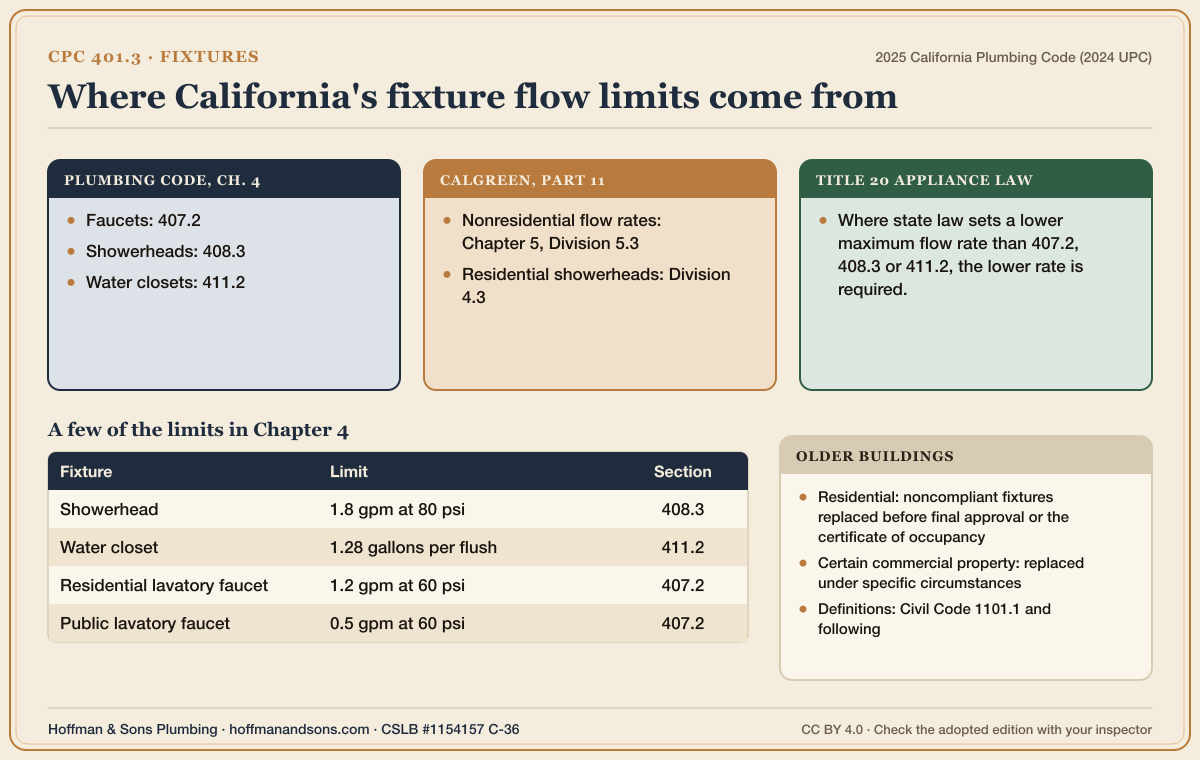
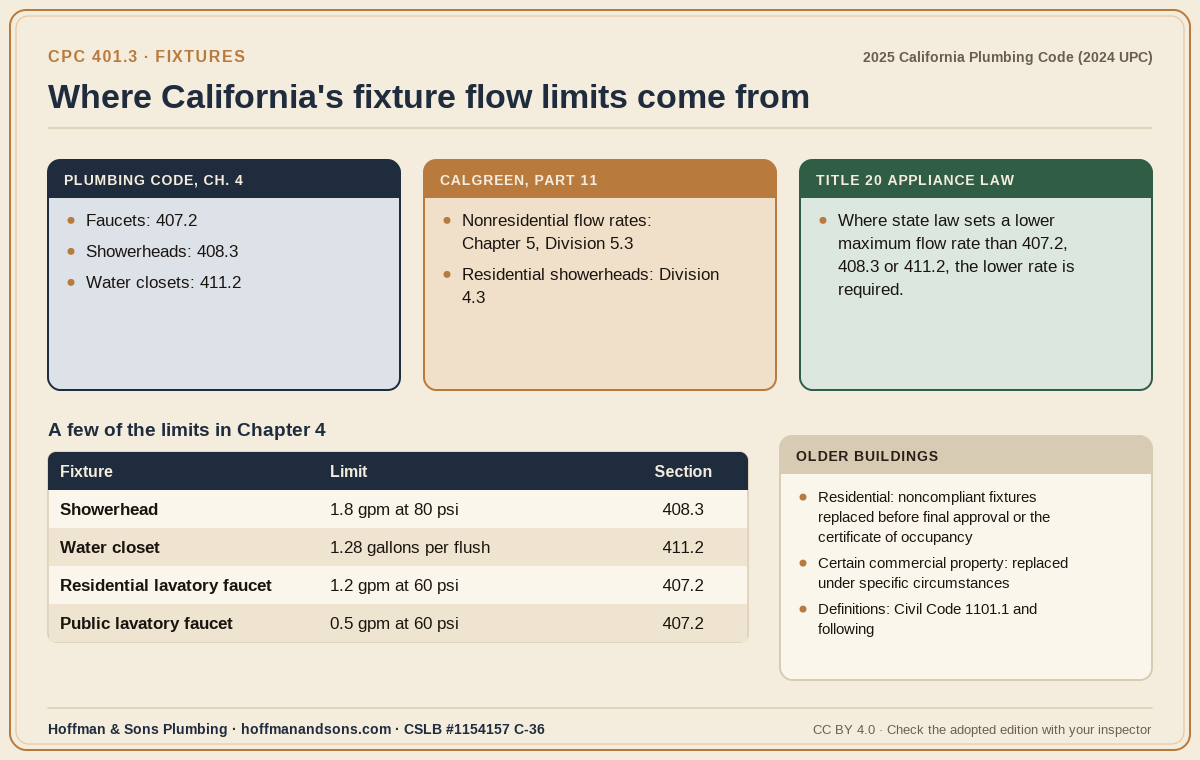
Think of 401.3 as a signpost. The actual flow limits for faucets, showerheads and toilets are in 407.2, 408.3 and 411.2. For mandatory nonresidential construction, the flow rates for specified fixtures are in Chapter 5, Division 5.3 of CALGreen, the California Green Building Standards Code.
Two notes deal with older buildings. On and after January 1, 2014, certain commercial real property has to have noncompliant plumbing fixtures replaced with water-conserving ones under specific circumstances. A separate residential paragraph says all noncompliant plumbing fixtures in residential real property have to be replaced, and that has to happen before the local building department issues a certificate of final completion, a certificate of occupancy or final permit approval. The definitions, the building types and the dates are in Civil Code Section 1101.1 and the sections after it.
The last note is a tie-breaker. Where California's appliance efficiency law (Title 20) sets a lower maximum flow rate than 407.2, 408.3 or 411.2 for a water-using appliance sold in the state, the lower flow rate is the one the code requires.
On the job
- On a permitted residential job, put the fixture swap on the schedule early. The code ties replacement to the certificate of final completion, the certificate of occupancy or final permit approval, so leaving it for last can hold up a final.
- Whether a particular fixture counts as noncompliant is a Civil Code question, not a plumbing code question. Read the definition in the Civil Code section the note cites, and ask the building department if it's unclear.
- Check the flow marking on the fixture or its box before you buy. The number that counts is the lower of the plumbing code limit and the state appliance limit.
The inspector and your city's adopted edition have the final word.