The rule
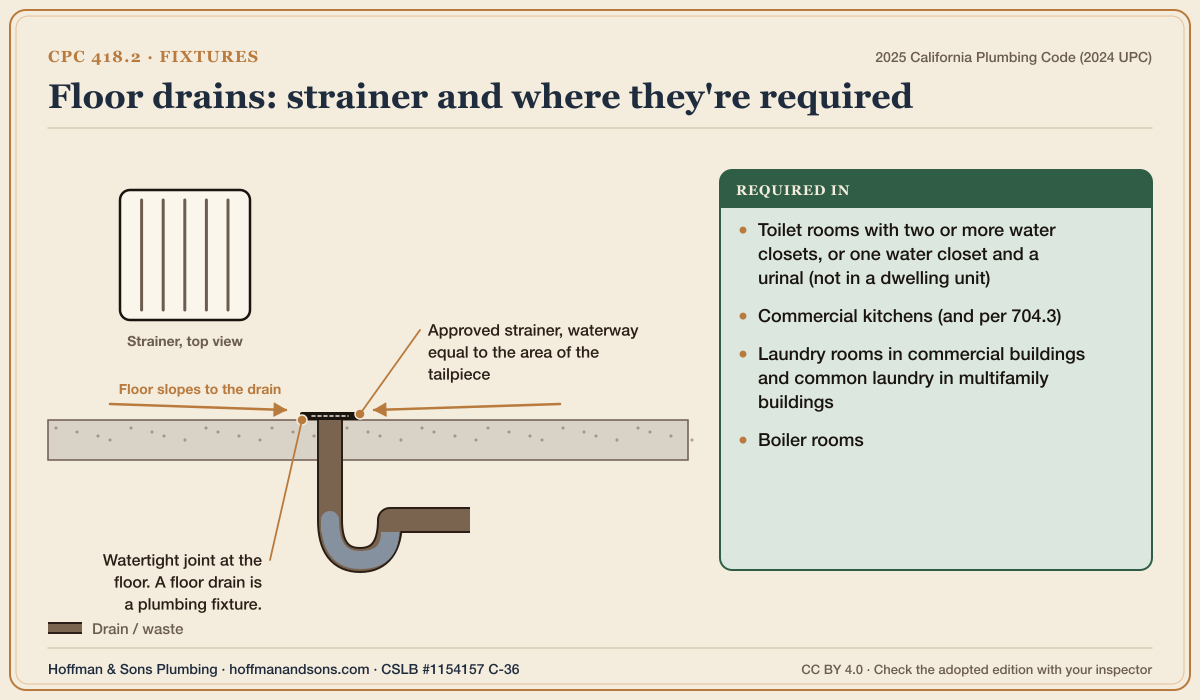
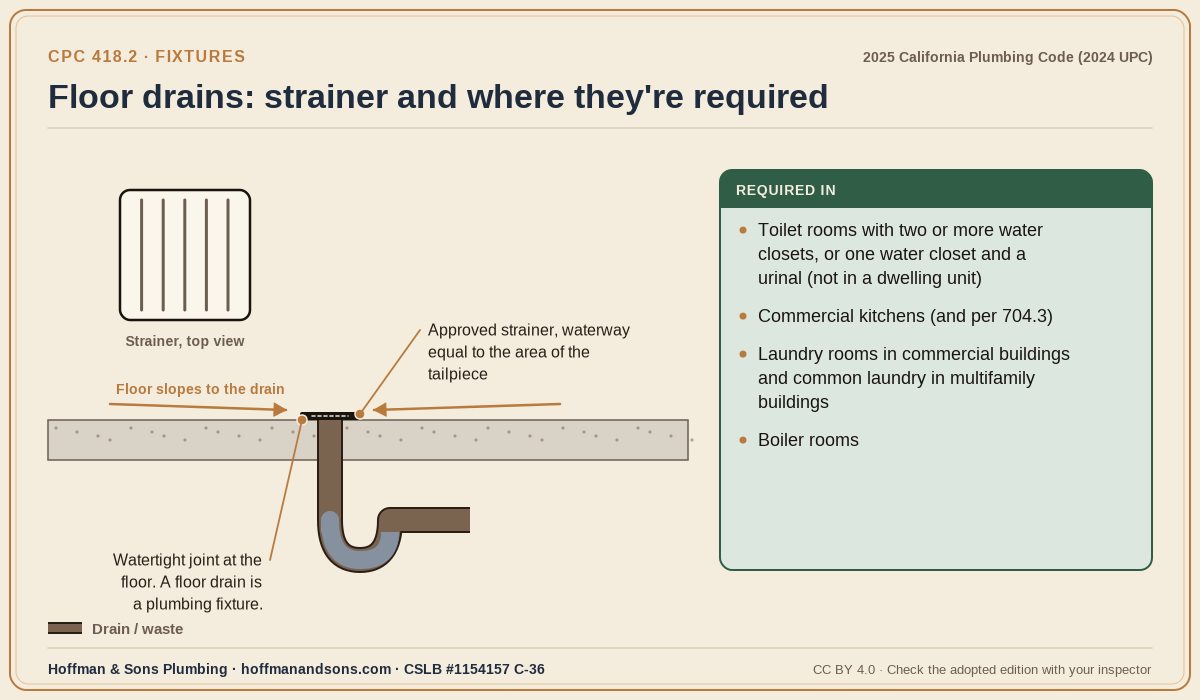
Floor drains comply with ASME A112.3.1, ASME A112.6.3 or CSA B79. Each is considered a plumbing fixture and needs an approved-type strainer with a waterway equivalent to the area of the tailpiece. The drain is of an approved type and makes a watertight joint at the floor.
Section 418.3 lists where one has to be installed: toilet rooms with two or more water closets, or a water closet and a urinal, except in a dwelling unit; commercial kitchens (and per Section 704.3); laundry rooms in commercial buildings and common laundry facilities in multifamily buildings; and boiler rooms.
Floors are sloped to floor drains.
On the job
- A floor drain that rarely sees water can dry out and let sewer gas in. Ask about trap seal protection for drains that won't be used often.
- Check the grate. A decorative cover that cuts down the opening below the tailpiece area isn't an approved strainer.
- Slope the floor to the drain during the concrete work. It's much harder to fix after the pour.
The inspector and your city's adopted edition have the final word.