The rule
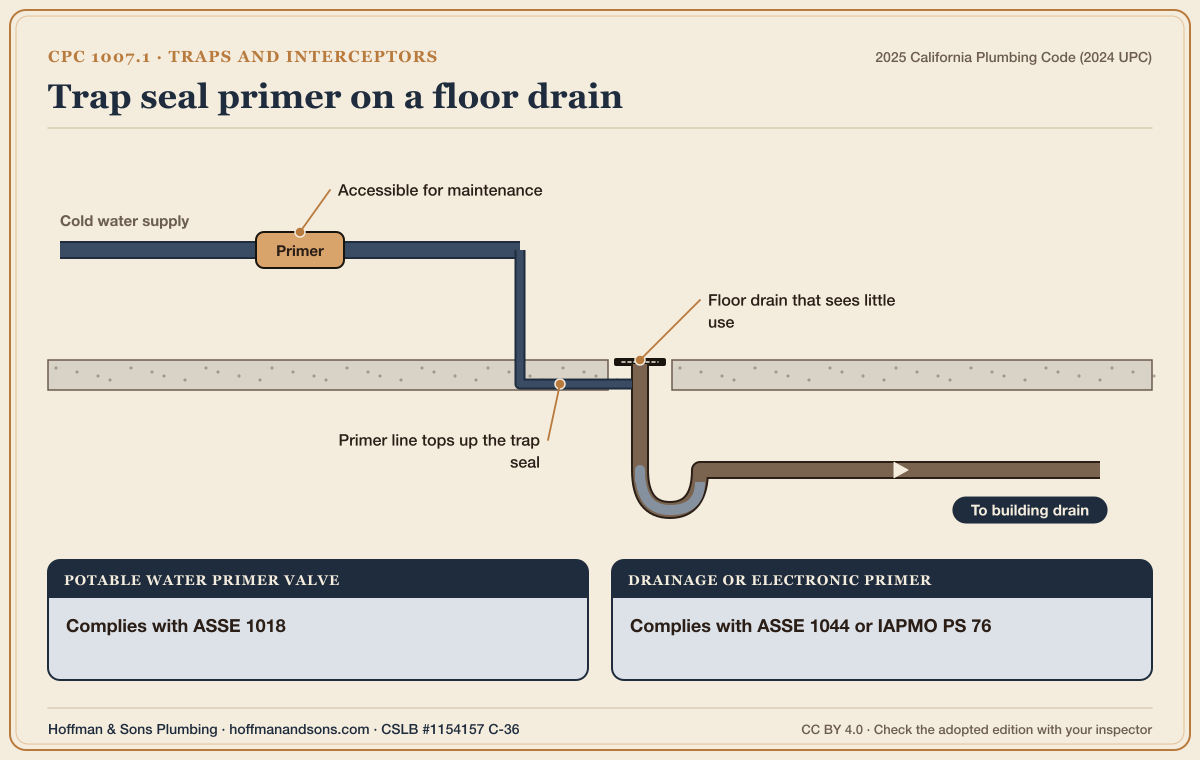
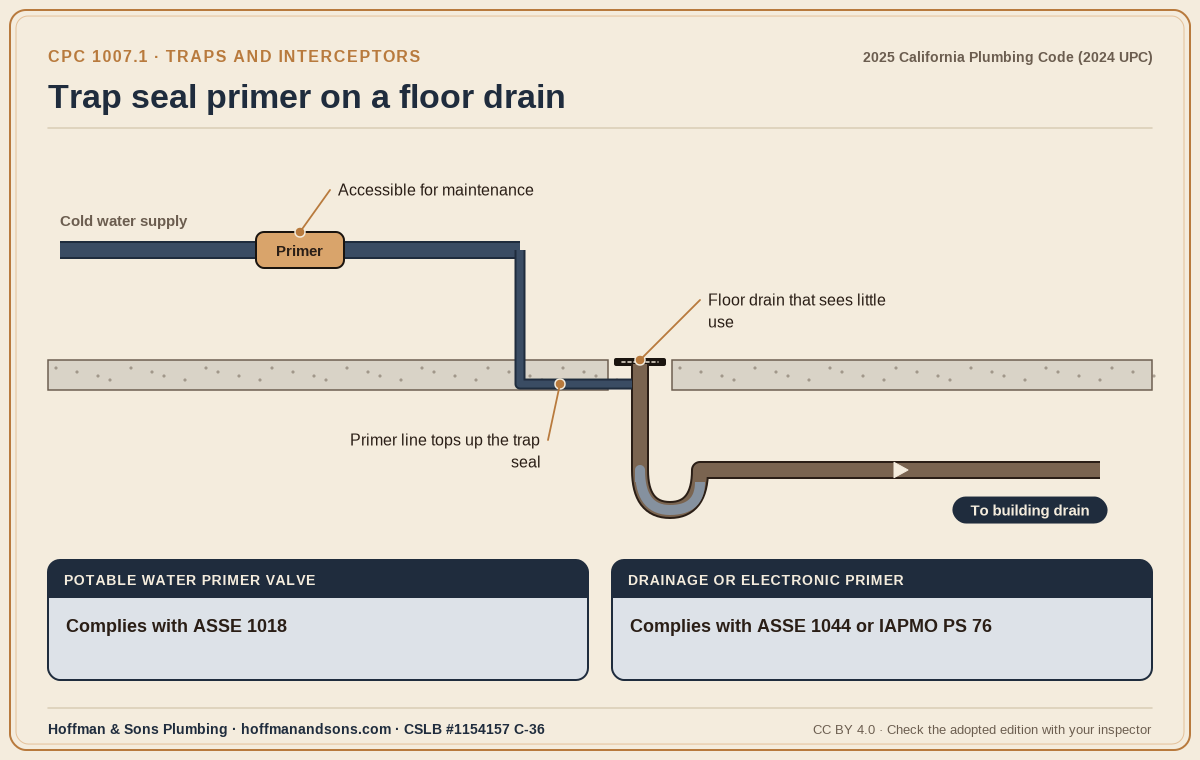
A trap that doesn't get used dries out, and a dry trap lets sewer gas into the building. For floor drains and similar traps that see little use, a trap seal primer puts a little water in the trap on a regular basis so the seal stays.
The primer has to be accessible, so it can be serviced later. The authority having jurisdiction can waive the primer where it's not deemed necessary for safety or sanitation.
Primer types are covered in Section 1007.2. A potable water supply primer valve complies with ASSE 1018. Drainage-type or electronic primer devices comply with ASSE 1044 or IAPMO PS 76.
On the job
- Mechanical rooms, garages, laundry rooms, and restroom floor drains in commercial buildings are the usual places a primer comes up.
- A potable water primer is tied to the water supply, so ask your inspector what backflow protection they expect on the primer line.
- Put the primer where somebody can reach it. A primer valve buried above a hard ceiling is hard to service and likely to be written up.
The inspector and your city's adopted edition have the final word.