The rule
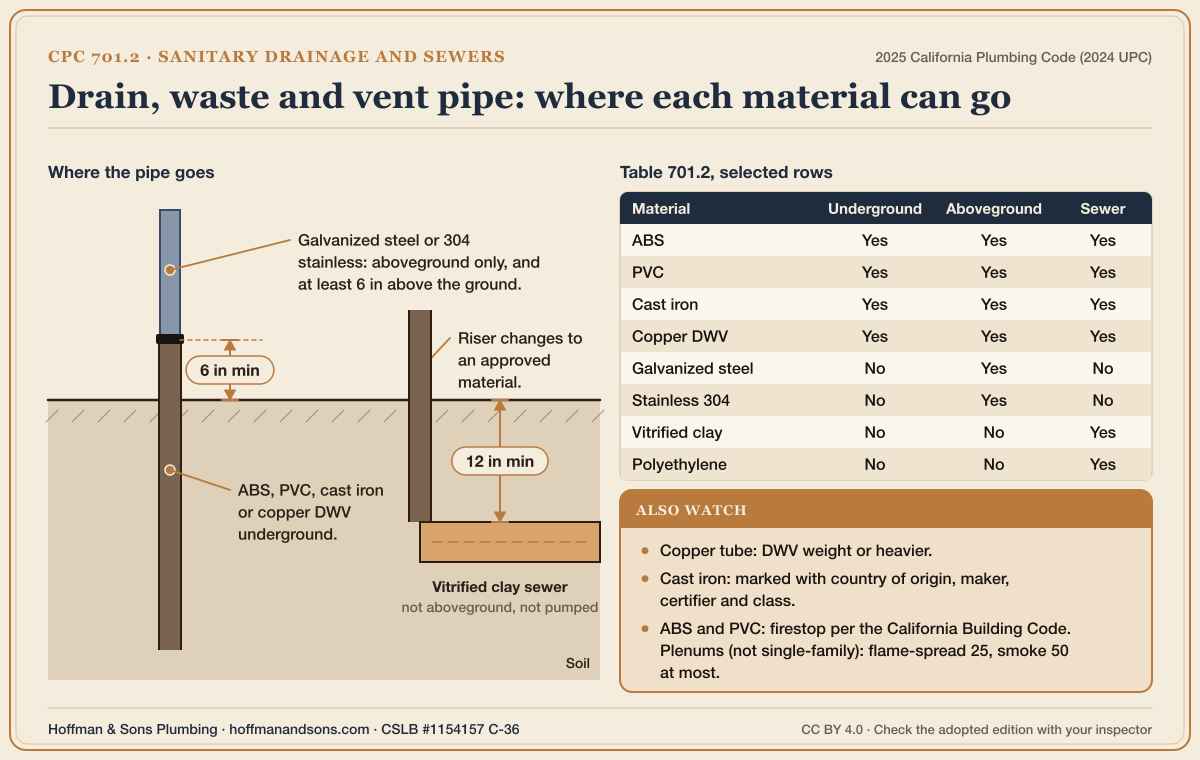
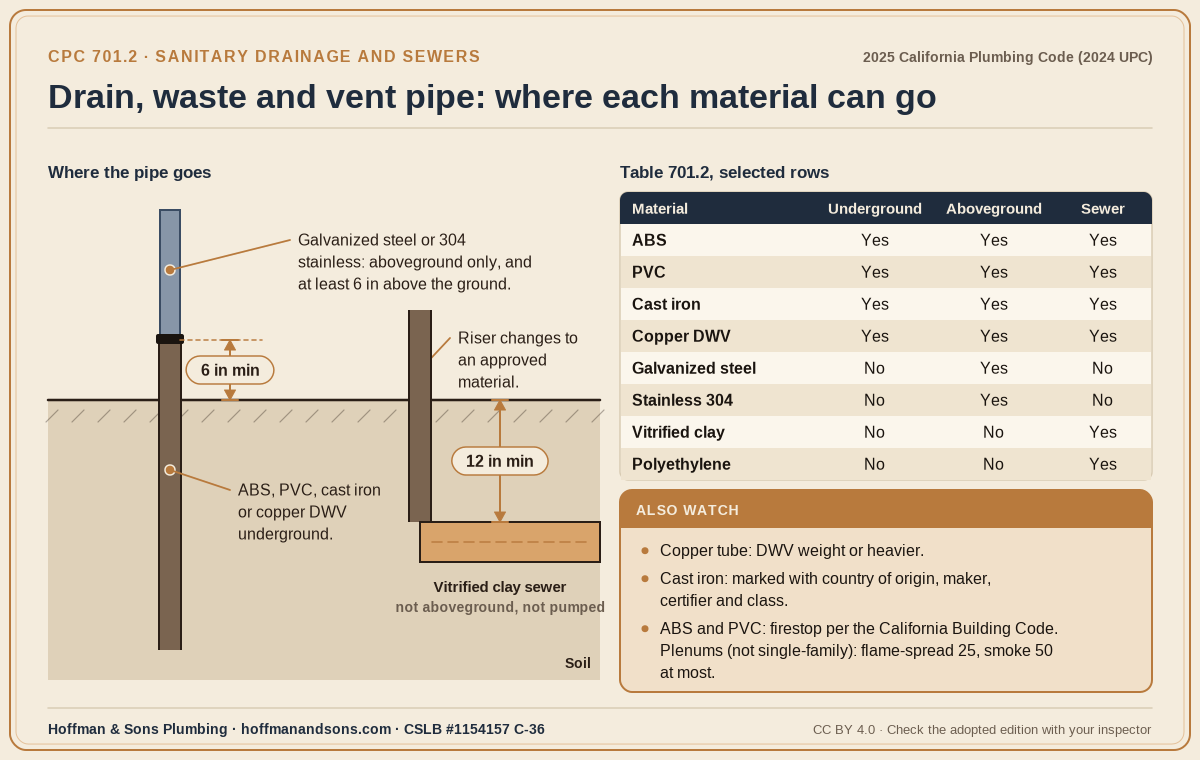
Table 701.2 is the master list. It sorts each material into three uses: underground DWV, aboveground DWV, and building sewer, and it names the product standard the pipe and its fittings have to meet. ABS, PVC, cast iron and copper DWV can go in all three places. Galvanized steel is aboveground only. Polyethylene, PVC sewer and drain, and PVC PSM are building sewer pipe only.
Section 701.2 adds limits on top of the table. Galvanized steel and 304 stainless steel can't go underground, and both have to stay at least 6 inches above ground. Vitrified clay can't be used aboveground or where a pump or ejector pressurizes it, and it has to sit at least 12 inches below ground. Copper tube for drainage and vent has to be at least DWV weight.
Cast-iron pipe and fittings (and the stainless couplings used on them) have to be listed and tested to the standards in the table, and they have to carry the country of origin, the maker's name or trademark, the third-party certifier's mark, and the class.
For ABS and PVC, install to the table's standards and to the firestop requirements in the California Building Code. Plastic that's exposed inside ducts or plenums has to have a flame-spread index of no more than 25 and a smoke-developed index of no more than 50 (ASTM E84 or UL 723), except in individual single-family dwelling units.
On the job
- Read the printing on the pipe and fittings before you glue or hang them. The material and standard have to match the table row for where the pipe is going, and cast iron has to carry the full set of marks.
- Plastic DWV through a fire-rated floor or wall is a firestop job, and those rules live in the California Building Code, not in this chapter. Decide on the collar or wrap before the drywall goes up.
- Remodels often mix materials, like a cast-iron stack with ABS branches. The transition has to be the right kind of joint, and Section 705.10 covers joints between different materials.
- Galvanized steel DWV is still allowed aboveground, but never underground, and it has to stay 6 inches above the ground. Where a repair would reach below grade, use a material from the table for that part.
The inspector and your city's adopted edition have the final word.