The rule
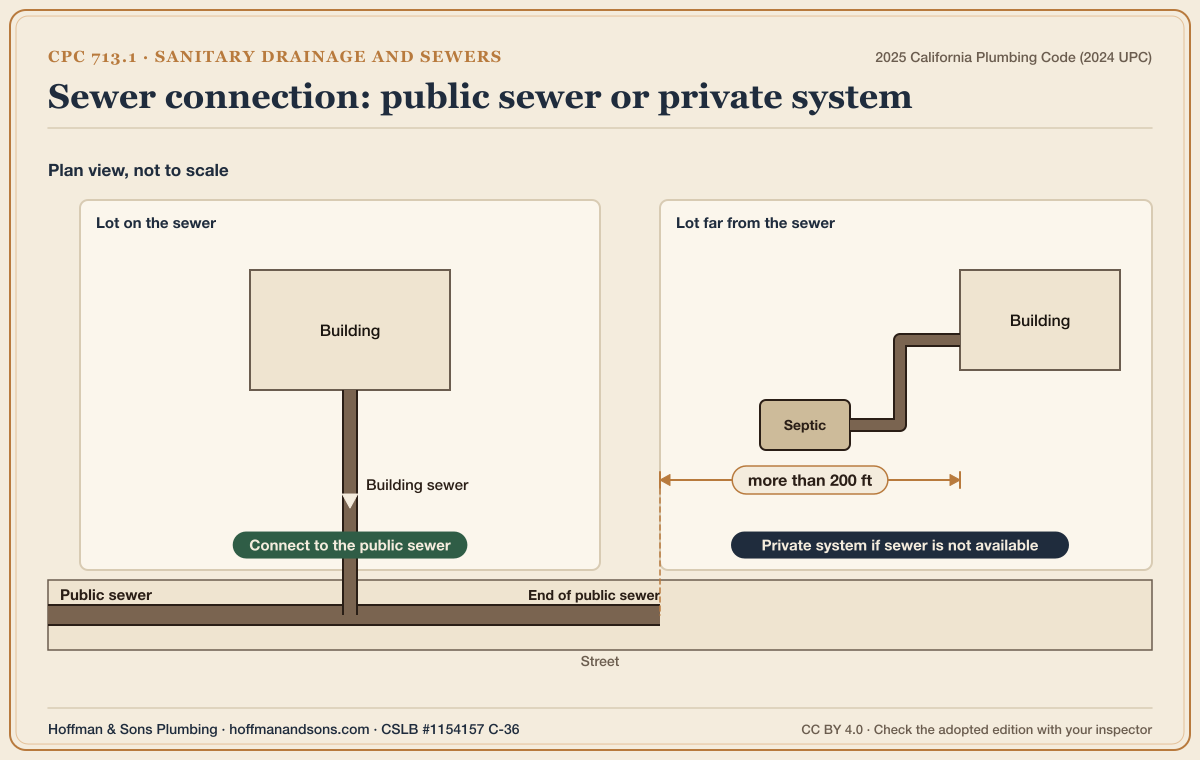
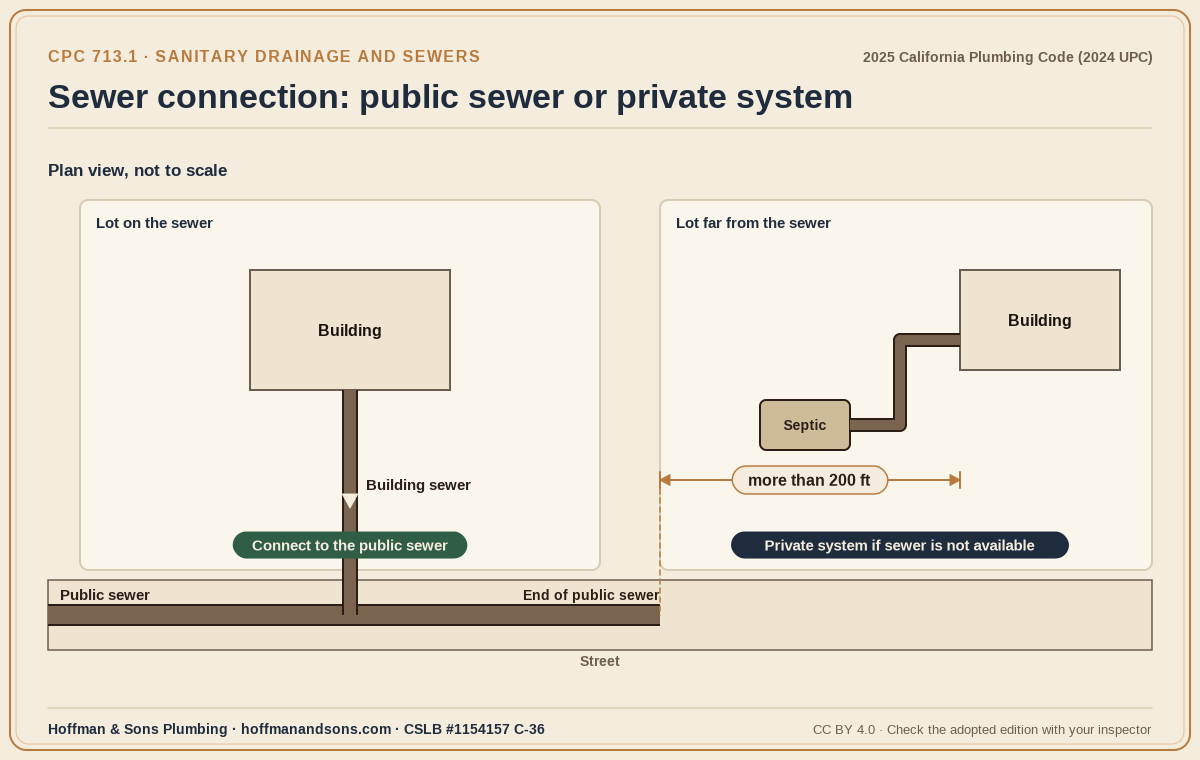
Any building with plumbing fixtures installed, and any premises with drainage piping, has to be connected to a public or private sewer. The exceptions are the private sewage disposal provisions in Section 713.2 and the availability limits in Section 713.4.
Where no public sewer intended to serve the lot is available in a street or right of way abutting it, drainage piping goes to a private sewage disposal system approved by the Authority Having Jurisdiction (see Appendix H). No permit is issued for a private system on a lot where a public sewer connection is available.
Splitting a lot doesn't get you out of it. If a lot abuts and is served by a public sewer, the new smaller parcels still connect to the public sewer. The public sewer can be considered not available only where it, or a building or exterior drainage facility connected to it, is located more than 200 feet from the proposed building or exterior drainage facility.
On the job
- Before you design a septic system on a lot near a sewer, check availability with the sewer agency and the building department. Confirm the 200 foot measurement with them, because the Authority Having Jurisdiction makes the call.
- On a lot split, the new parcels still have to connect to the public sewer where it serves the lot (Section 713.3), so budget for the lateral and the permit early.
- Make sure the sewer agency and the building department agree on the point of connection before you excavate.
The inspector and your city's adopted edition have the final word.