The rule
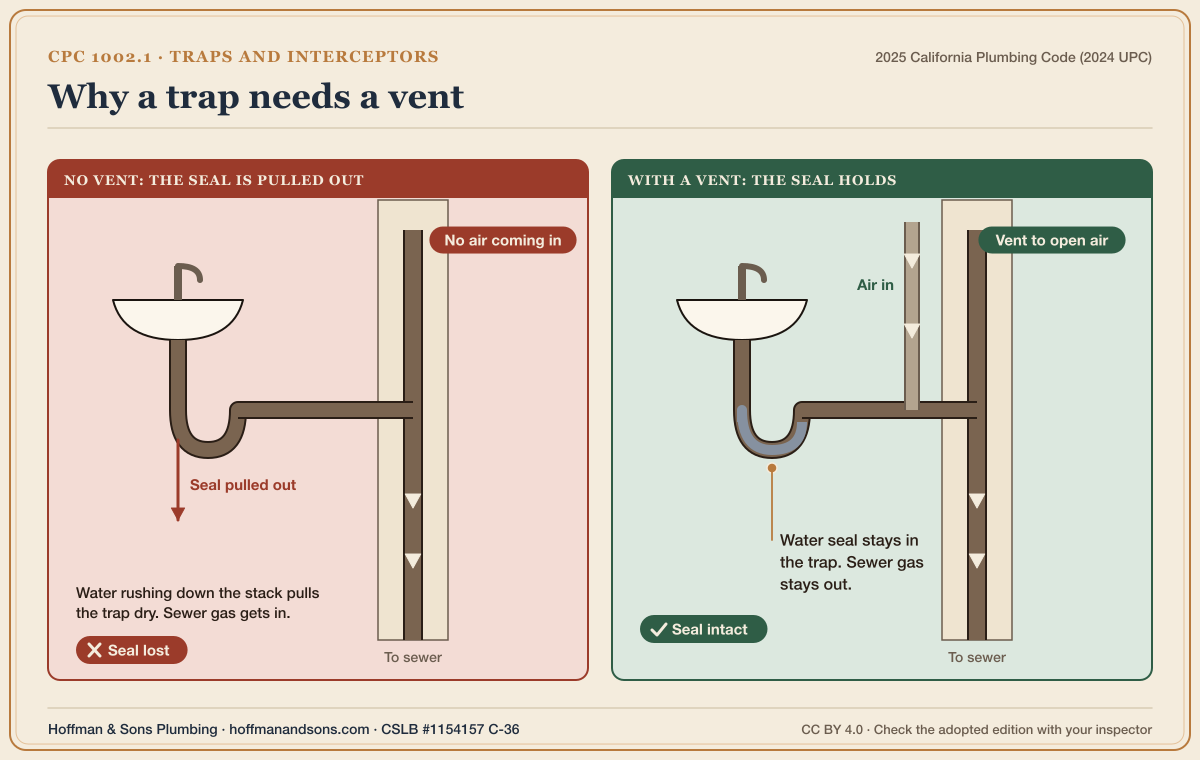
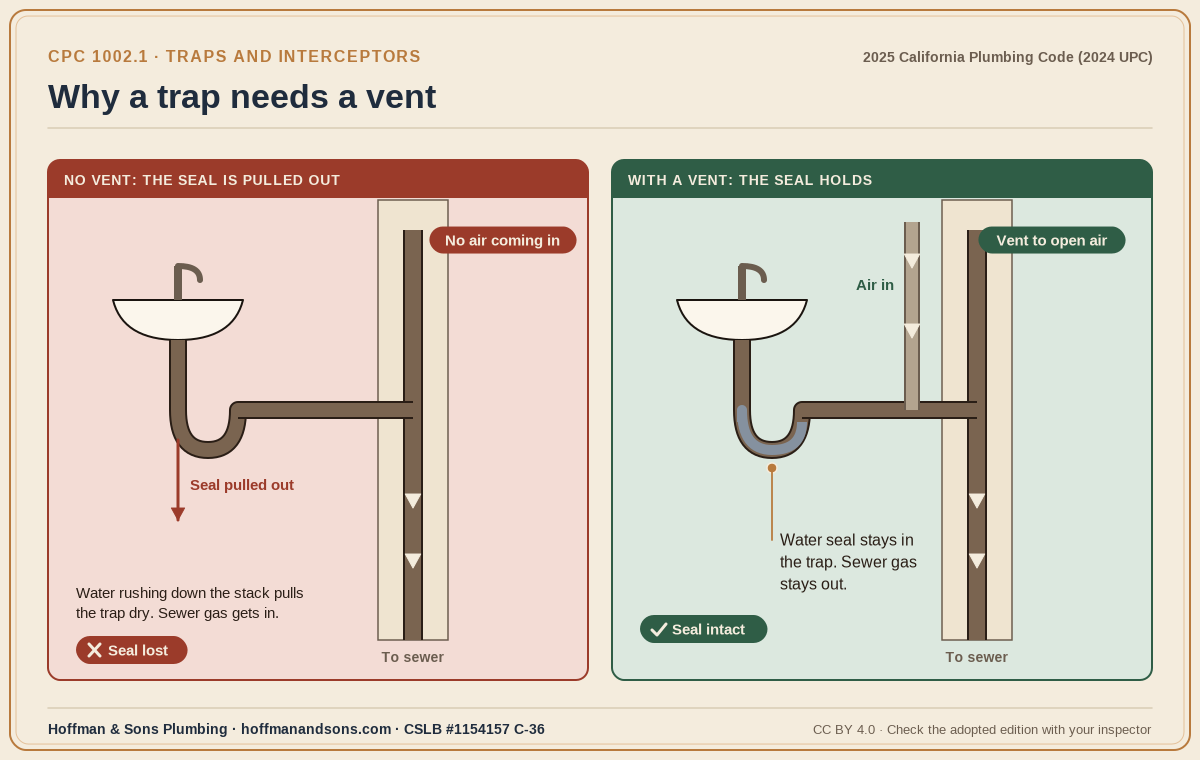
Water running down a drain pushes and pulls on the air in the pipe. Without a way for air to move, that can suck the water seal right out of a trap (siphonage) or blow it back into the room (backpressure). A vent is the fix: an air path that keeps pressure near normal at the trap.
The code says every fixture trap is protected this way, with air circulating through the whole drainage system, unless the code provides otherwise somewhere else. Where the code does allow something different, like a wet vent, it spells out the rules in the venting chapter.
How far the vent can sit from the trap is set by Table 1002.2, covered in the next section.
On the job
- A gurgling drain or a trap that keeps losing its water is the classic sign of a venting problem, not a bad trap.
- Inspectors check that every trap has a vent before they check anything else about it. If a fixture ends up without one, the fix is a proper vent, and your city's adopted edition and the inspector decide what alternatives are accepted.
- Don't use a cleanout or a capped stub as a stand-in for a vent. It doesn't move air.
The inspector and your city's adopted edition have the final word.