The rule
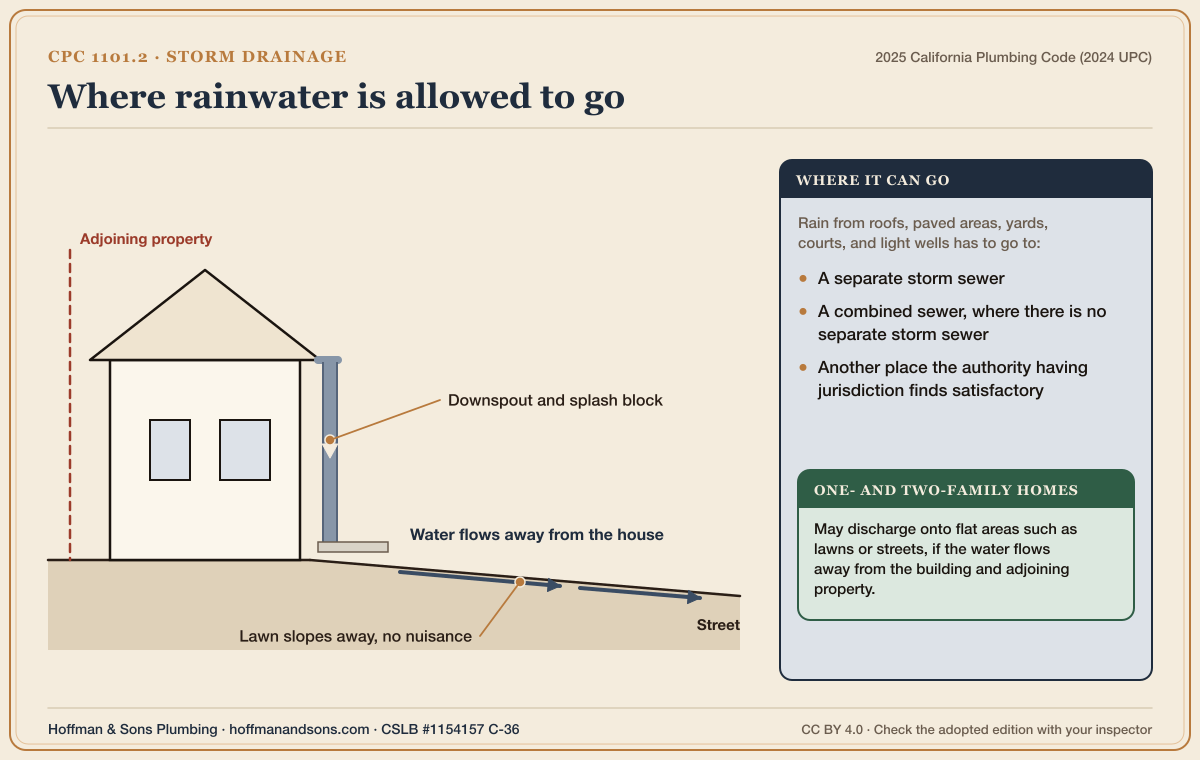
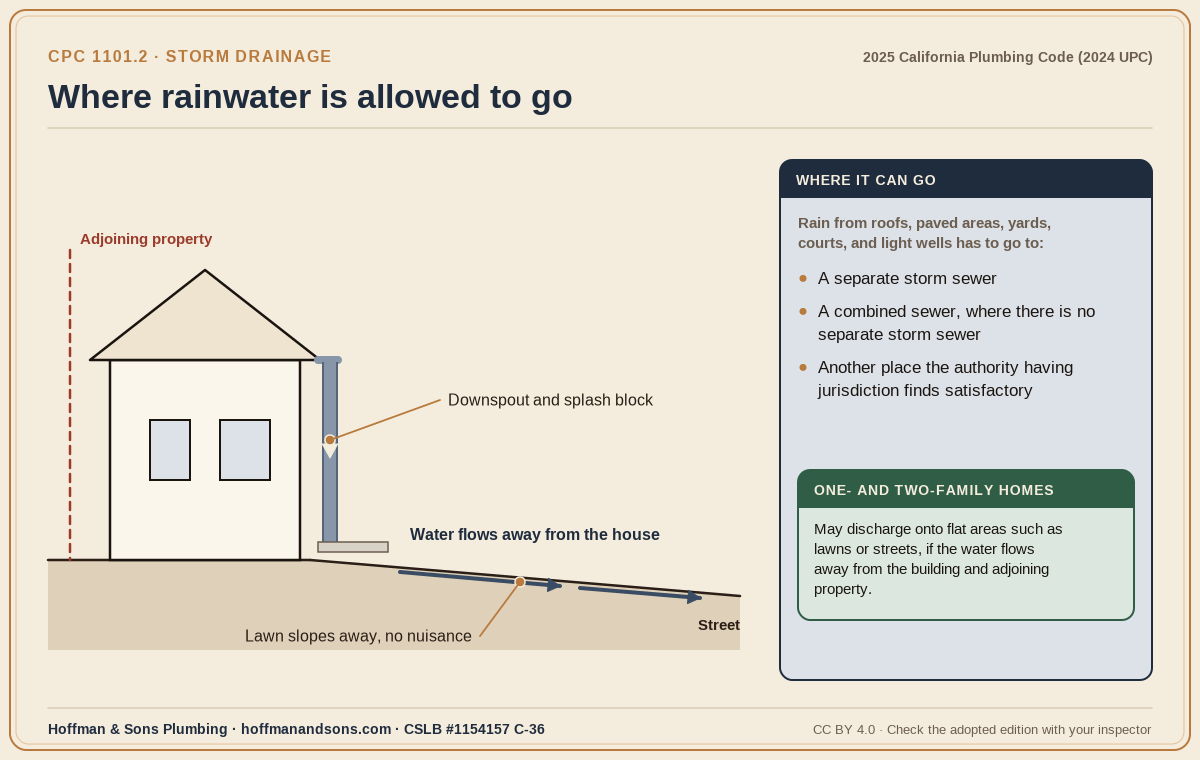
The code starts with a simple question: where does the water go? Roofs, paved areas, yards, courts, courtyards, vent shafts, and light wells that collect rain have to be drained. The first choice is a separate storm sewer. Where there isn't one, a combined sewer is allowed, or any other place of disposal that the authority having jurisdiction finds satisfactory.
One- and two-family dwellings get a break. Storm water can be discharged onto flat areas, such as streets or lawns, as long as it flows away from the building and away from adjoining property and doesn't create a nuisance.
For a house that mostly means downspouts that carry water out and away, not onto a neighbor's lot, and not against the foundation. For a commercial site it means a storm drain connection, a water course, or whatever the city has approved for the project.
On the job
- On a remodel, look at where the existing downspouts end before you add roof area. A new addition can overload a spot that was fine before.
- Don't tie a downspout or area drain into the sanitary sewer. That's prohibited, and the next section covers it.
- Many cities have their own stormwater and runoff rules on top of the code. Ask the building department what applies before you design the discharge.
The inspector and your city's adopted edition have the final word.