The rule
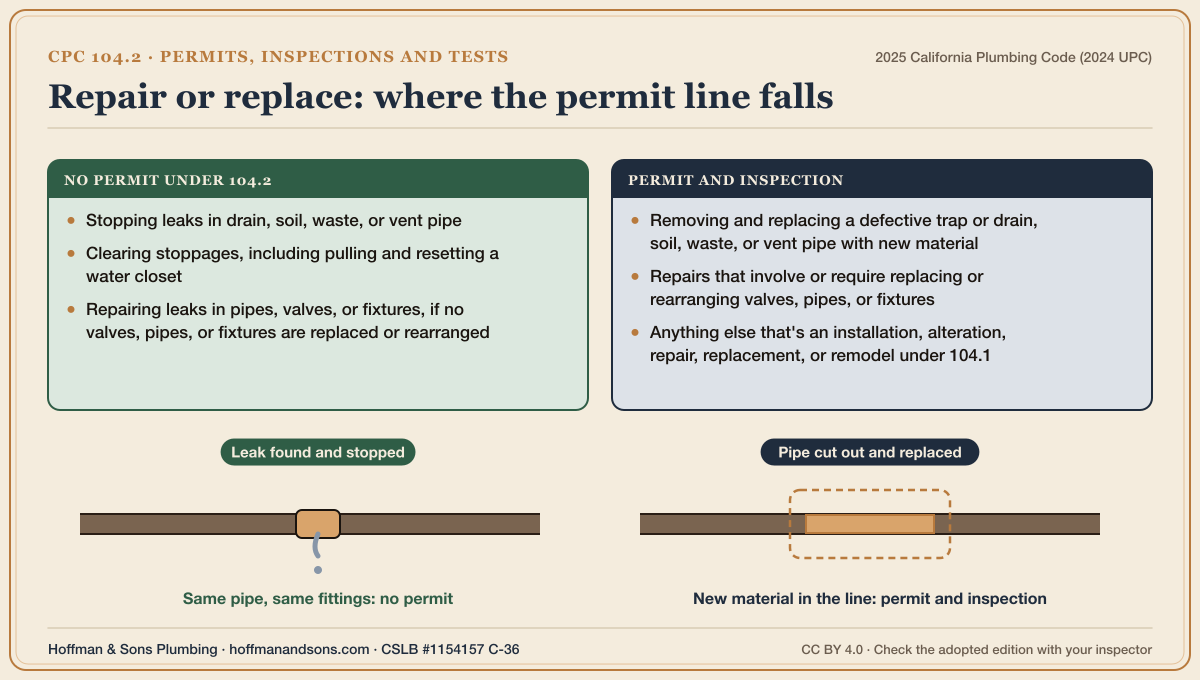
There are two exemptions. One is stopping leaks in drain, soil, waste, or vent pipe. The other is clearing stoppages (including pulling and resetting a water closet) or repairing leaks in pipes, valves, or fixtures.
Both have limits. If a trap or a drain, soil, waste, or vent pipe is defective and has to be removed and replaced with new material, that's new work, and it needs a permit and an inspection. A leak repair that involves replacing or rearranging valves, pipes, or fixtures isn't exempt either.
Being exempt from a permit doesn't make the work exempt from the code. It still has to meet the code and any other law or ordinance that applies.
The building department decides how the exemptions apply on its counter, and the city's adopted edition of the code has the final word. If you're not sure, call before you start.
On the job
- Clearing a stoppage, including pulling a toilet to get at it and setting it back, is the classic no-permit call.
- The line gets crossed when repair turns into replacement. A cracked trap, or a section of drain cut out and replaced with new pipe, is permit-and-inspection work.
- Write down what you replaced and why. A line on the invoice helps if anyone asks later whether the job needed a permit.
The inspector and your city's adopted edition have the final word.