The rule
New plumbing work, and the parts of existing systems that new work affects, gets inspected to confirm the code is met and the work matches the approved plans. The permittee or the permittee's authorized agent is responsible for scheduling the inspections.
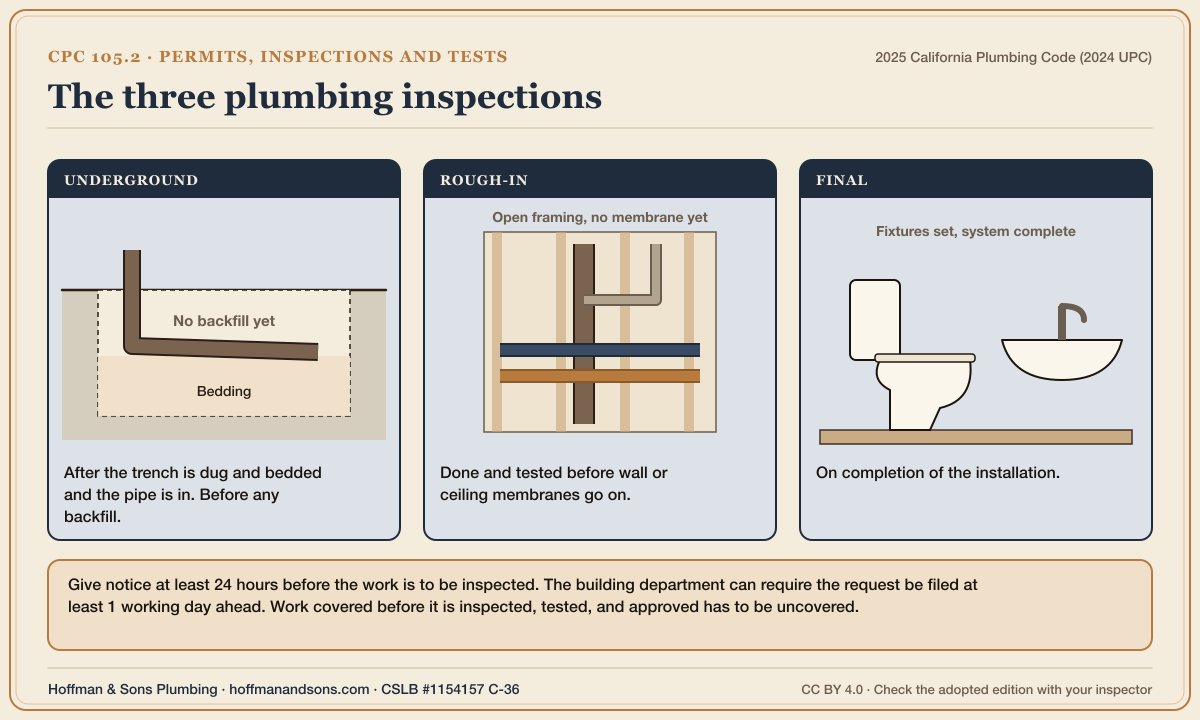
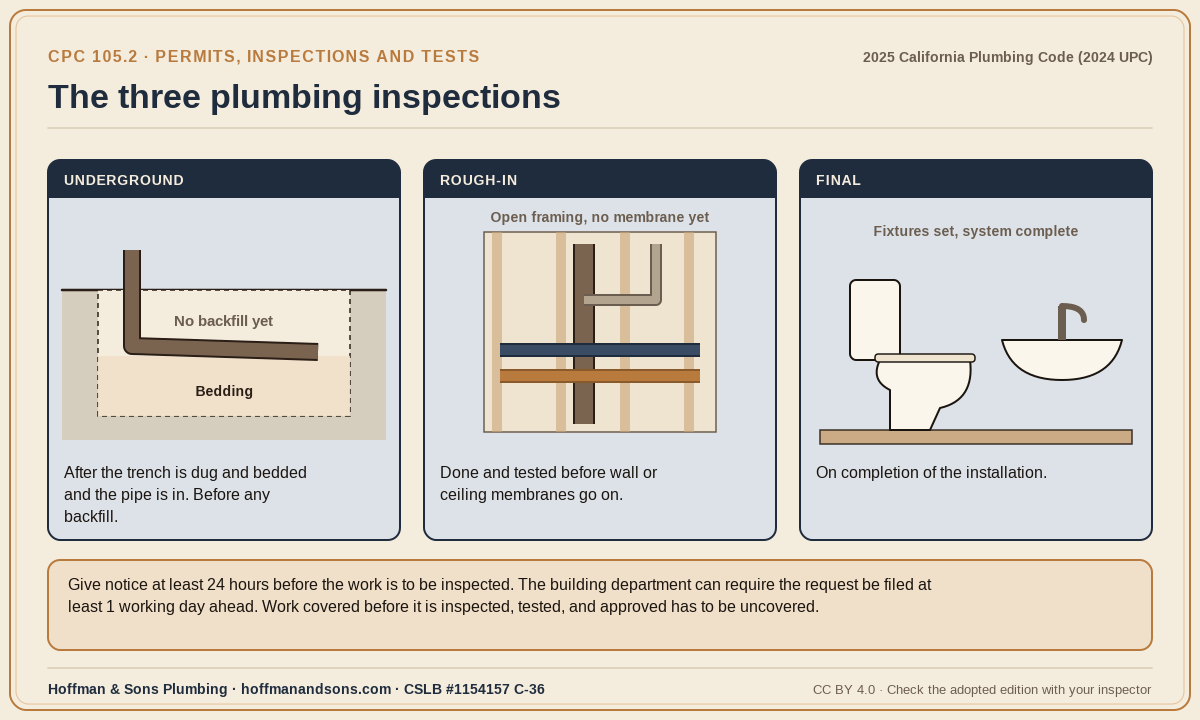
Three are named. The underground inspection happens after trenches are excavated and bedded and the piping is installed, before backfill. Rough-in is before wall or ceiling membranes go on. Final is on completion of the installation. The building department can require other inspections as well.
Don't cover work early. If a drainage or plumbing system or any part of it is covered or concealed before it's inspected, tested, and approved, it has to be uncovered for inspection once the building department gives notice. Water supply piping can't be covered until it's tested, inspected, and approved.
On notice, the code asks for at least 24 hours before the work is to be inspected, and the building department can require the request to be filed at least 1 working day ahead. The permit holder supplies access, equipment, and labor for tests, and reinspection fees can be charged when work isn't ready, access isn't provided, or the approved plans aren't available. Your city's building department sets how requests are made, and the city's adopted edition of the code has the final word.
On the job
- Call for underground with the pipe bedded and every joint in view. If the trench has been backfilled or covered before the inspector arrives, expect to dig it back out.
- Rough-in has to be done before the wall and ceiling membranes go on, so schedule it ahead of the drywall crew, not alongside them.
- Keep the approved plans, the permit, and the test equipment on site. No plans or no access on inspection day can draw a reinspection fee.
The inspector and your city's adopted edition have the final word.