The rule
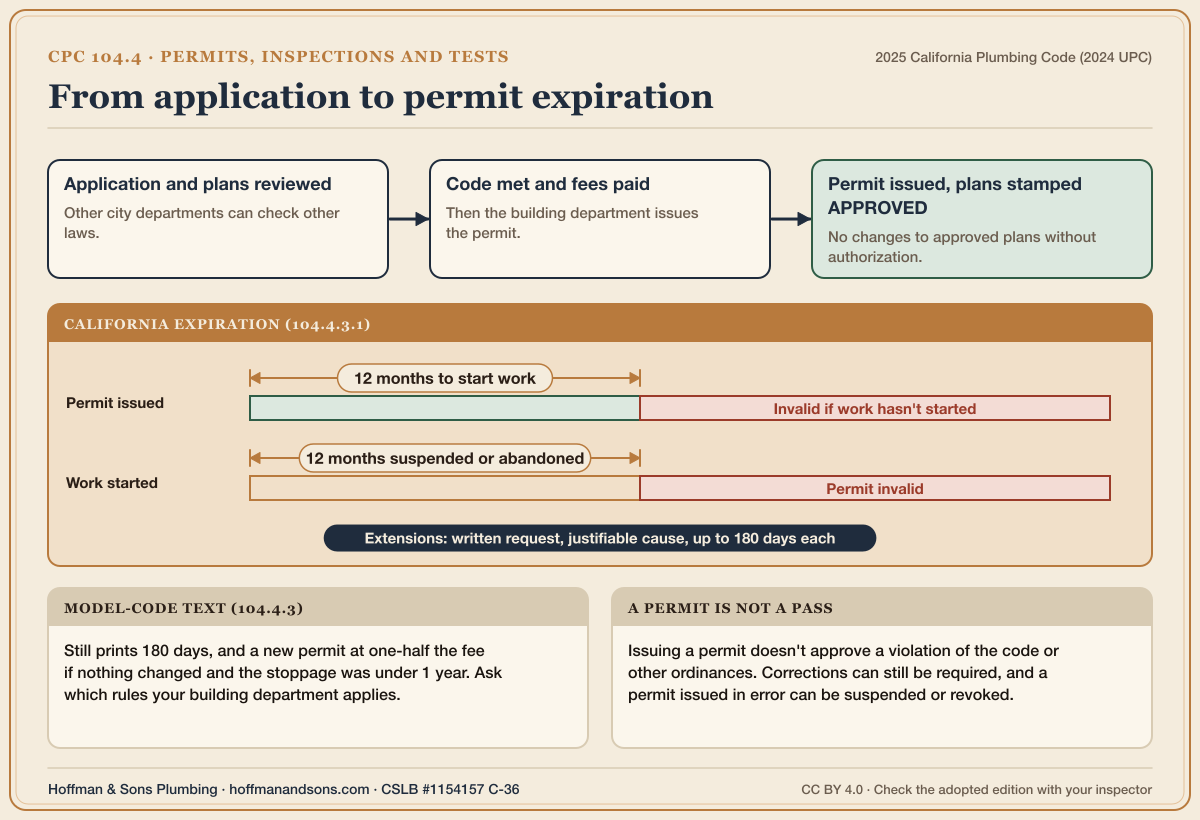
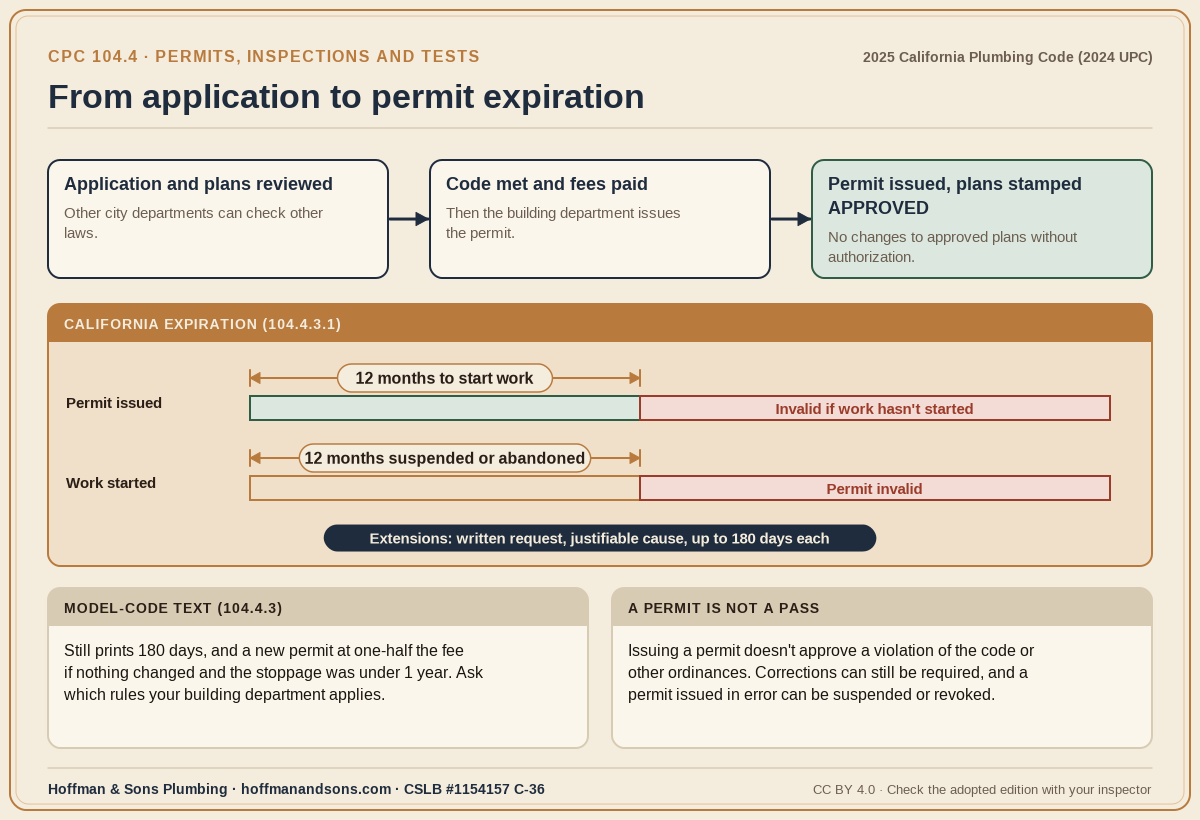
The building department reviews the application, plans, and other data, and can route the plans to other city departments to check other laws. If everything complies and the fees are paid, it has to issue the permit.
Where plans are required, they're endorsed in writing or stamped APPROVED. Approved plans can't be changed without the building department's authorization, and the work has to follow them. A permit for part of a system can be issued before the full plans are approved, but the holder proceeds at their own risk.
A permit doesn't approve a violation. Issuing one doesn't stop the building department from later requiring corrections to errors in the plans or work that violates the code or other ordinances. It can also suspend or revoke a permit issued in error or on bad information.
Expiration is where the numbers matter. California adds Section 104.4.3.1: a permit becomes invalid if work on the site isn't started within 12 months of issuance, or if work is suspended or abandoned for 12 months after it starts. The building official can grant, in writing, one or more extensions of not more than 180 days each, on a written request that shows justifiable cause. The model-code text in 104.4.3 and 104.4.4 still prints 180 days and a single extension, so ask your building department which expiration and extension rules it applies.
On the job
- Keep the approved plans and the manufacturer's installation instructions on site while work is in progress. The building department keeps its own copy until final approval.
- Calendar the permit date. If the job stalls, request an extension in writing before the permit lapses and say why work stopped.
- Don't alter anything on approved plans in the field without authorization. A change that skips the plan check is the kind of thing that fails an inspection.
The inspector and your city's adopted edition have the final word.