The rule
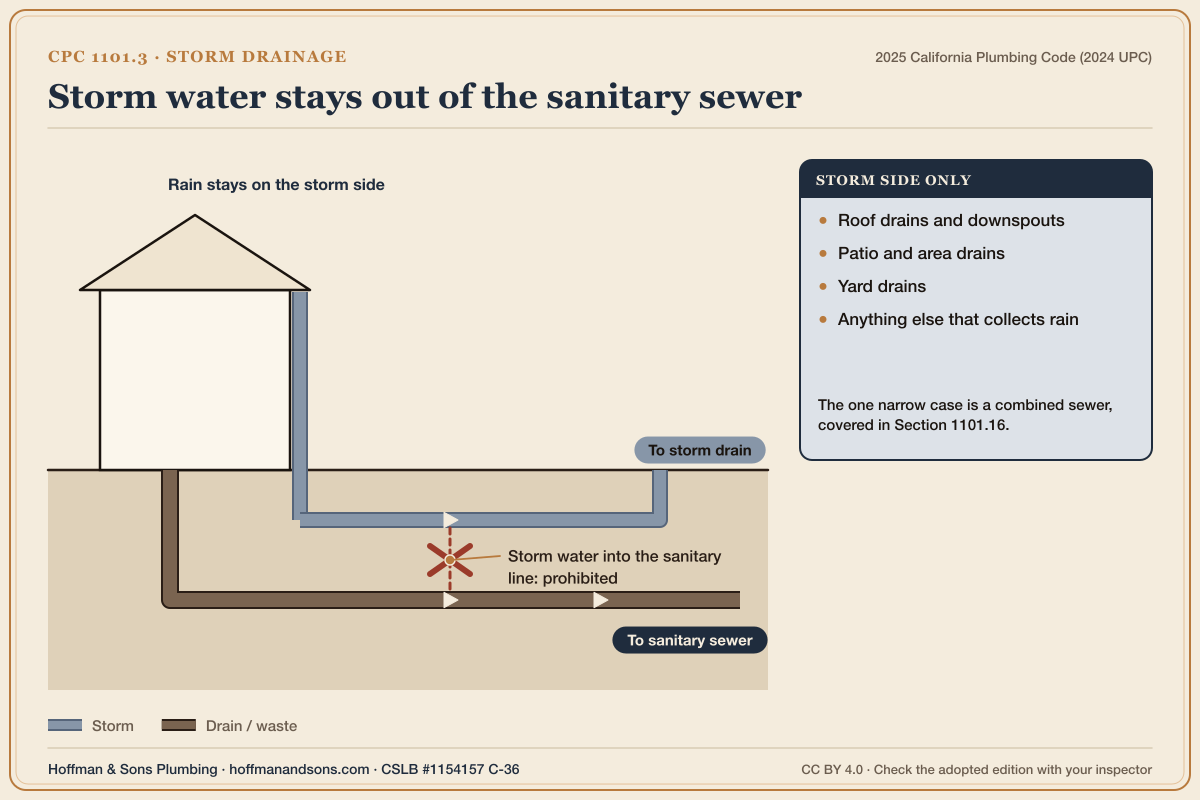
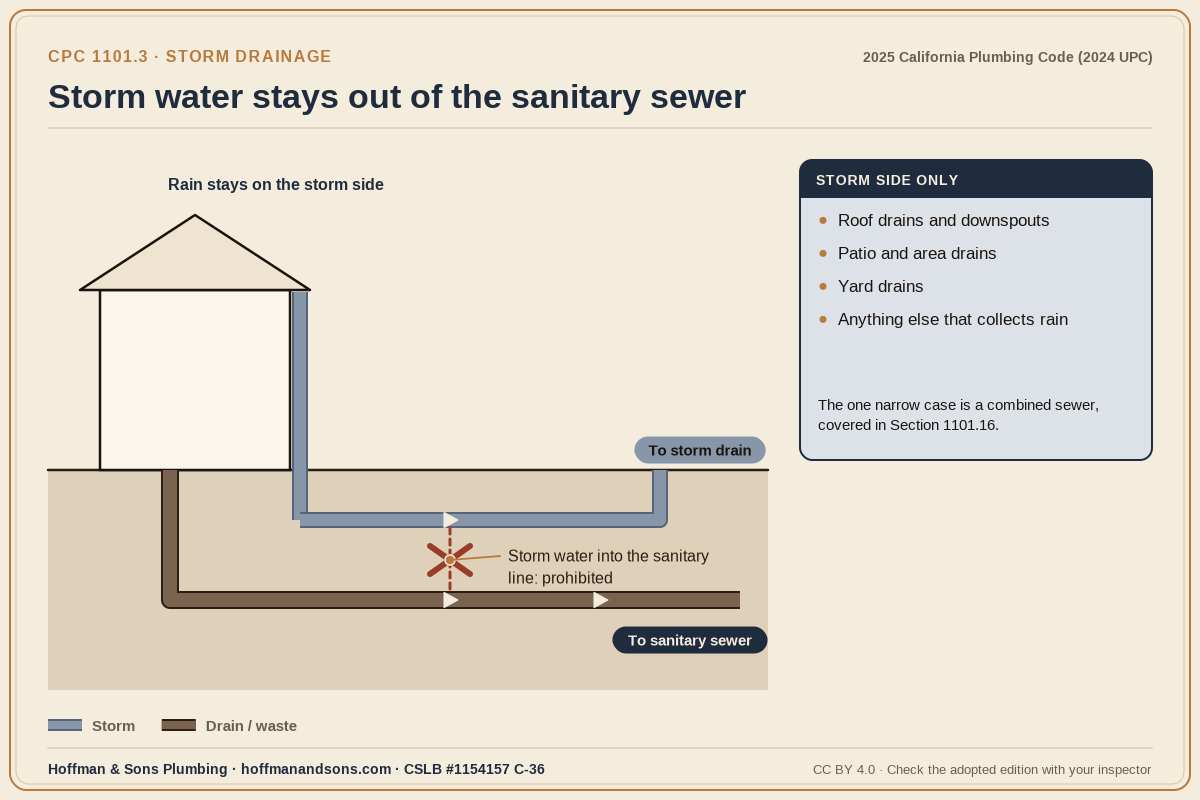
Sanitary sewers are sized and treated for household waste, not for a rainstorm. Dumping roof and yard water into them overloads the pipes and the treatment plant, so the code says no. Storm water can't be drained into sewers intended for sanitary drainage.
In practice a building has two systems: a sanitary system carrying waste to the sewer, and a storm system carrying rain to a storm drain, the curb, or another approved place. They stay separate inside the building too. Section 1101.16.2 covers the one narrow case of a combined sewer.
That includes the small stuff. A downspout connected to a sanitary cleanout, a patio drain tied into the house drain, or a sump pump discharging into a floor drain are all storm water going to the sanitary side.
On the job
- Look for downspouts that disappear into the ground near the house. They sometimes tie into the house sewer, and a camera inspection or a smoke test will tell you.
- Area drains and patio drains need a storm destination. Plan it before the concrete goes in.
- If you find storm water in the sanitary line during a remodel, point it out to the owner. The fix is a separate storm connection.
The inspector and your city's adopted edition have the final word.