The rule
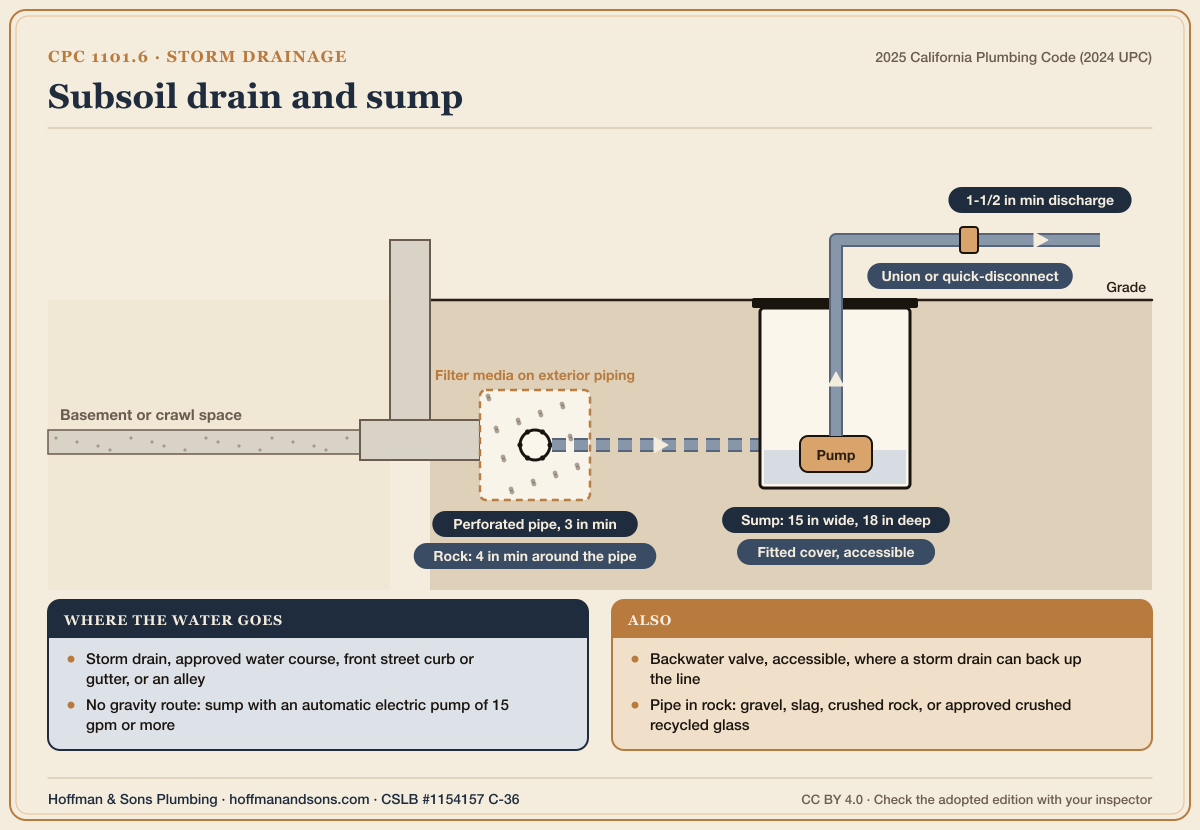
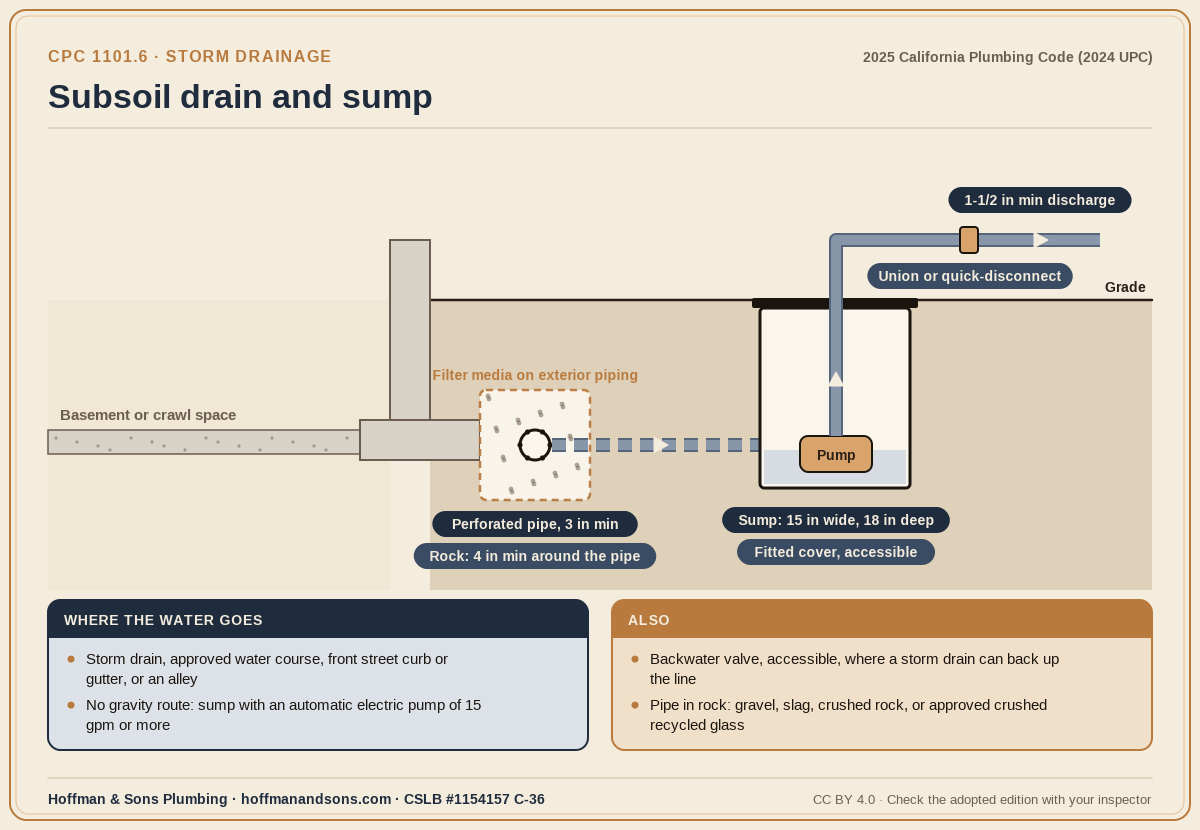
A subsoil drain relieves groundwater pressure around a foundation. It goes around the perimeter, inside or outside the footing, in perforated or open-jointed approved drain tile or pipe not less than 3 inches in diameter. The pipe sits in gravel, slag, crushed rock, approved 3/4 inch crushed recycled glass aggregate, or another approved porous material, with not less than 4 inches surrounding it. Exterior subsoil piping gets filter media.
The water has to go somewhere. It can run to a storm drain, an approved water course, the front street curb or gutter, or an alley. Where gravity can't do it, the drains discharge to an accessible sump with an approved automatic electric pump. The sump is not less than 15 inches in diameter and 18 inches deep with a fitted cover, the pump moves at least 15 gpm, and the discharge pipe is at least 1-1/2 inches with a union or quick-disconnect so the pump can be pulled for service.
Where a subsoil drain can see backflow from a storm drain, it needs an accessible backwater valve. A separate dwelling not serving continuously flowing springs or groundwater can discharge the sump pipe onto a concrete splash block of 24 inches or more.
On the job
- Follow the pipe maker's direction for which way the holes face, bed the pipe in clean rock, and keep soil out with filter media on exterior runs. Dirt clogs a drain that has no filter.
- Plan the sump discharge early. The pump, check valve, and a union have to be where somebody can reach them years from now.
- A sump with no cover is a rejection and a hazard. Use the fitted cover.
The inspector and your city's adopted edition have the final word.