The rule
The prohibited-location rule is short. Where there isn't enough lot area, or the soil conditions are wrong for the water to soak in, no gray water system can be installed there.
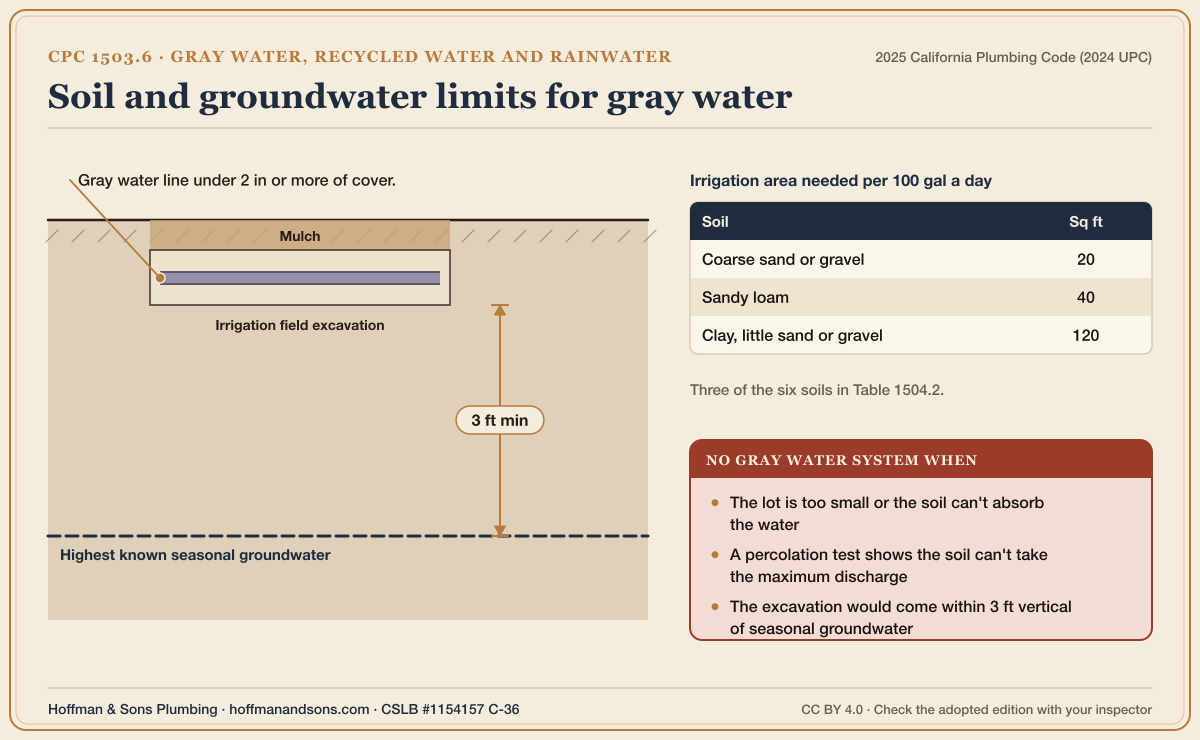
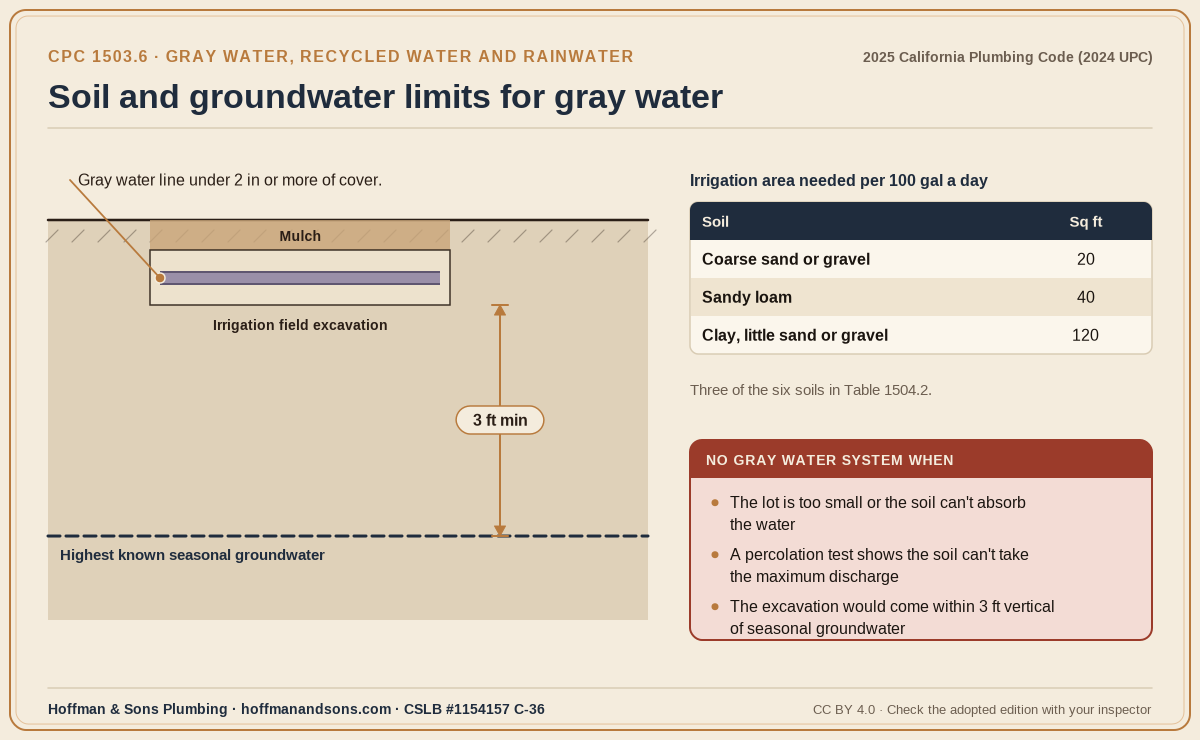
Soil is how you find out. Table 1504.2 gives the minimum irrigation area per 100 gallons per day for six typical soils: from 20 square feet for coarse sand or gravel up to 120 square feet for clay with small amounts of sand or gravel. For a soil not in the table, absorption is determined by percolation tests or another method the Authority Having Jurisdiction accepts, and a system isn't permitted if the soil can't take the maximum discharge.
Depth matters too. No excavation for an irrigation field, disposal field, or mulch basin can extend within 3 feet vertical of the highest known seasonal groundwater level, or down to a depth where gray water can contaminate groundwater or surface water. The applicant supplies the groundwater evidence. A test hole with no groundwater 3 vertical feet below the deepest irrigation or disposal point is enough, unless seasonal high groundwater is documented to rise into that zone.
On the job
- Do the estimate first. Daily gray water flow (1503.8) times the soil's square feet per 100 gallons gives you the minimum area. If it doesn't fit on the lot with the setbacks, the system's out.
- Clay soil can need a lot of area. 100 gallons a day in clay with small amounts of sand or gravel is 120 square feet, versus 20 in coarse sand.
- Ask the Authority Having Jurisdiction what they accept for groundwater evidence. Drip-only irrigation fields built to 1504.5 are exempt from percolation tests, and the Enforcing Agency may waive the groundwater and soil absorption requirements based on local knowledge.
The inspector and your city's adopted edition have the final word.