The rule
This section is guidance for designing a gray water irrigation field when no alternate design is available. It doesn't stop you from using another appropriate method the Enforcing Agency approves.
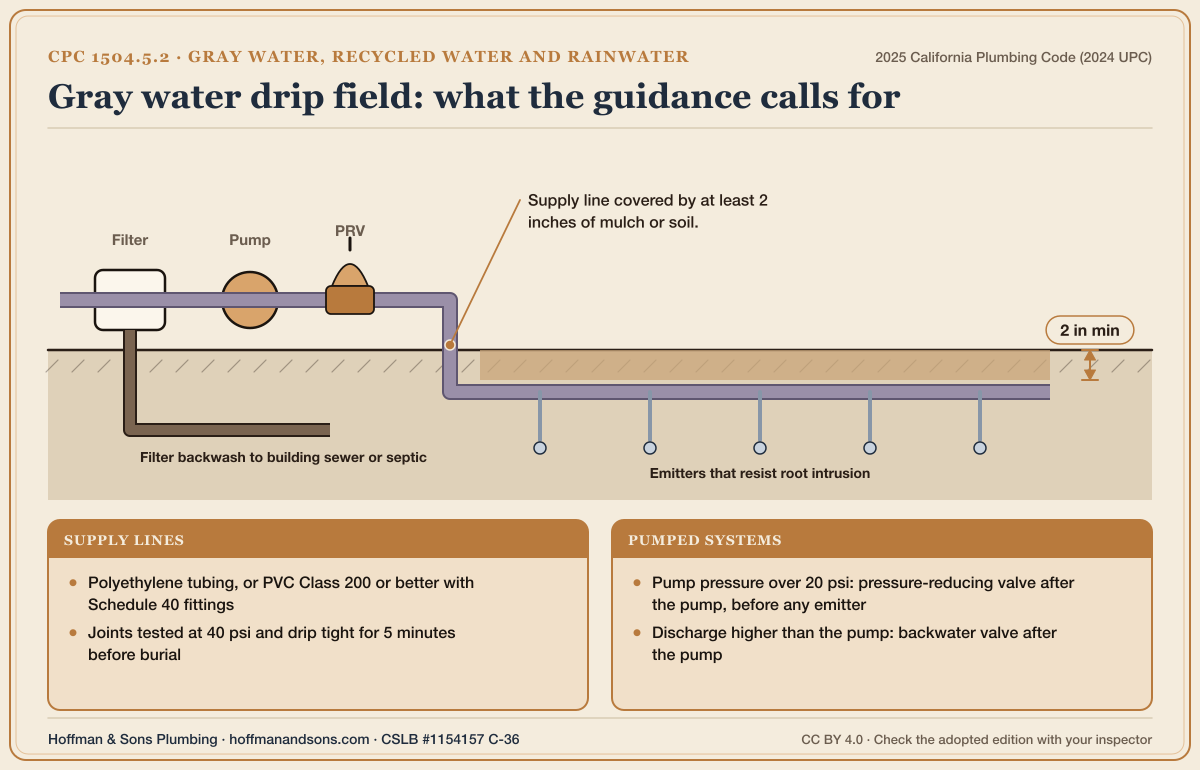
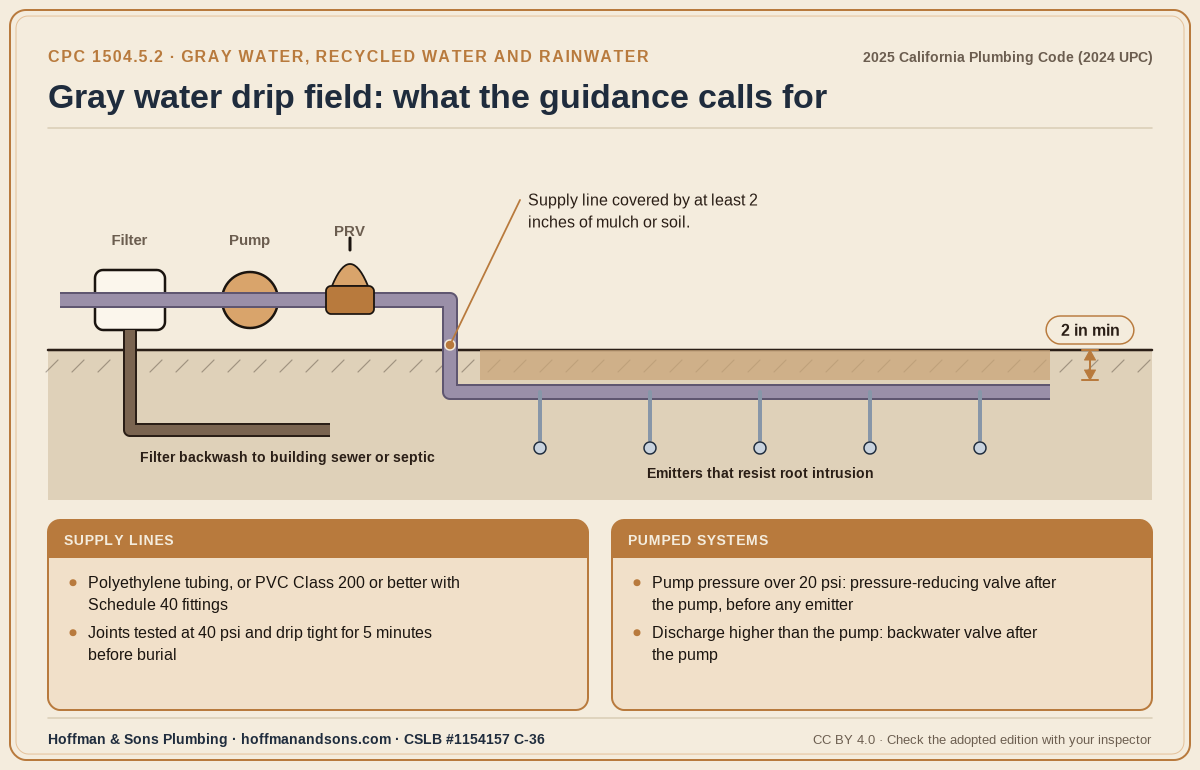
Filters follow the manufacturer's instructions. Their backwash and flush water has to be contained and sent to the building sewer, the septic tank, or, with approval, a separate mini-leachfield sized to take it. It can't be used for anything. Emitters have to resist root intrusion, and each zone has to include at least the number of emitters in Table 1504.5.5 or follow the agency's procedure. Spacing has to prevent surfacing or runoff. The system provides user controls, like valves or timers, to rotate flow between zones.
Supply lines are polyethylene tubing, or PVC Class 200 pipe or better with Schedule 40 fittings. Joints are pressure tested at 40 psi and shown drip tight for five minutes before burial. Supply piping and drip feeder lines (poly or flexible PVC tubing) are covered by at least 2 inches of mulch or soil.
If pump discharge pressure is over 20 psi, a pressure-reducing valve goes downstream of the pump and before any emission device. If the field discharges higher than the pump, add a backwater valve downstream of the pump to prevent back-siphoning of water and soil.
On the job
- Test before you cover. Pressure to 40 psi, hold it five minutes, and look for drips. It's cheap to fix now and expensive after mulch.
- Keep the filter backwash line separate. It can't be reused and has to reach the sewer or septic.
- Check the manufacturer's maximum pressure for the tubing and emitters. Over 20 psi at the pump, you need the PRV.
The inspector and your city's adopted edition have the final word.