The rule
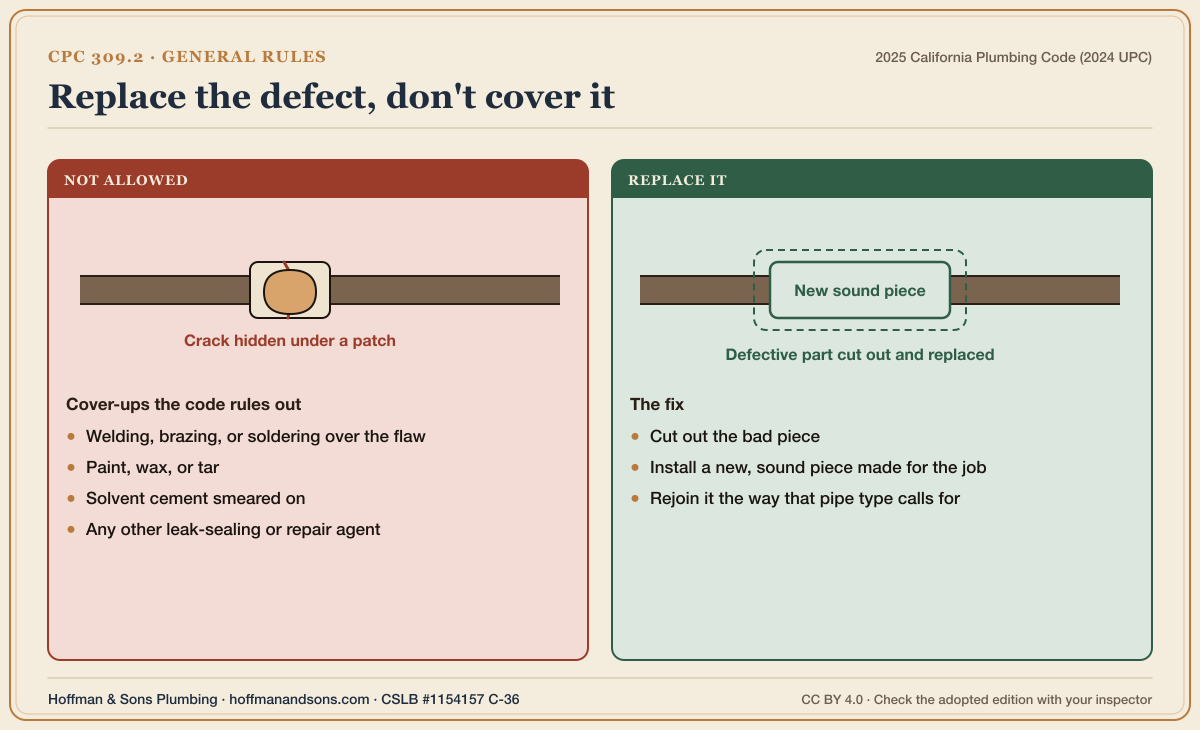
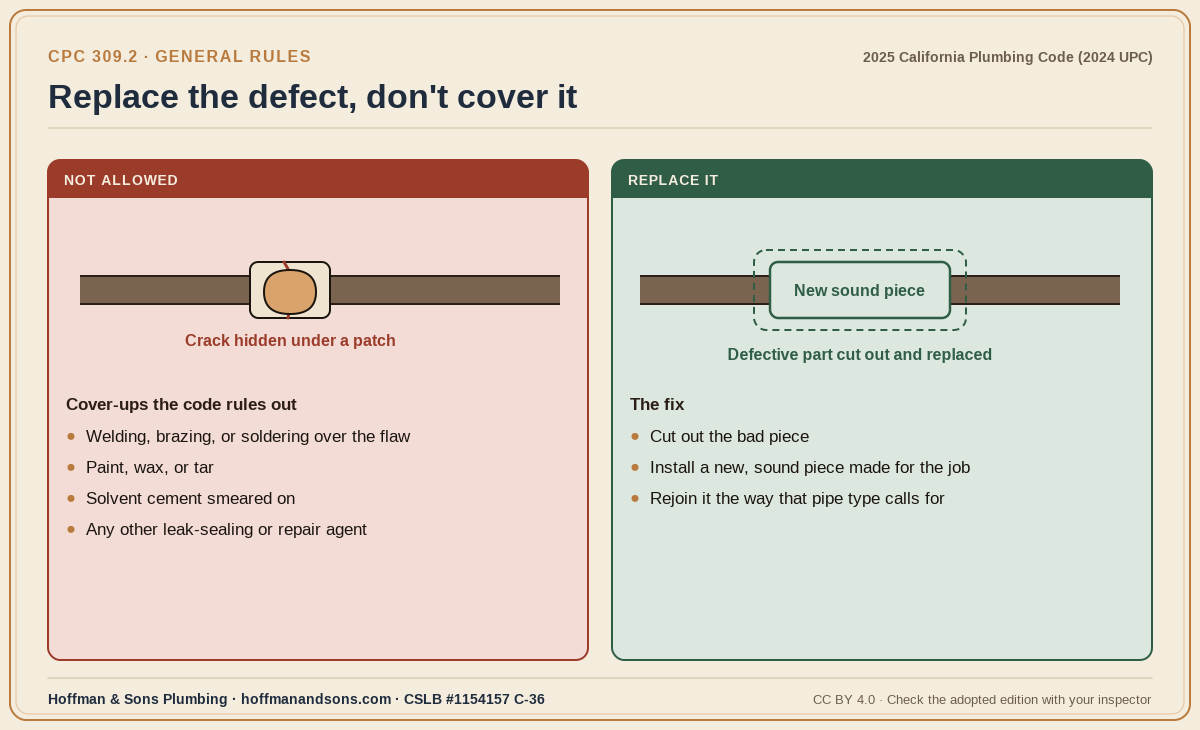
A defect gets fixed, not covered. The code makes it unlawful to conceal cracks, holes, or other imperfections in materials with welding, brazing, or soldering, or with paint, wax, tar, solvent cement, or any other leak-sealing or repair agent.
That covers the shop-floor temptations: a pinhole in copper that gets a blob of solder, a cracked plastic fitting that gets a smear of cement, a weeping cast-iron joint that gets painted or tarred over.
Making a joint the normal way isn't concealing anything. The rule is aimed at covering a flaw so a bad part passes. The fix is a new piece. The inspector and the city's adopted edition of the code have the final word.
On the job
- Cut out and replace the bad part. A cracked fitting, a pinholed pipe, a damaged flange: swap the piece.
- Don't nurse a failed test with a sealant, an additive, or a dab of solvent cement. Find the leak, cut it out, and redo the joint.
- Inspectors know what a patched fitting looks like, and a covered-up flaw can fail an otherwise good rough-in.
The inspector and your city's adopted edition have the final word.