The rule
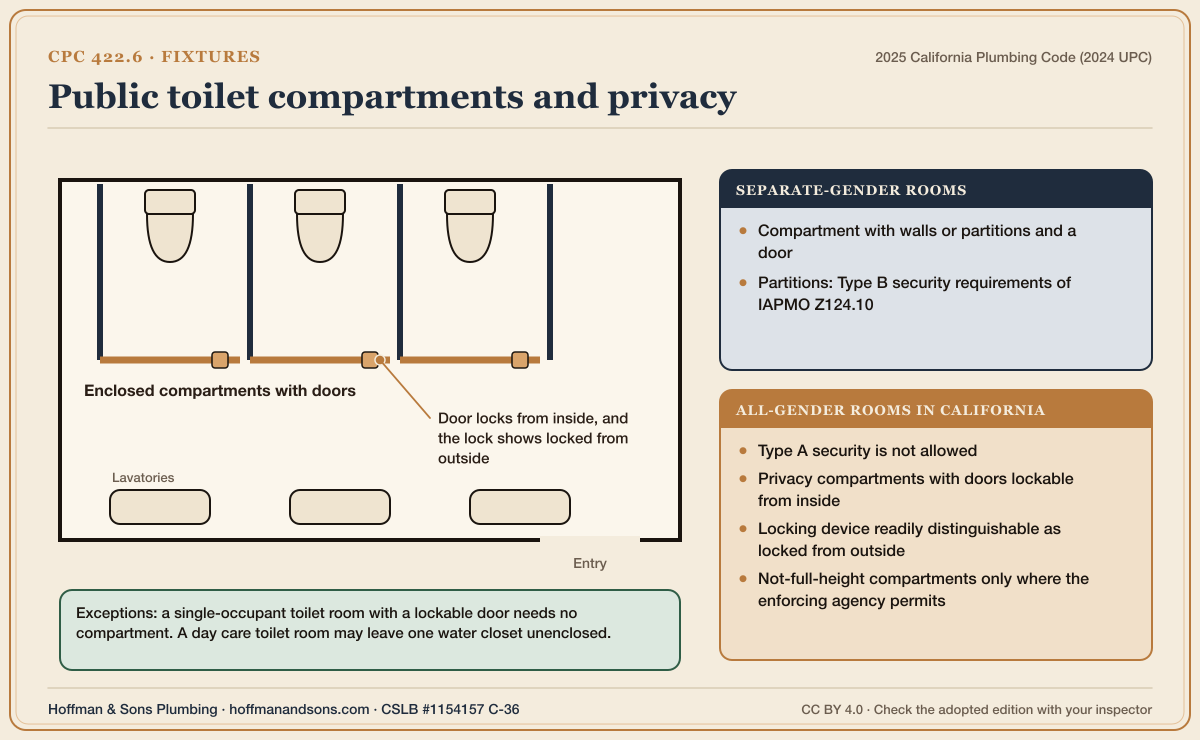
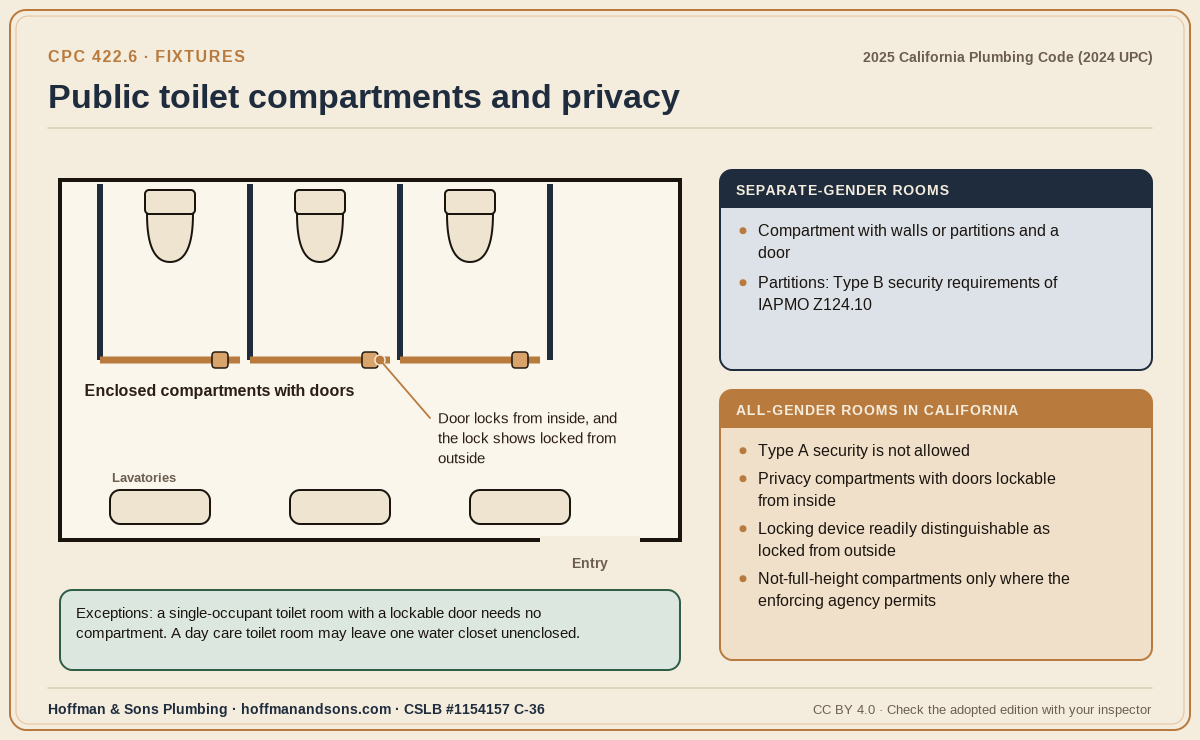
Public water closets occupy a separate compartment with walls or partitions and a door enclosing the fixture. In separate-gender toilet rooms, the partitions meet the Type B security requirements of IAPMO Z124.10. For all-gender rooms, the base text calls for Type A.
Two exceptions apply to the compartment rule. A single-occupant toilet room with a lockable door doesn't need compartments, and a day care toilet room with more than one water closet can have one water closet with no enclosing compartment.
California's added exception changes the all-gender case. Type A security isn't allowed in all-gender rooms. Compartments for water closets in all-gender multi-user bathrooms have to be privacy compartments as the code defines them, with each door lockable from the inside and a locking device that's readily distinguishable as locked from the outside. Privacy compartments and doors that aren't full height or floor to ceiling may be permitted by the enforcing agency.
On the job
- Pick partition and door hardware early. The lock needs an indicator that can be read from outside the compartment, and it has to lock from the inside.
- Accessible stall sizes come from the California Building Code accessibility chapters, not from this section. Coordinate with the architect before ordering partitions.
- For an all-gender room, check the plan against the privacy compartment definition and ask the plans examiner whether partial-height partitions are acceptable in that jurisdiction.
The inspector and your city's adopted edition have the final word.