The rule
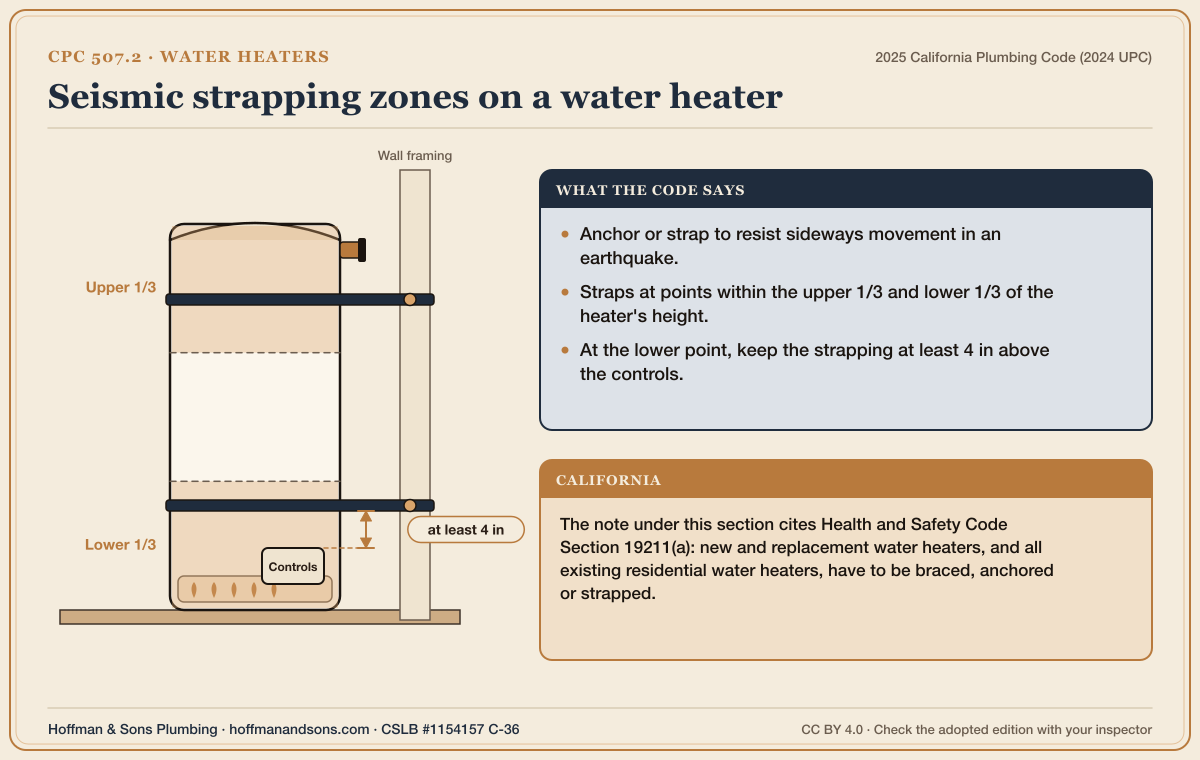
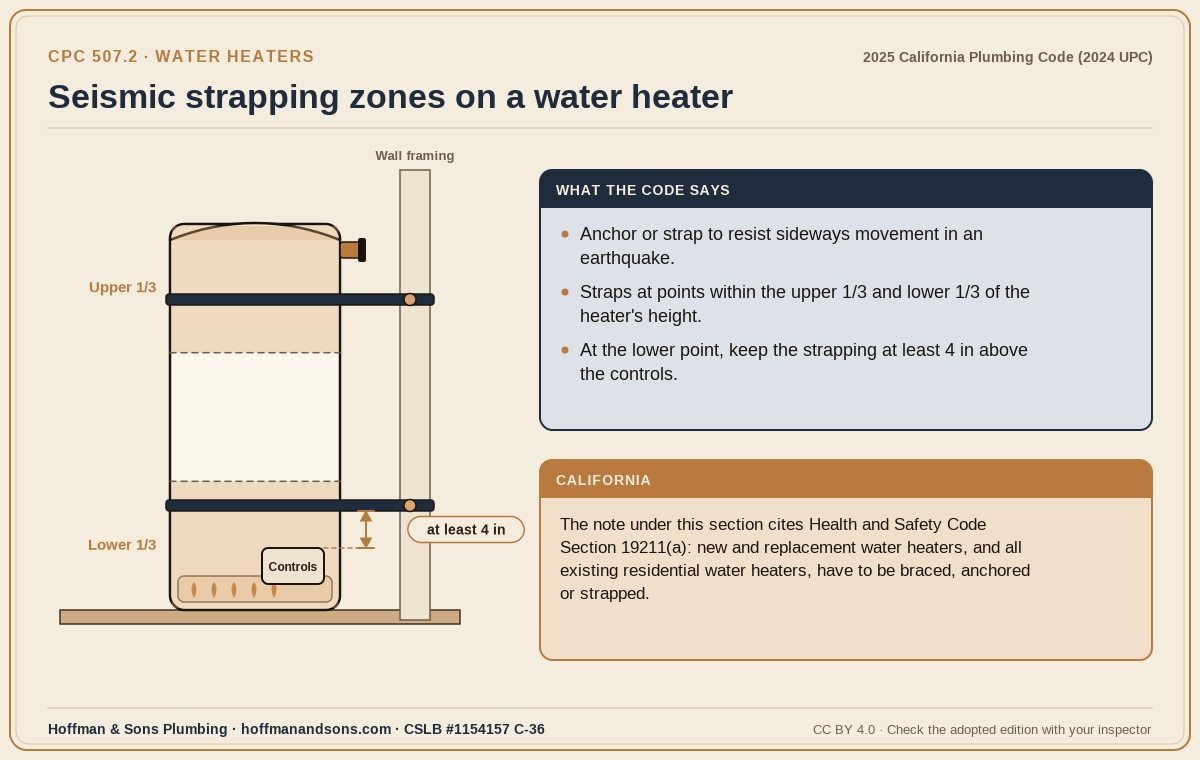
The code says water heaters have to be anchored or strapped to resist horizontal displacement from earthquake motion. Strapping goes at points within the upper one-third and the lower one-third of the heater's vertical dimension. That means two zones, one high and one low.
At the lower point, the strapping has to stay at least 4 inches above the controls, so the strap isn't crossing the gas control or thermostat and the controls stay reachable.
California adds a note pointing to Health and Safety Code Section 19211(a): all new and replacement water heaters, and all existing residential water heaters, have to be braced, anchored or strapped to resist falling or horizontal displacement from earthquake motion, at a minimum as the California Plumbing Code says. That covers a heater that's already in the house, not only one being installed.
The code text gives the two zones and the 4 inch clearance. It doesn't specify strap size, number of straps beyond those two points, or the fasteners, so follow the strap kit and the water heater manufacturer's instructions, and your inspector's expectations.
On the job
- Find the controls first, measure 4 inches above them for the lower strap, then check that the upper strap lands in the top third of the tank. Either one in the wrong zone is a correction.
- Fasten into framing or an approved anchor, not into drywall. Ask the inspector what your city expects for the attachment hardware.
- On a changeout, strap the new heater before the inspection. It's the easiest item to miss and the easiest for the inspector to see.
The inspector and your city's adopted edition have the final word.