The rule
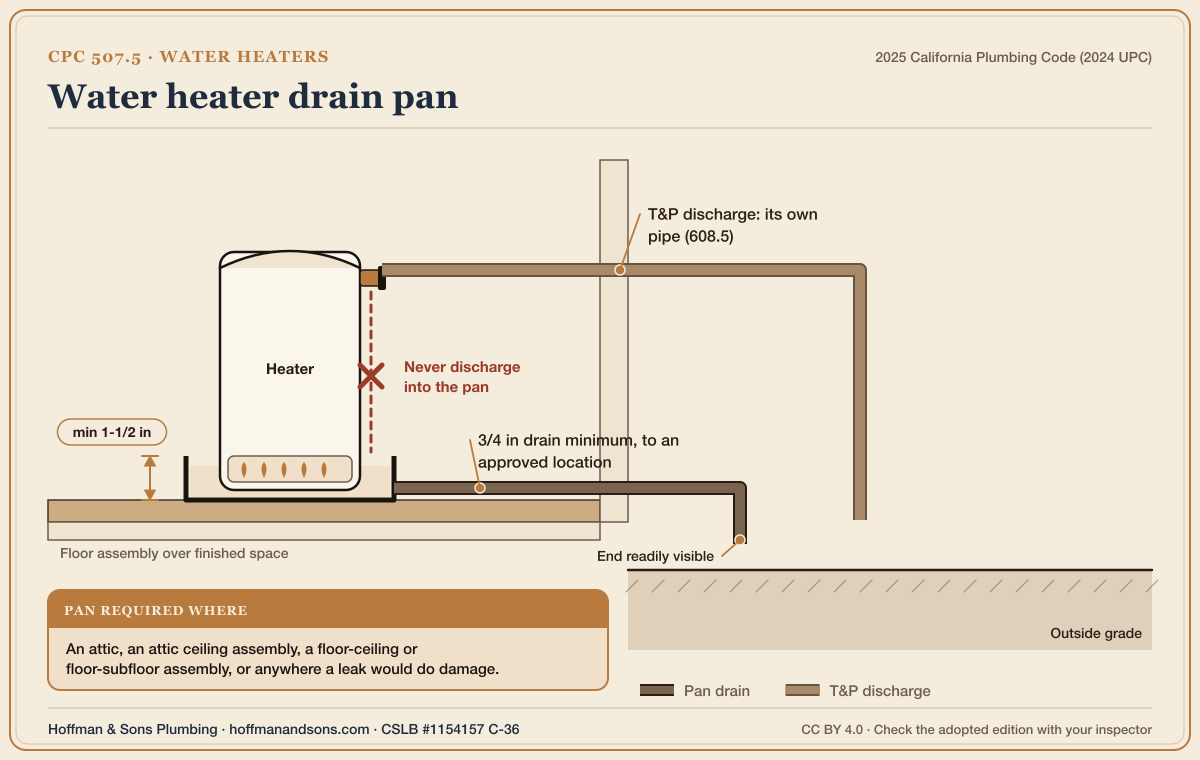
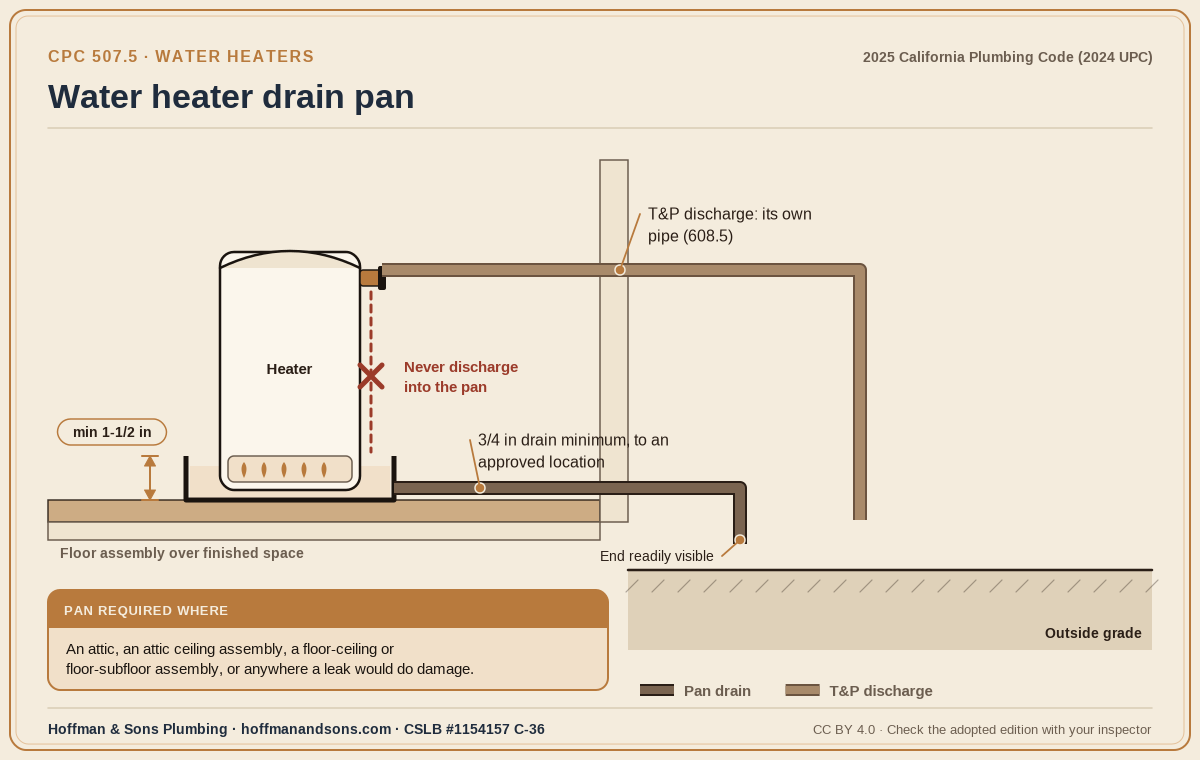
A watertight pan of corrosion-resistant material goes beneath the water heater when the heater is in an attic, in or on an attic ceiling assembly, in or on a floor-ceiling or floor-subfloor assembly, or anywhere a leaking heater would cause damage. That last clause is broad on purpose, so think about what sits under or beside the heater, not only the attic and floor cases.
The pan has to be at least 1-1/2 inches deep and has to have a drain at least 3/4 inch in diameter running to an approved location. The end of that drain has to be readily visible, so a leak gets noticed.
Pan drain piping has to be rated for the water heater's temperature and approved for the liquid. And the T&P valve can never discharge into the pan: relief discharge has its own pipe under Section 608.5.
On the job
- Check the pan drain's destination. It runs to an approved location where the end is readily visible, and not into a wall cavity or a spot nobody looks.
- Keep the T&P discharge pipe and the pan drain separate. Tying one into the other is a common correction.
- Test the pan fit before setting the heater. Level the pan and make sure the drain fitting is at the low point.
The inspector and your city's adopted edition have the final word.