The rule
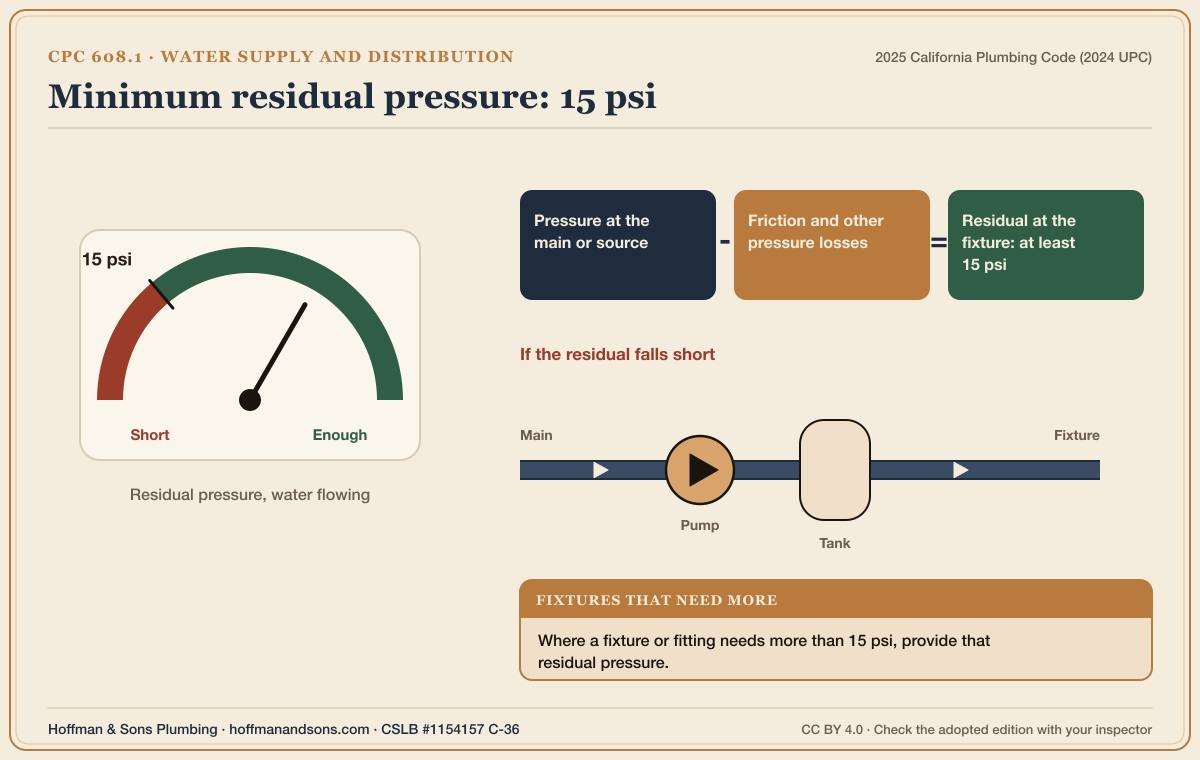
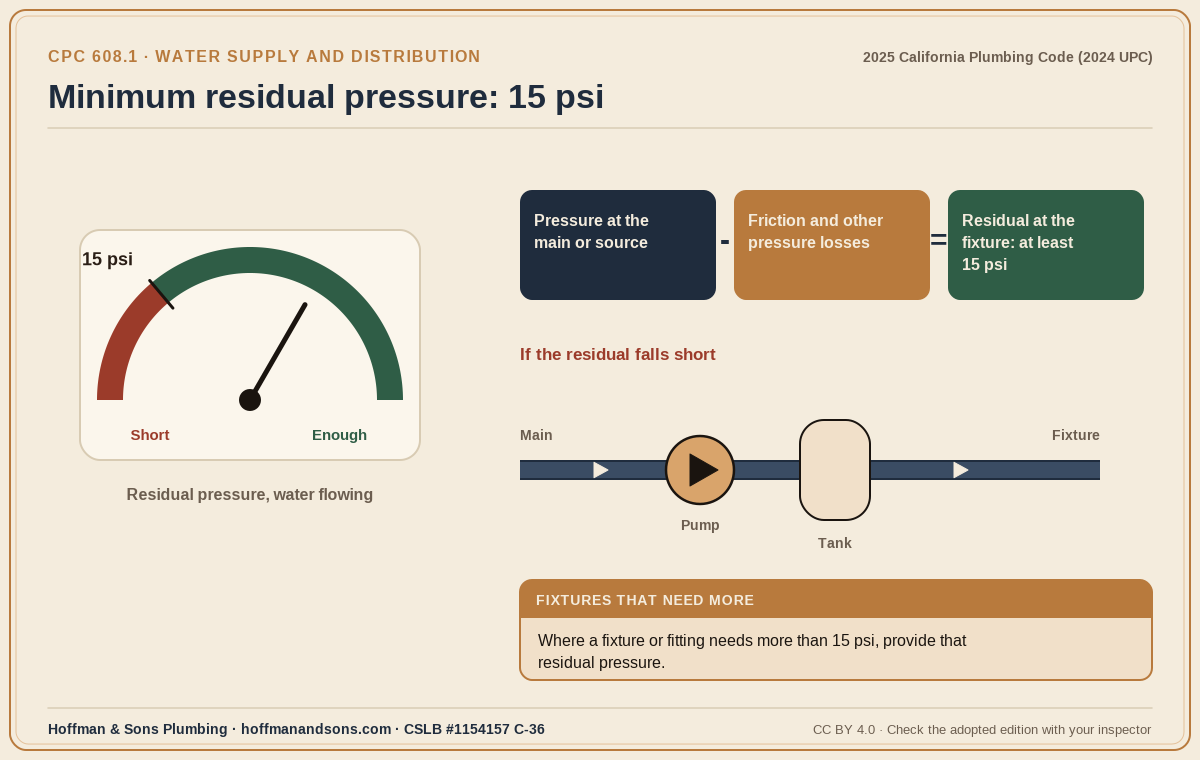
Residual pressure is what's left while water is flowing, after the pipe, fittings, meter, valves and elevation have taken their share. The code wants at least 15 psi there. If the main or other supply can't deliver it, you install a tank and pump or some other means that will.
The 15 psi is a floor. Where a fixture or fixture fitting needs more than 15 psi to work, that higher residual pressure is the number you have to provide.
This is the low-pressure counterpart of 608.2. High static pressure gets a regulator. Low residual pressure gets a boost.
On the job
- A gauge on a hose bibb with nothing running shows static pressure, not residual. Read it again with the demand running before you decide the supply is short.
- Check what the fixtures on the job actually need. Fixture fittings and valves list a minimum operating pressure, and the highest or most remote fixture is the one that runs out first.
- Look at the sizing before you reach for a pump. An undersized line or a restriction (see 610.2) can look like low supply pressure.
The inspector and your city's adopted edition have the final word.