The rule
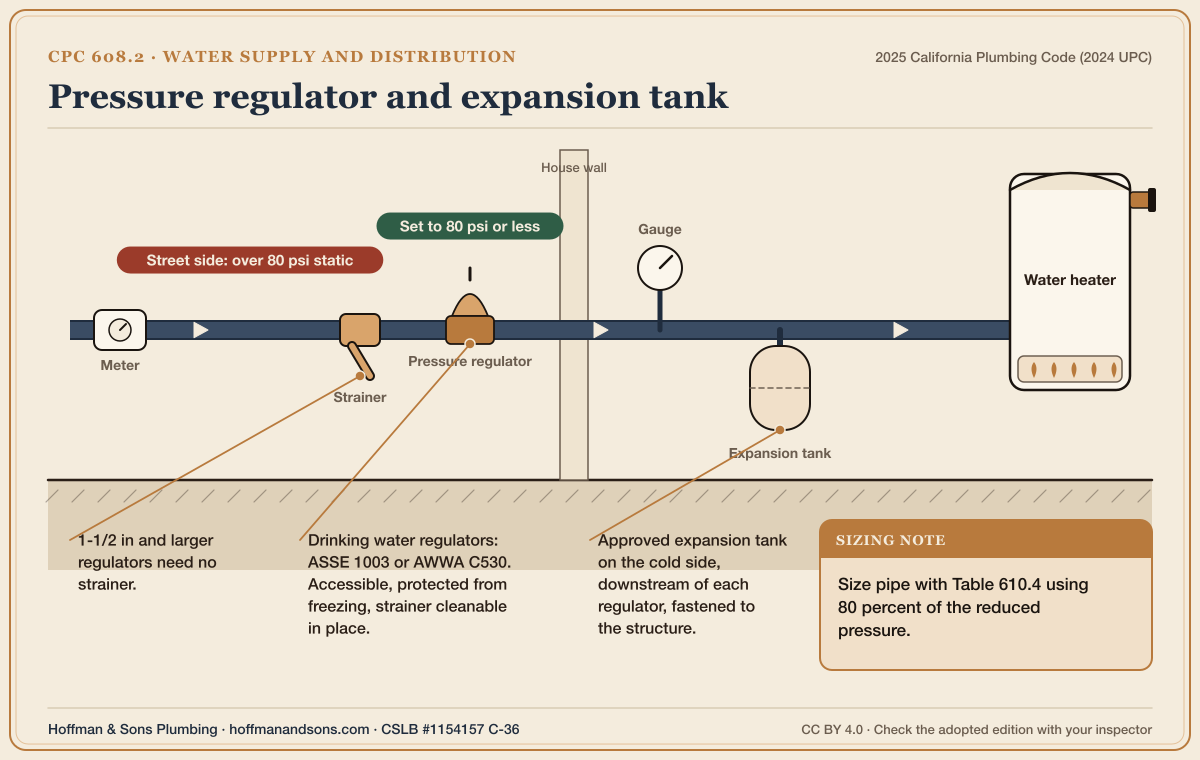
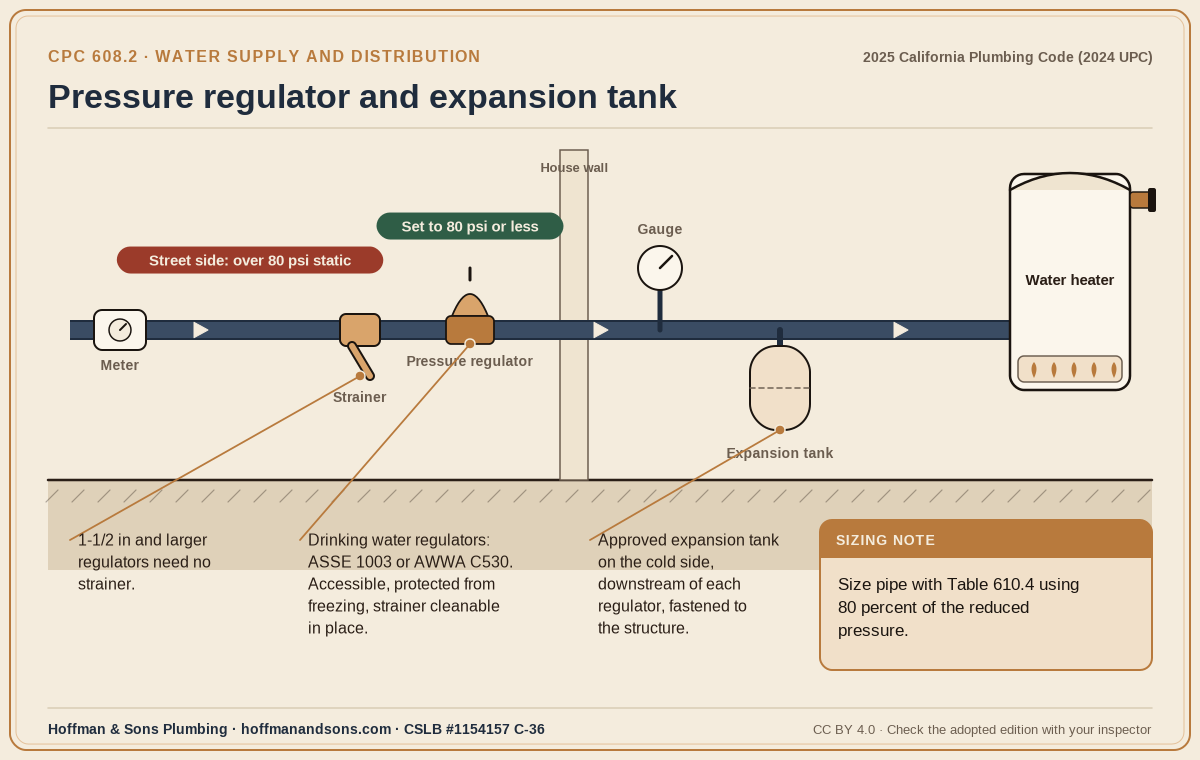
Static pressure is the pressure with no water running. When it's over 80 psi, the code wants an approved-type pressure regulator, with a strainer in front of it, that drops the building to 80 psi or less. Regulators on drinking water lines have to meet ASSE 1003 or AWWA C530. A regulator 1-1/2 inches or larger doesn't need the strainer.
The regulator and strainer have to be accessible, protected from freezing, and set up so the strainer can be cleaned without pulling the regulator or cutting the supply line. They can sit above ground, or in a vault with a drain to daylight.
Once a regulator is in, the building is a closed system, so thermal expansion from the water heater has nowhere to go. That's why the same section requires an approved expansion tank on the cold water piping downstream of each regulator, sized and strapped to the structure per the maker's instructions. A system designed by a licensed plumbing contractor or a registered design professional may use approved relief valves set at 100 psi or less instead of a tank.
When you size pipe with Table 610.4, use 80 percent of the reduced pressure, not the street pressure.
On the job
- Put a gauge on a hose bibb with nothing running before you decide. Pressure changes street to street, so test at the house, not from a neighbor's number.
- Set the regulator, then set the expansion tank on the cold side after it. Charge the tank's air side to match the regulator's outlet setting before you fill the system.
- A dripping T&P valve on a water heater is often a missing or dead expansion tank, not a bad valve.
The inspector and your city's adopted edition have the final word.