The rule
Section 712.1 lets you test with water or air, but plastic pipe can't be tested with air. The water test is the one that applies to every material. It can be applied to the whole drain and vent system or to sections of it.
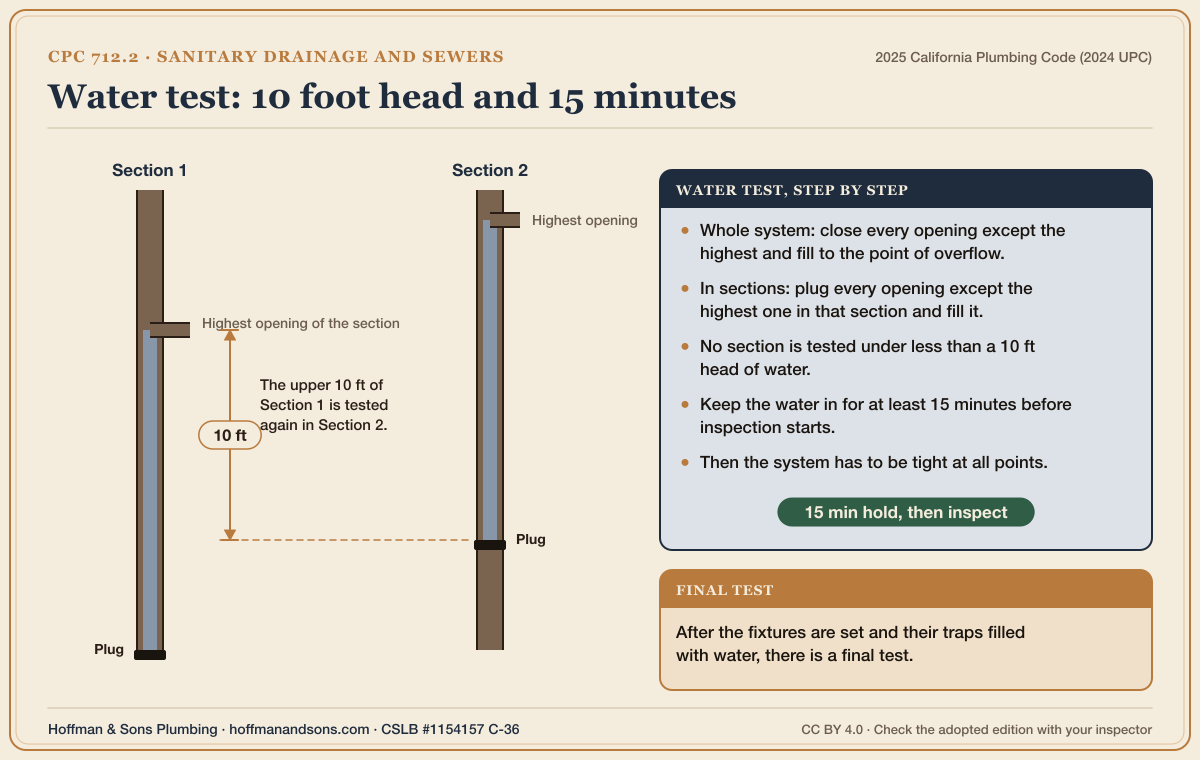
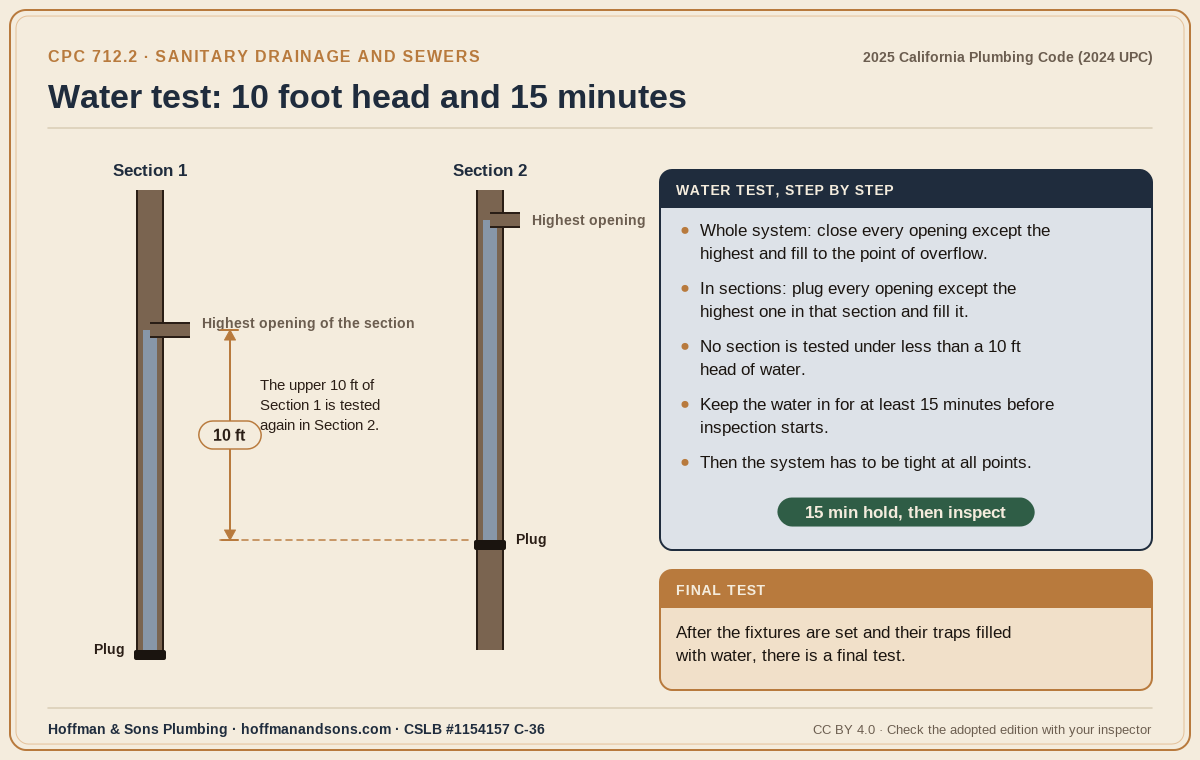
To test the whole system, close every opening tight except the highest, and fill the system with water to the point of overflow. To test in sections, plug every opening except the highest one in that section, and fill the section with water. No section can be tested with less than a 10 foot head of water.
When you test successive sections, the upper 10 feet of the previous section gets tested again, so that no joint or pipe in the building (except the top 10 feet of the system) ever sees less than a 10 foot head.
The water has to stay in the system, or the section under test, for at least 15 minutes before the inspection starts. After that the system has to be tight at all points. Once fixtures are set and their traps are filled with water, there's a final test, and the Authority Having Jurisdiction can require cleanouts to be removed to confirm the test reached every part of the system.
On the job
- Plug and test before insulation, drywall or concrete covers anything. A leak found after the slab is poured is the expensive kind.
- Mark the water level when you fill it. A level that drops during the 15 minutes means a leak you need to find before the inspector arrives.
- On a multi-story job, plan your test plugs and fill points for each section so every joint gets its 10 foot head. Build the overlap into the plan so the upper 10 feet of each section is tested again.
The inspector and your city's adopted edition have the final word.