The rule
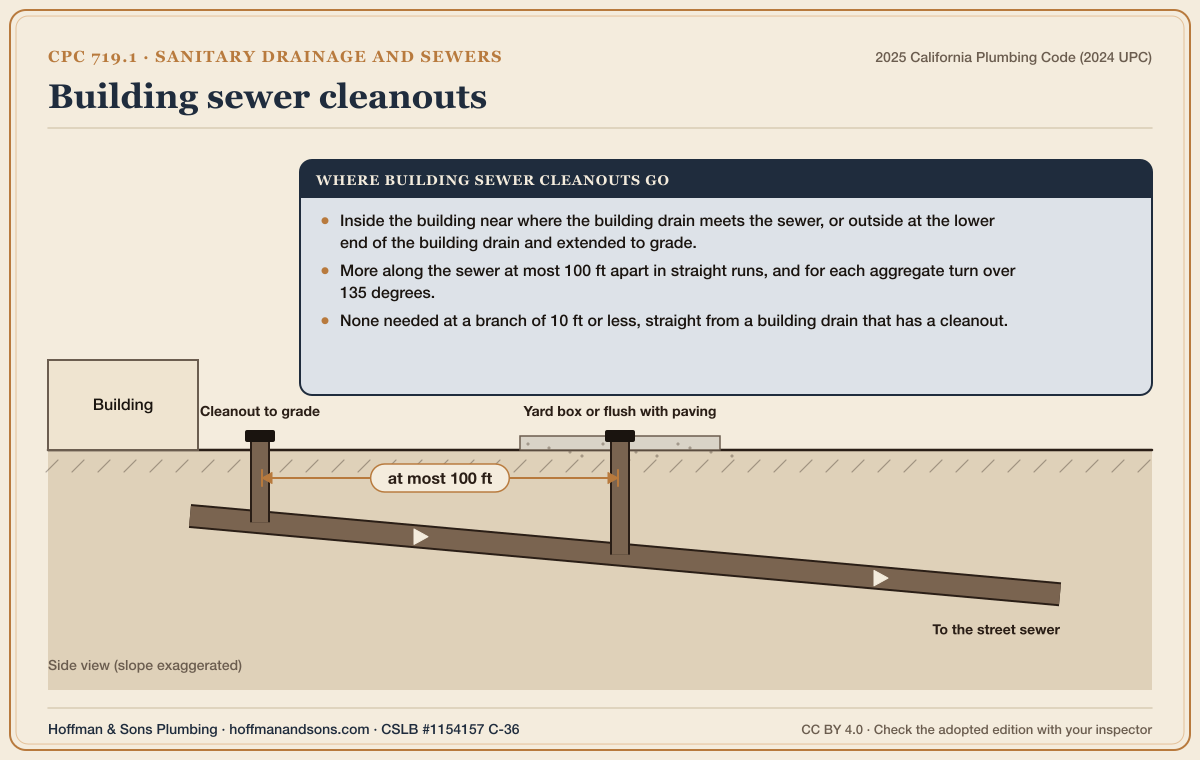
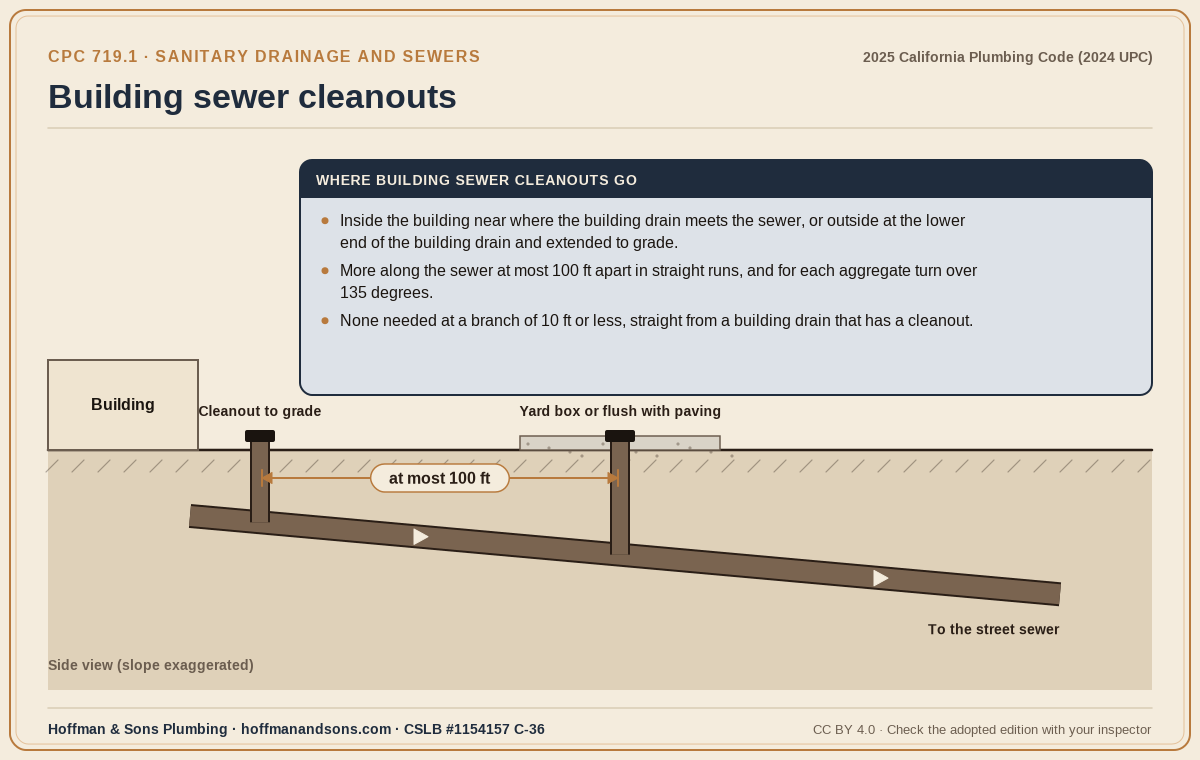
The main cleanout goes either inside the building near the connection between the building drain and the building sewer, or outside the building at the lower end of the building drain and extended to grade.
Beyond that, add building sewer cleanouts at intervals not to exceed 100 feet in straight runs, and one for each aggregate horizontal change in direction exceeding 135 degrees.
A short branch doesn't need its own. A building sewer or branch that's 10 feet or less, in a straight-line projection from a building drain that has a cleanout, doesn't need one where it connects (Section 719.2).
Required sewer cleanouts extend to grade and follow the Section 707.0 rules for size, construction and materials. Cleanouts under concrete or asphalt paving are accessible through yard boxes or extend flush with the paving, and are protected (Section 719.5).
On the job
- An approved two-way cleanout at the lower end of the building drain, extended to grade, is a common way to meet the first requirement, and it lets you clean in both directions.
- Set yard boxes or flush-mounted covers so they're protected from driveway traffic. Use load-rated covers where a vehicle will pass over.
- Walk the sewer route and mark long runs and bends on the plan before you dig. It's cheaper than adding a cleanout after the line is backfilled.
The inspector and your city's adopted edition have the final word.