The rule
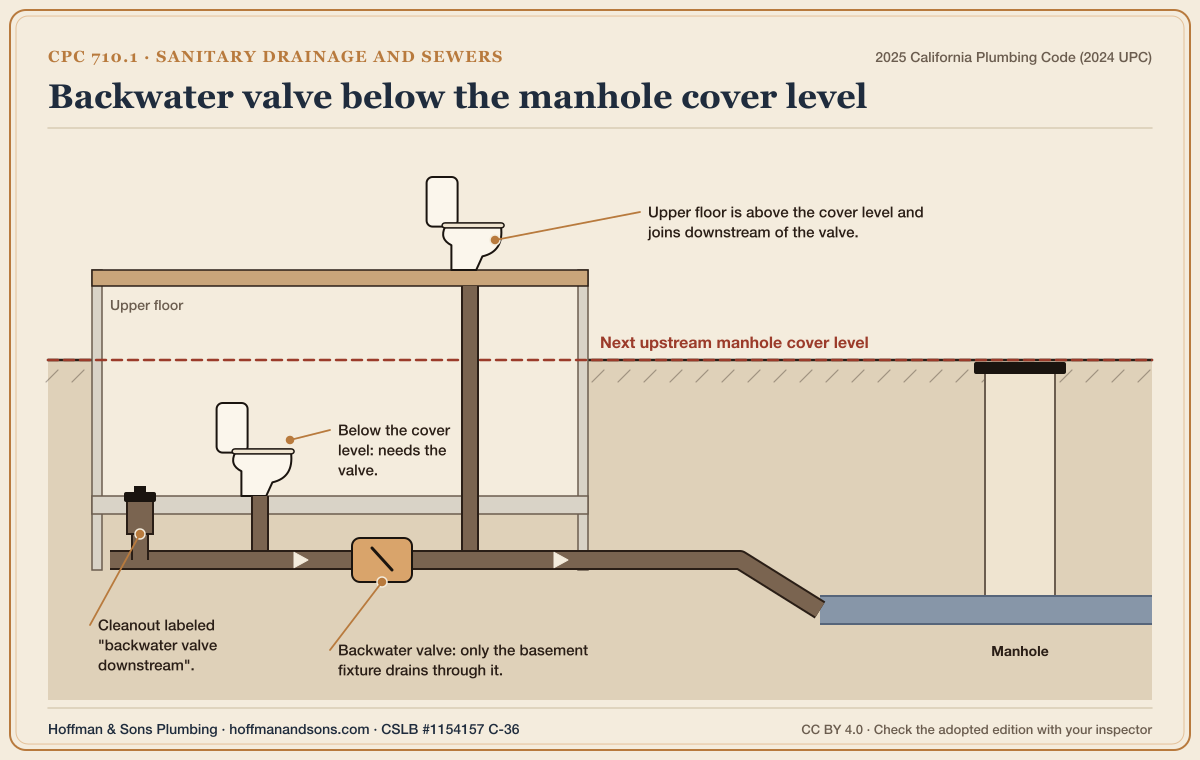
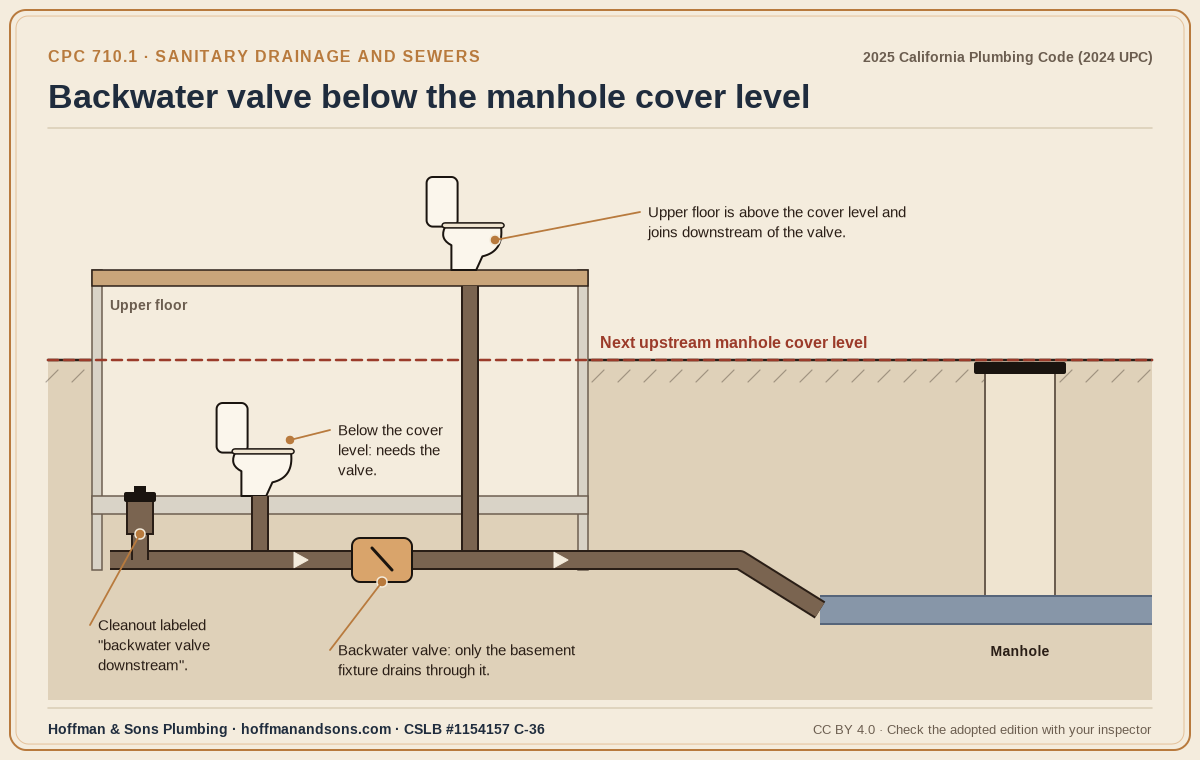
If the sewer backs up in the street, wastewater rises to the level of the next upstream manhole cover before it spills out of the manhole. Any fixture on a floor lower than that cover (a basement bath, a garage floor drain, a lower-level laundry) can then be flooded from its own drain. That's why those fixtures have to be protected by an approved backwater valve.
Fixtures on that same low floor that aren't below the manhole cover don't need the valve. Fixtures on floors above that level have to be piped so they don't discharge through the backwater valve, which keeps the whole house from losing its drain if the valve closes.
Cleanouts for drains that pass through a backwater valve have to carry a permanent label that reads "backwater valve downstream," so no one opens one while the sewer is backed up.
On the job
- Get the manhole cover elevation from the city or sewer district, compare it to the lowest fixture floor, and write both down on the permit set. That comparison drives the whole question.
- Pipe the upper-floor fixtures so they join the building drain downstream of the valve, not through it.
- Put the label on the cleanouts upstream of the valve when you set them. It's a cheap tag now and a safety issue later.
The inspector and your city's adopted edition have the final word.