The rule
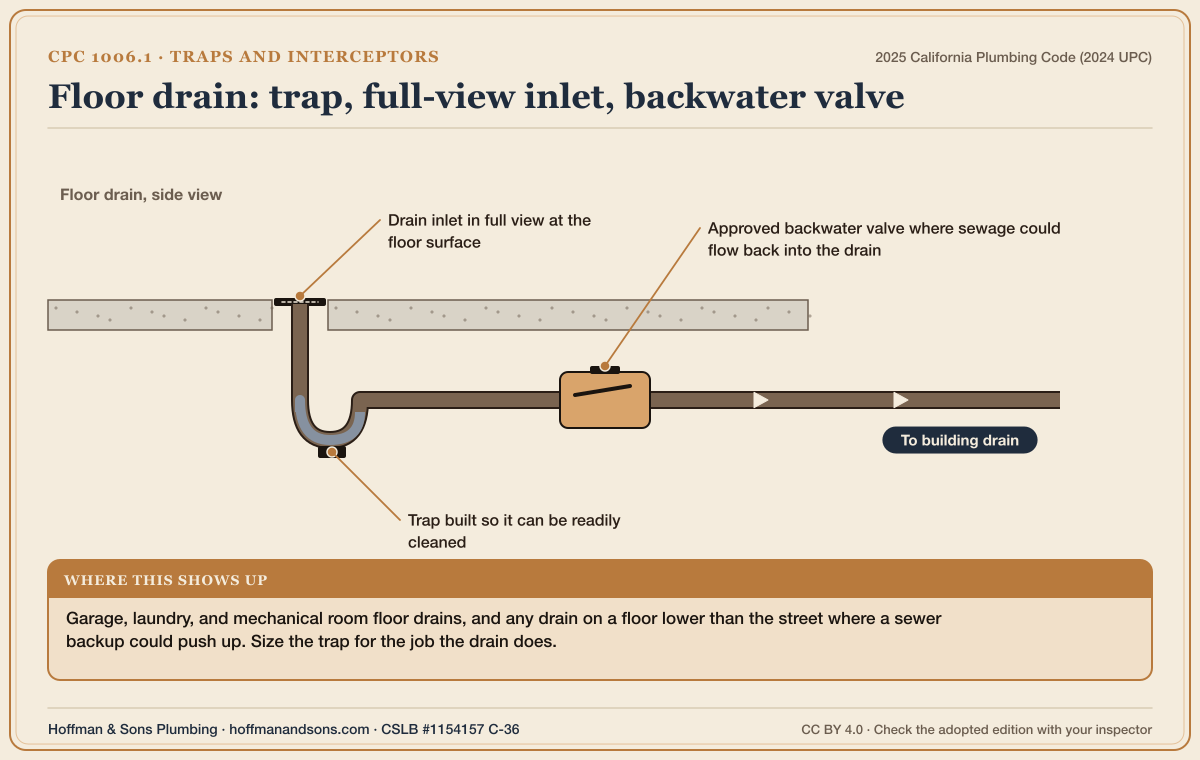
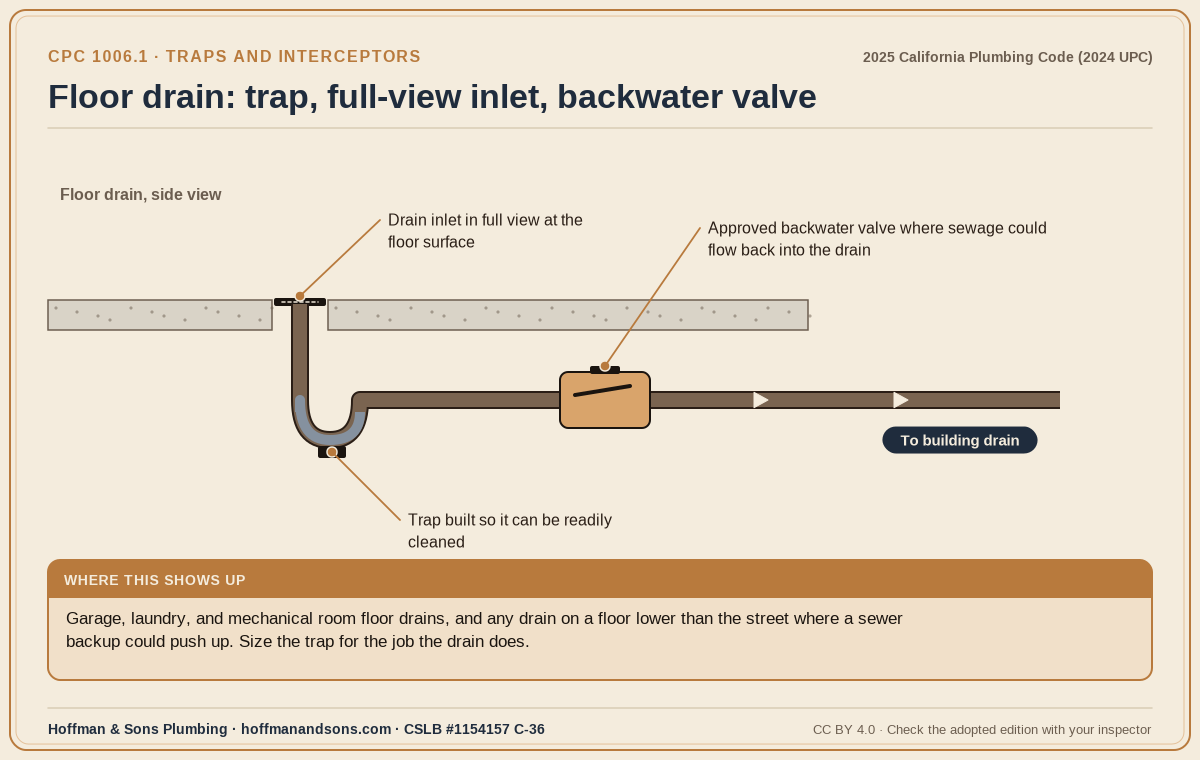
A floor drain always gets its own trap. The trap has to be built so it can be cleaned out easily, and sized for the job the drain does.
The drain inlet has to be located in full view. In practice that means the grate sits at the floor surface where it can be seen and reached, not buried under a cabinet or a finish.
Where the drain is subject to reverse flow of sewage or liquid waste, an approved backwater valve goes on it. That comes up on drains at a low level, like a basement or a garage floor that's below the street, where a sewer backup could push up through the drain.
On the job
- Floor drains that are rarely used dry out. See the next section on trap seal primers for the code answer, and fill the trap before the final.
- A floor drain in a garage or utility room is a common addition when a water heater or washer moves. Make sure it ties to a trap and a vent, and not to a plain stub.
- A backwater valve needs access. Leave a way to open the cover and clean the flapper later.
The inspector and your city's adopted edition have the final word.