The rule
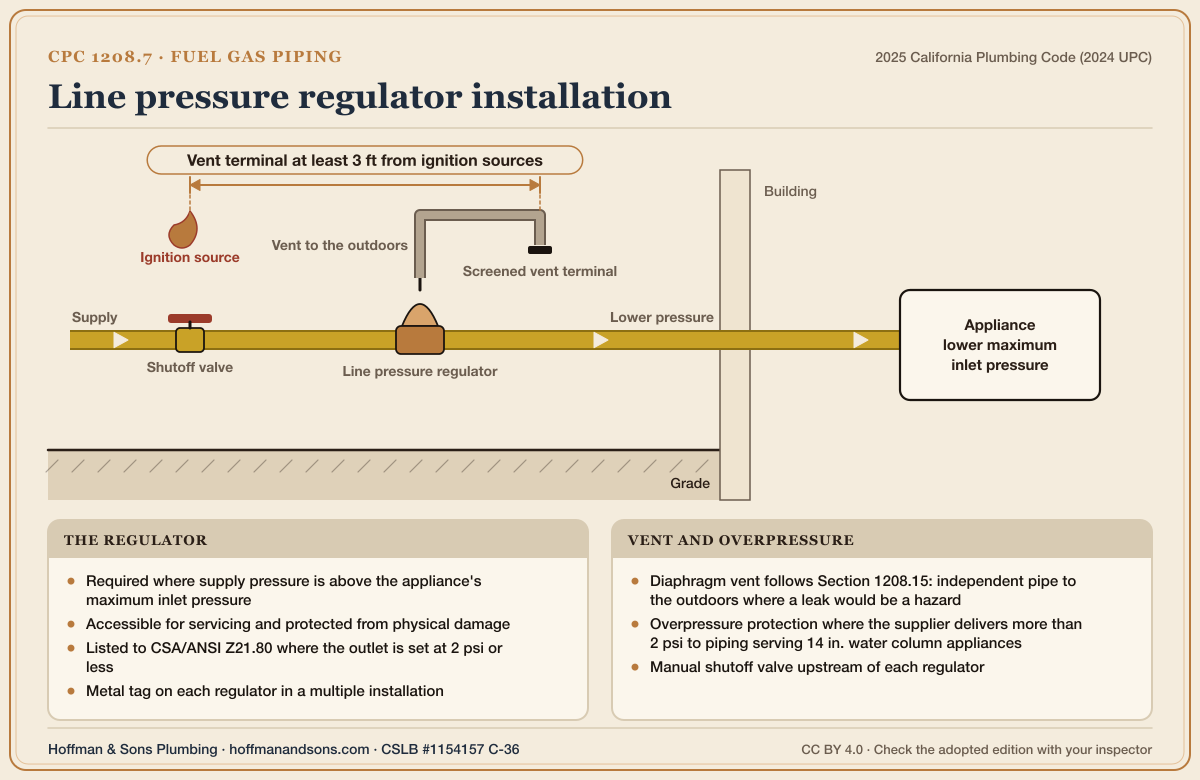
If the gas supply pressure is higher than what an appliance can take at its inlet, a line pressure regulator steps it down. That comes up where the gas supplier delivers a higher pressure than the appliances are built to take.
The regulator has to be accessible so it can be serviced, and it has to be protected against physical damage. Regulators with outlet pressure set at 2 psi or less have to be listed to CSA/ANSI Z21.80/CSA 6.22. Where there's a bank of regulators, each one gets a metal tag or other permanent marking showing the building or part of the building it serves.
Vents matter. The vent for the atmospheric side of the diaphragm follows Section 1208.15: where a leak would be a hazard it needs its own vent pipe to the outdoors, with a terminal that keeps water and insects out and that ends at least 3 feet from a possible source of ignition. A regulator that's listed with a vent limiting means doesn't need to be vented outdoors.
There's also a separate overpressure protection rule. Where the serving gas supplier delivers more than 2 psi to piping that serves appliances designed for 14 inches water column or less, overpressure protection devices are required.
On the job
- Set the regulator where you can reach it. Above a finished ceiling or behind a built-in is how a regulator ends up an access complaint.
- Run the vent first and the cosmetics second. Keep the terminal at least 3 feet from sources of ignition and keep it screened.
- Put a manual shutoff valve upstream of each regulator (Section 1210.9). Two regulators in series on one line need a valve only at the first.
- Tag every regulator on a multiple-regulator installation. It takes a minute and saves a long afternoon of guessing later.
The inspector and your city's adopted edition have the final word.