The rule
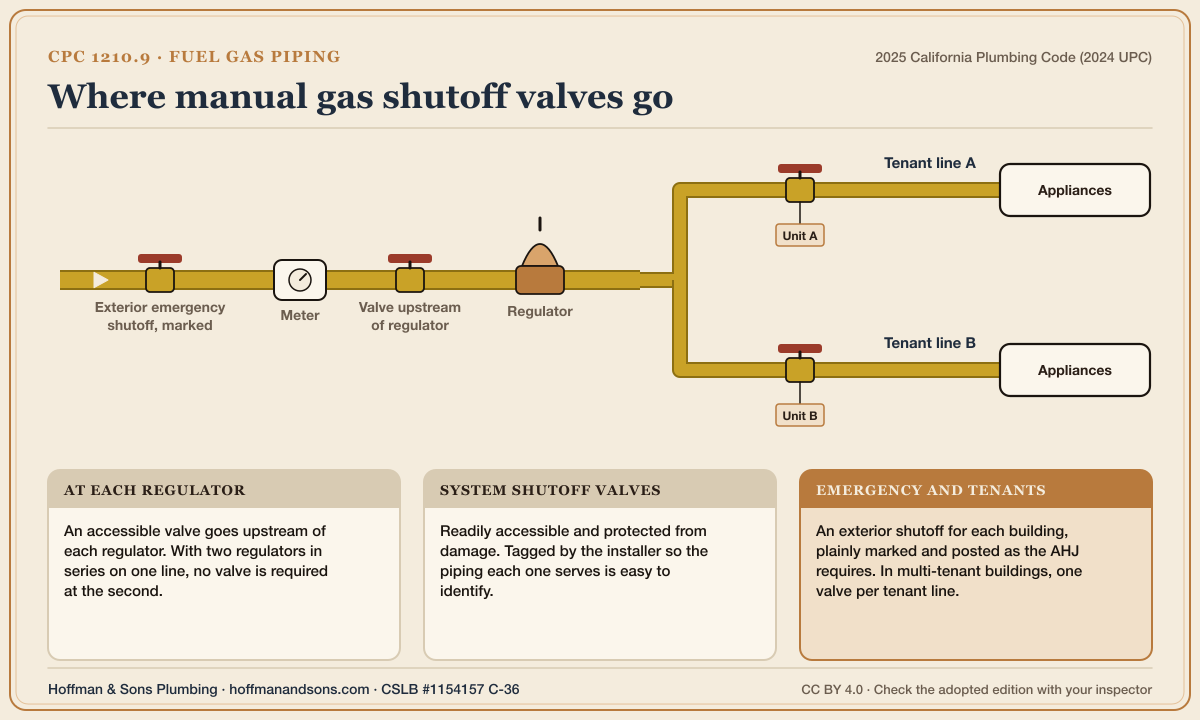
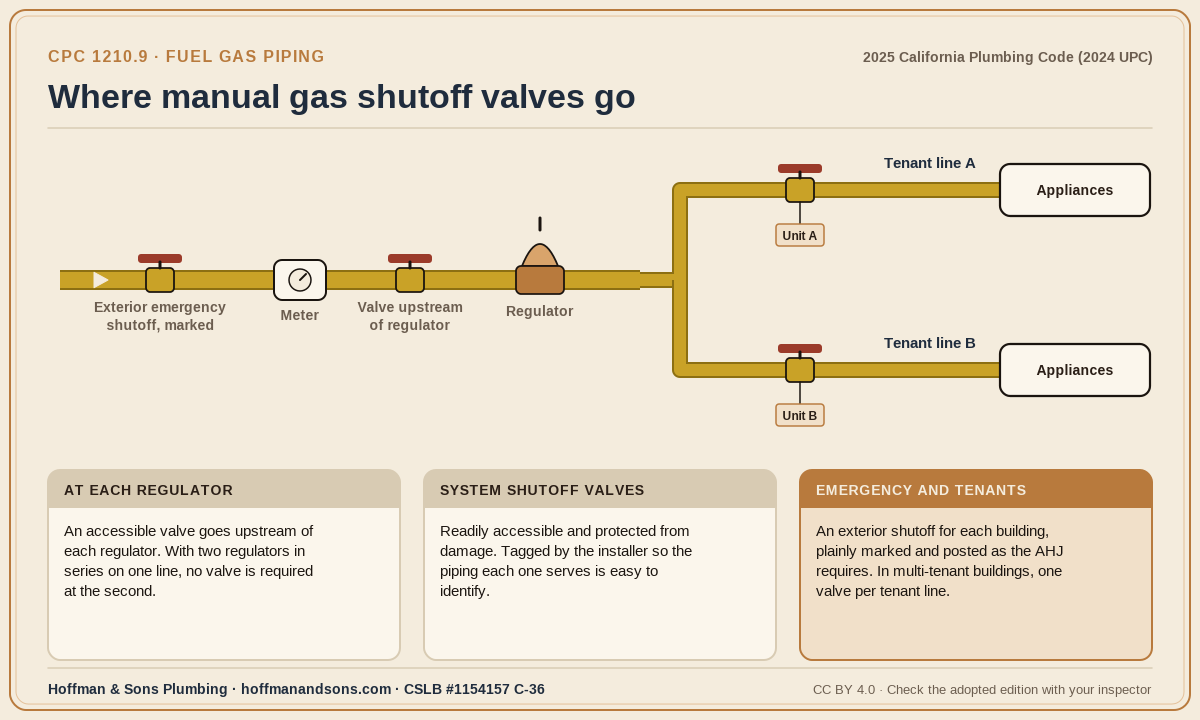
An accessible gas shutoff valve goes upstream of each gas pressure regulator. If two regulators are installed in series on a single line, there's no valve required at the second one.
System shutoff valves have to be readily accessible for operation and protected from physical damage. Each is marked with a metal tag or other permanent means, put on by the installer, so the piping it feeds can be identified quickly. A system shutoff valve has to meet the valve selection rules in Section 1208.13.
In a multiple-tenant building served by a master meter, or through one service regulator with no meter, or where the meters or regulators aren't readily accessible from the appliance, each apartment or tenant line gets its own shutoff valve at a convenient point of general accessibility. In a common system serving several buildings, shutoff valves go at each building.
Each building also gets an exterior shutoff valve that lets the gas be turned off in an emergency. It's plainly marked as an emergency shutoff and its location is posted as the Authority Having Jurisdiction requires. A lab space with two or more gas outlets on tables, benches or in hoods gets a single, accessible, identified shutoff valve.
On the job
- Put the tag on at install, with the name of what the valve serves. Valves in a multi-unit building without tags are a service call waiting to happen.
- Don't hide the valve behind a built-in, in a ceiling or behind landscaping. 'Readily accessible' means you can get to it fast in an emergency.
- Check with the Authority Having Jurisdiction about how they want the emergency shutoff location posted.
- In tenant buildings, confirm each unit's shutoff can be reached without going through another unit.
The inspector and your city's adopted edition have the final word.